
From Community Giving to Online Campaigns: Who Started Fundraising? Someone needs help. A few people contribute. More people hear the story. Soon, an entire community comes together. That basic idea has existed for centuries. Today, we may call it fundraising, share it through WhatsApp or social media, and complete the donation online. But the idea itself began long before websites, QR codes or crowdfunding platforms. So, Who Started Fundraising? The answer is more interesting than one name. FUNDRAISING IN ONE LINEA need becomes a story → the story reaches people → people choose to support it. Who Started Fundraising? There Was No Single Inventor Fundraising was not created by one person. For centuries, religious groups, communities and charitable organisations collected voluntary contributions for people, public needs and social causes. Early fundraising commonly included: One Early Written Appeal A frequently mentioned milestone appeared in 1643, when Harvard College used a written appeal known as New England’s First Fruits to seek financial support. The idea was simple but powerful: a cause could reach beyond the local community when its story was shared. How Did Modern Fundraising Begin? By the early 1900s, fundraising became more organised. Charles Sumner Ward, working with Lyman Pierce, is closely associated with modern campaign-style fundraising. Their approach introduced methods that are still familiar today: BIG CHANGEFundraising moved from “Please help” to“Here is the goal, the cause and how you can take part.” From Donation Boxes to Digital Campaigns Technology changed the reach of fundraising. Traditional fundraising relied heavily on face-to-face requests and local networks. Today, online fundraising can connect a cause with supporters in different cities or even countries. A modern campaign may follow a simple path:Create Campaign → Share Story → Receive Donations → Update Supporters Online fundraising now includes donation pages, crowdfunding, peer-to-peer campaigns and digital payment tools. What Has Not Changed? Whether offline or online, strong fundraising still depends on three things: Understanding the importance of trust is essential when making donations. Read our guide on charitable giving for education, emergency relief and safe donations to learn about responsible giving and supporting genuine causes. How Kanavu Help Brings Fundraising Online The same community spirit continues through Kanavu Help. Kanavu Help allows people to start campaigns for personal causes, healthcare needs, education and community support. The process is simple: Create → Share → Receive Support So, when we ask Who Started Fundraising?, the answer is bigger than one name. The tools have changed. The human idea has not: people helping people. Have a genuine cause that needs support? Explore Kanavu Help and start a fundraiser online. Before starting a campaign, it is helpful to understand how different charitable organisations work. Explore NGO vs Trust vs Foundation: What’s the Difference, and Where Does Kanavu Fit? to understand the differences between these organisational structures and Kanavu Help’s role in online fundraising. FAQs Source: New England’s First Fruits: An Early Fundraising Appeal

Beyond Tuition Fees: How Higher Education Support Helps Students Continue Their Studies
Beyond Tuition Fees: How Higher Education Support Helps Students Continue Their Studies Getting admission to college is only the beginning. For many students, staying enrolled can become difficult when hostel charges, examination fees, books, travel, devices and everyday expenses begin to add up. This is where Higher Education Support becomes important. The right assistance can help a student remain focused on completing a degree instead of putting education on hold because of financial pressure. College Costs Go Beyond Tuition A scholarship may cover part of the academic fee, but students often face several smaller expenses throughout the year. The Hidden Costs of Continuing Education THE REAL EDUCATION GAP Getting a college seat is one milestone. Having the resources to stay, study and complete the course is another. What Types of Higher Education Support Are Available? Students in India can explore different forms of financial assistance depending on their academic performance, family income, course and eligibility category. Scholarships for College Students The PM-USP Central Sector Scholarship supports eligible meritorious students from lower-income families, with assistance ranging from ₹12,000 to ₹20,000 per year depending on the year of study. Education Loan Support BEFORE APPLYINGCheck the latest eligibility, recognised institution requirements, income limits, documents and application dates on the official scheme portal. Support Available for Students in Tamil Nadu The Higher Education Special Scholarship provides eligible students with ₹7,500 per year for degree/polytechnic courses and ₹8,000 for postgraduate/professional courses. It is available to qualifying Adi Dravidar, Scheduled Tribe and Christian Adi Dravidar students studying in recognised Government/Aided institutions, subject to scheme conditions. Financial Help Is Only One Part Students may also need mentorship, study materials, devices, internet access and career guidance to continue their education confidently. During unexpected financial difficulties, Kanavu Help can support fundraising by helping people share genuine needs and receive contributions securely. A SMALL CONTRIBUTION CAN PROTECT A BIG DREAMSupport can help a student stay in education and move toward the next opportunity. Learn more about how charitable giving supports education and emergency relief and helps people access support during difficult times. How Kanavu Help Can Help When education expenses become difficult to manage, Kanavu Help gives students and families a simple way to seek support. They can create a fundraiser, share their needs with others and securely receive contributions to help continue their education. Need Help Continuing Your Education?Start a fundraiser with Kanavu Help and connect with people who can support your journey. You can also explore how to donate for children’s education in Tamil Nadu and help students continue their learning despite financial difficulties. Frequently Asked Questions
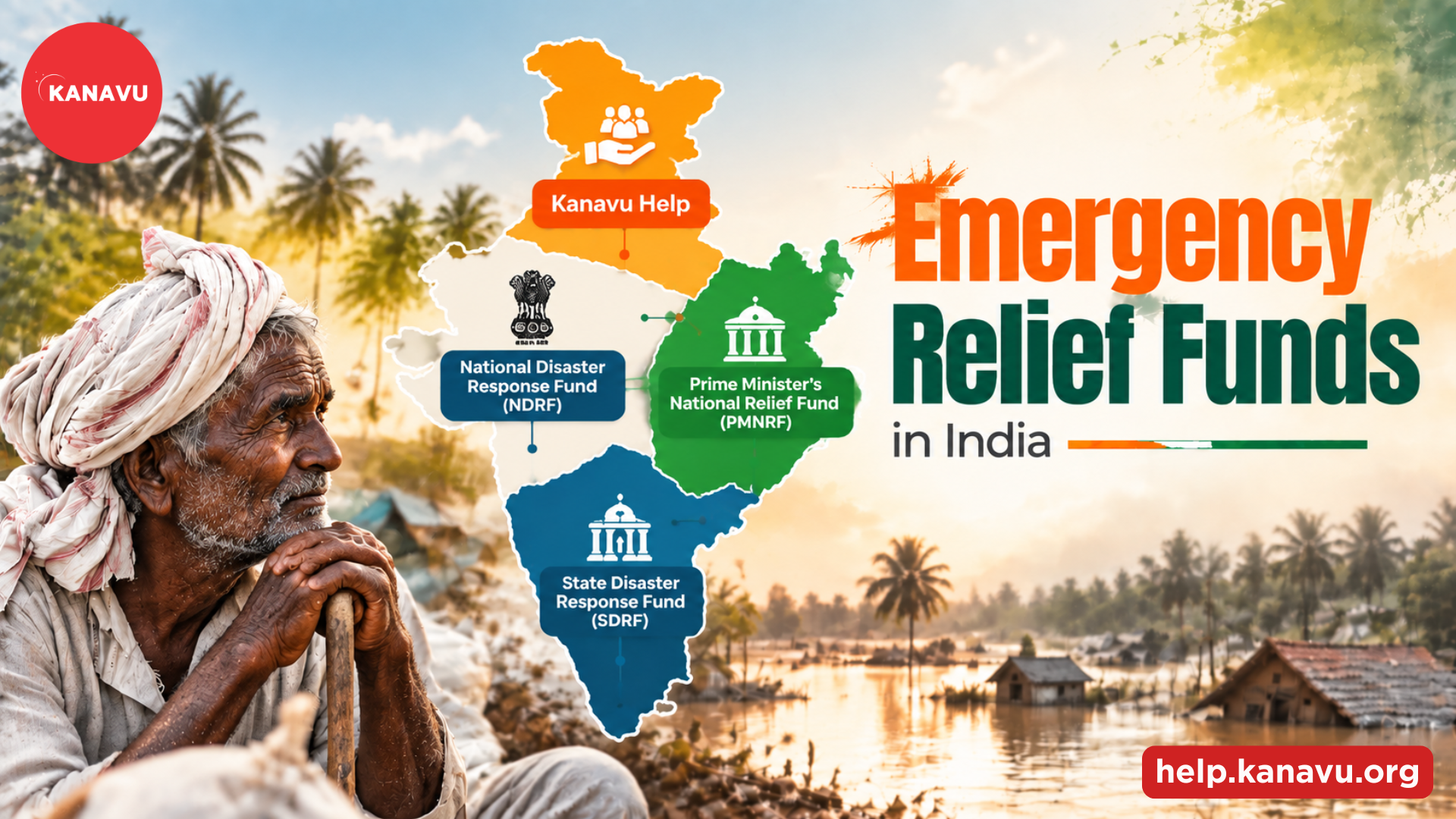
Emergency Relief Funds in India: Find Support with Kanavu Help
Emergency Relief Funds in India: Find Support with Kanavu Help Unexpected situations like natural disasters, medical emergencies, accidents, and financial crises can create serious challenges for individuals and families. During such difficult moments, Emergency Relief Funds in India provide financial assistance that helps individuals and communities recover from unexpected situations. Help During Unexpected CrisesEmergency Relief Funds in India provide financial support during crises through government programs and community-based platforms. What Are Emergency Relief Funds? Emergency relief funds are financial resources created to provide immediate support during crisis situations. These funds help affected people receive assistance for recovery, medical requirements, disaster relief, and other urgent needs. India provides emergency assistance through national relief funds, state disaster funds, and community fundraising platforms to support people affected by critical situations. Learn more about how Kanavu Help has evolved from its origins to its impact today and the growing role of charitable giving in education, emergency relief, and safe donations. Key Government Relief Funds for Emergencies Prime Minister’s National Relief Fund (PMNRF) The Prime Minister’s National Relief Fund (PMNRF) provides financial assistance to people affected by: The fund receives public contributions and supports relief activities for affected families. PM CARES Fund The PM CARES Fund (Prime Minister’s Citizen Assistance and Relief in Emergency Situations Fund) was created to support people during large-scale emergencies, including public health crises and national-level situations. Supporting Large-Scale EmergenciesPM CARES Fund supports urgent relief efforts through voluntary contributions during major emergency situations. National Disaster Response Fund (NDRF) The National Disaster Response Fund (NDRF) works under the Disaster Management Act and provides additional support during severe disasters. It helps states manage large-scale emergencies when existing resources are not enough. State Disaster Response Fund (SDRF) The State Disaster Response Fund (SDRF) provides immediate assistance during local emergencies. It supports relief activities during: How Kanavu Help Supports Emergency Fundraising Beyond government assistance, many families need additional financial support for medical expenses, recovery needs, and personal emergencies. For families dealing with accidents and related financial challenges, this guide on accident relief funds in India explains some of the available relief options. Kanavu Help provides a crowdfunding platform where people can create fundraisers and connect with donors who want to support genuine causes. Bringing People Together Through Help“Empowering Lives, Defeating Diseases & Disasters” by connecting people who need support with those willing to help. How to Start a Fundraiser with Kanavu Help Building Support During Difficult Times During unexpected crises, people often need timely financial assistance and reliable support. Government relief programs and platforms like Kanavu Help work together to provide help and connect communities with urgent needs. Emergency relief funds in India play an important role in strengthening this support system. Frequently Asked Questions (FAQs) 1. What are Emergency Relief Funds in India? Emergency Relief Funds in India are financial support systems created to help individuals and communities during unexpected situations like natural disasters, medical emergencies, and other critical crises. 2. Which are the major Emergency Relief Funds available in India? The major relief funds include Prime Minister’s National Relief Fund (PMNRF), PM CARES Fund, National Disaster Response Fund (NDRF), and State Disaster Response Fund (SDRF). These funds provide assistance during different types of emergencies. 3. How can Kanavu Help support people during emergencies? Kanavu Help helps individuals create fundraisers and connect with donors for urgent needs such as medical expenses, recovery support, and personal emergencies through a simple crowdfunding platform. Official Sources
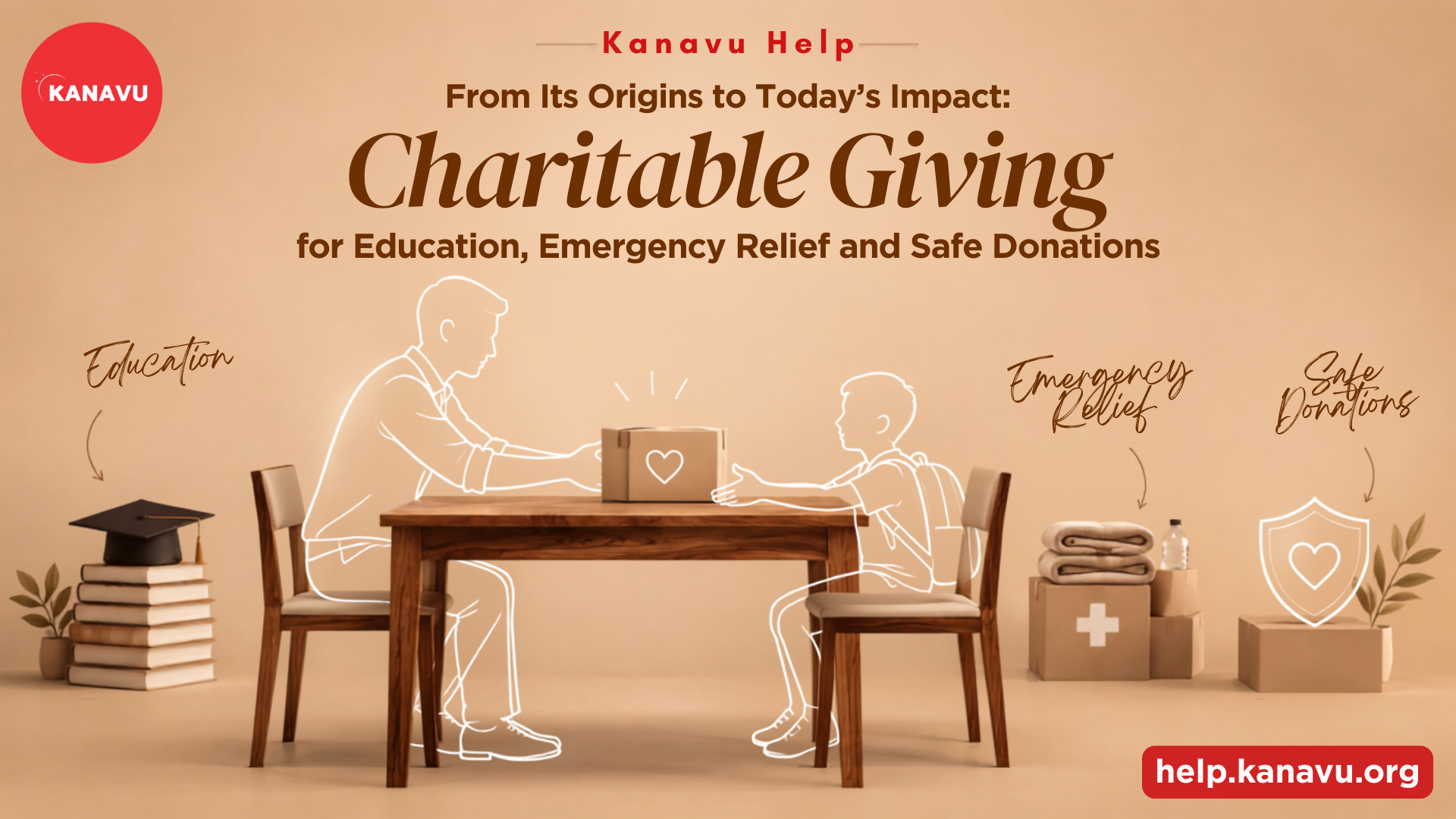
From Its Origins to Today’s Impact: Charitable Giving for Education, Emergency Relief and Safe Donations
From Its Origins to Today’s Impact: Charitable Giving for Education, Emergency Relief and Safe Donations 1. From Community Giving to Online Campaigns: Who Started Fundraising? Who started fundraising? Explore its historical roots, how communities collected donations and how traditional giving evolved into online campaigns. 2. Before You Donate: Tips for Spotting Charity Fraud When Donating Protect your donations with practical tips for spotting charity fraud when donating. Learn how to verify organisations and identify warning signs. 3. When Help Cannot Wait: How Emergency Relief Funds Support Families in Crisis Learn how emergency relief funds help families facing disasters and unexpected crises by providing financial assistance and essential support. 4. Beyond Tuition Fees: How Higher Education Support Helps Students Continue Their Studies Discover how higher education support helps students manage tuition fees, learning expenses and financial challenges so they can continue their studies. How Fundraising Works: Real Stories, Real Impact Discover how fundraising turns community support into meaningful help and real-life impact. Source:
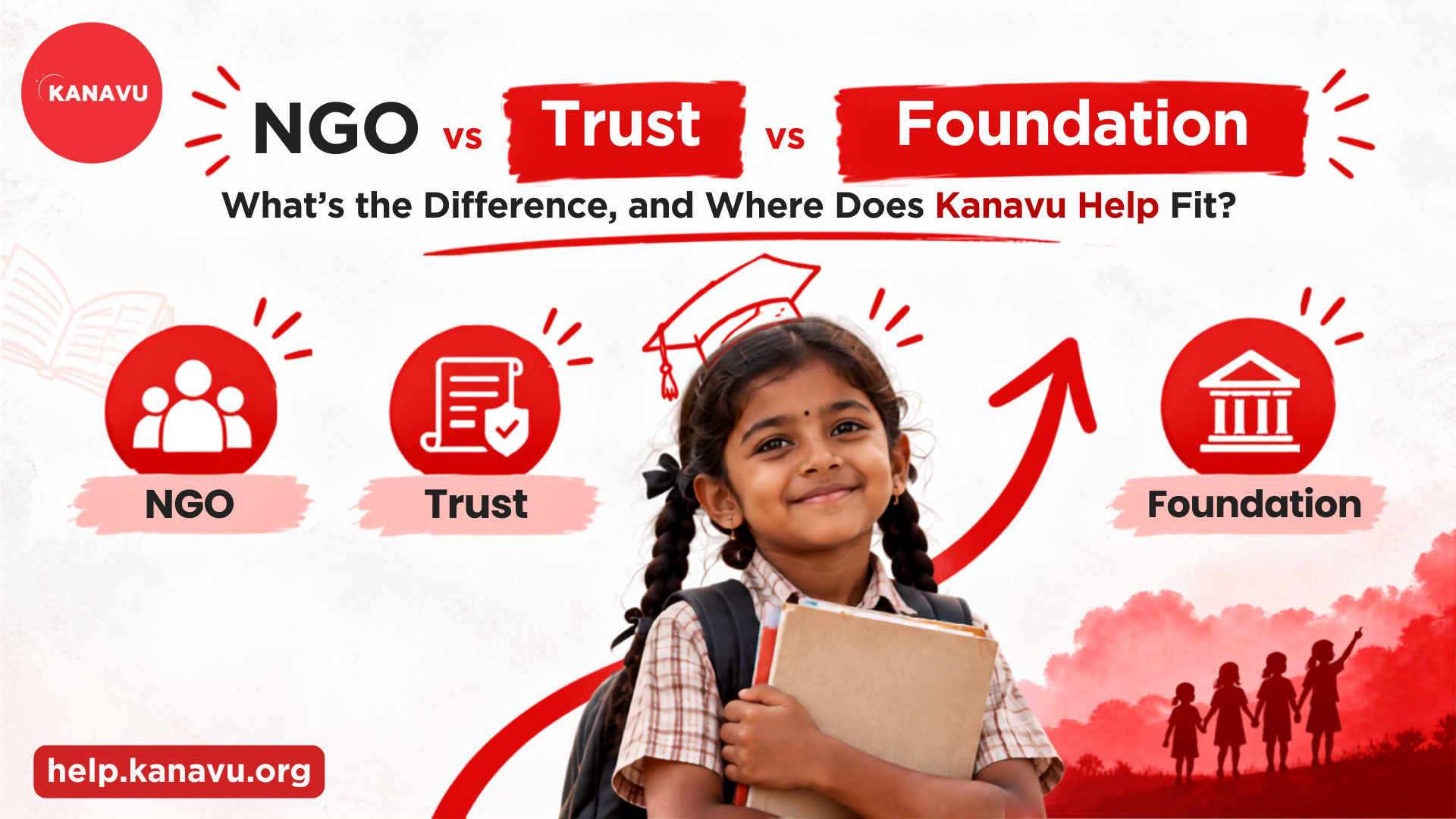
NGO vs Trust vs Foundation: What’s the Difference, and Where Does Kanavu Fit?
NGO vs Trust vs Foundation: What’s the Difference, and Where Does Kanavu Fit? When you hear NGO, Trust, and Foundation, the terms may sound similar, but they have different meanings. Knowing the difference makes it easier to understand how organisations support social causes and how Kanavu Help fits into the picture. What Is an NGO? An NGO, or Non-Governmental Organisation, is a broad term for an organisation that works independently from government to address social, humanitarian, environmental, educational, or community needs. An NGO can operate through different legal structures, depending on the country and its registration. NGOs may work in areas such as: So, NGO is more about the organisation’s mission and activities than one specific legal structure. To understand how fundraising works and how real causes receive support, explore How Fundraising Works: Real Stories, Real Impact. What Is a Trust? A Trust is a legal arrangement in which trustees manage assets or resources for specific beneficiaries or charitable objectives. A charitable trust normally operates according to a trust deed that sets out its purpose and administration. Key features include: What Is a Foundation? A Foundation generally refers to a non-profit organisation established to support charitable or social purposes. Depending on the legal system, foundations may fund projects, provide grants, or operate programmes directly. A foundation may focus on: NGO vs Trust vs Foundation Type What It Means Common Purpose NGO Broad term for a non-governmental organisation Social and public benefit Trust Legal arrangement managed by trustees Charitable objectives Foundation Organisation supporting charitable causes Funding or running social programmes Where Does Kanavu Fit? Kanavu Help connects fundraisers with donors through an online platform. People can create campaigns for needs such as education, healthcare, and personal support and share them with potential donors. KANAVU HELP IN ACTIONCreate → Share → Receive Support Why Does the Difference Matter? Knowing the difference between an NGO, Trust, and Foundation helps donors understand how organisations operate. Before donating, consider their purpose, legal information, fundraising process, and beneficiaries. How Kanavu Help Makes a Difference NGO, Trust, and Foundation describe different organisational concepts, while Kanavu Help connects people who need support with those willing to contribute. You can also learn how online fundraising can support people facing difficult situations through How the Best Platform for Raising Funds Helped One Family Start Over? Turning Support Into Action From education to healthcare, Kanavu Help gives people a simple way to create campaigns, share their stories, and reach donors. A need creates the cause. A fundraiser shares the story. Donors make a difference. Frequently Asked Questions
The 80/20 Rule in Fundraising: Why a Few Donors Matter Most
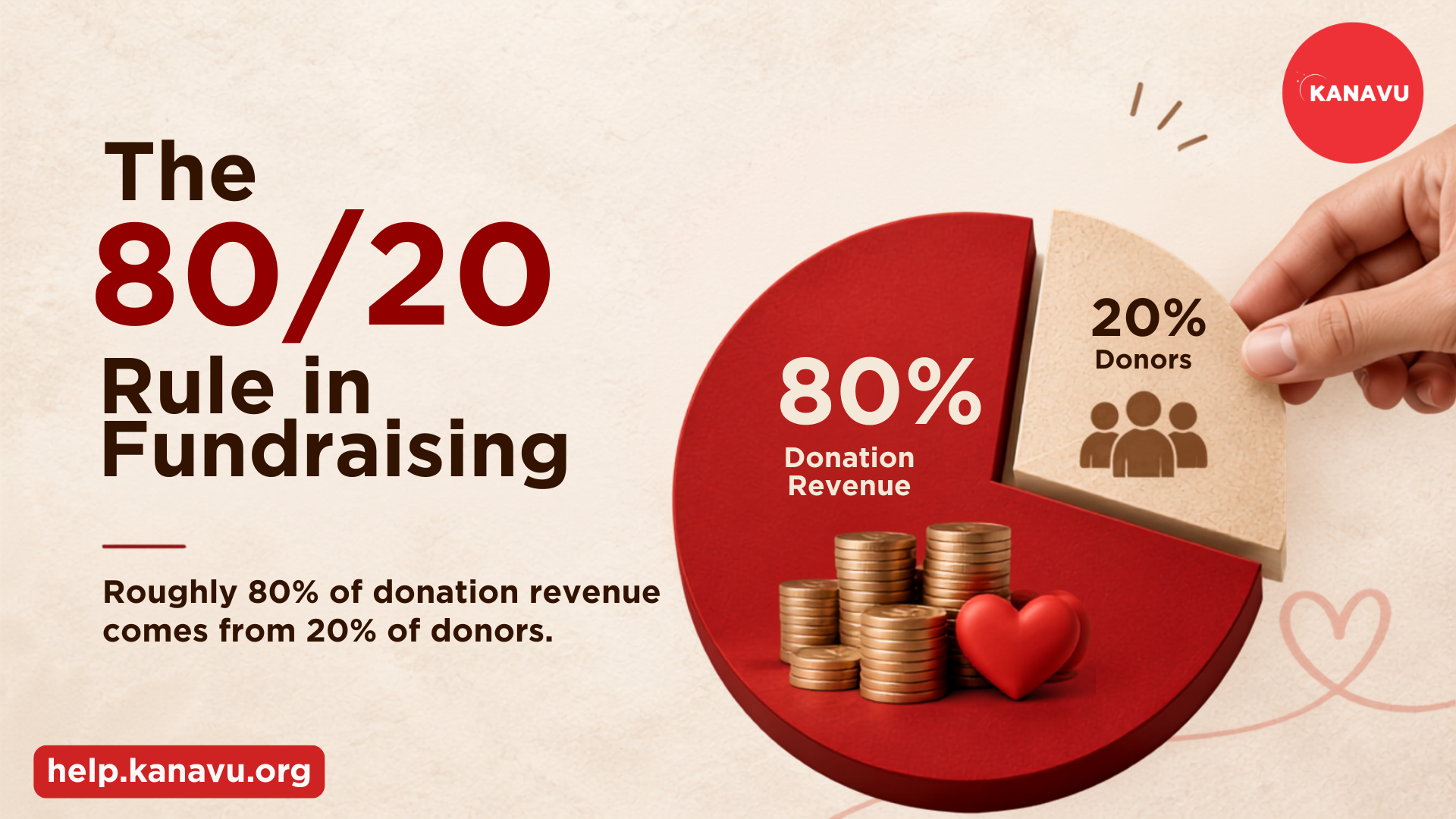
The 80/20 Rule in Fundraising: Why a Few Donors Matter Most Fundraising does not always grow evenly. A small group of donors may contribute a large share of an organization’s total donations. This idea is often explained using The 80/20 Rule in Fundraising, based on the Pareto Principle. In Simple Terms: The 80/20 rule suggests that roughly 80% of results can come from 20% of the causes. In fundraising, this can mean that a smaller group of donors provides a large part of the funds. Why a Few Donors Can Matter More Some donors give larger or more frequent donations, making them important to fundraising efforts. Building strong relationships with these supporters can help organizations maintain long-term support. Important: The 80/20 split is not a fixed rule. The actual percentage can be different for every organization. How the 80/20 Rule Helps Fundraising? The principle can help fundraising teams decide where to focus their time and resources. Build Strong Donor Relationships Keep major supporters engaged through personal communication, updates, and regular appreciation. Find Your Most Valuable Donors Review donation records to understand which supporters contribute the most. Keep Smaller Donors Engaged Smaller donors also matter. They can continue supporting campaigns and may become larger contributors over time. When donors choose to support a cause online, following simple safe online donation practices can also help them make informed contributions. Every Donor Matters: Major donors provide significant support, while smaller donations help build a wider donor community. How to Apply the 80/20 Rule? You can start with a simple review of your donor data: The Pareto Principle can help organizations focus on important priorities and use resources more efficiently. Donor Relationships Matter The 80/20 Rule in Fundraising helps organizations understand where their fundraising efforts have the greatest impact. Focusing on important donors while keeping the wider donor community engaged can support stronger, long-term fundraising. Strong donor relationships turn contributions into lasting support. Platforms like Kanavu Help make it easier for people to create fundraisers, reach donors, and receive funds securely. This helps connect people with causes that need support. Frequently Asked Questions

From Karate Champion to International Competitor: Rakshitha’s Journey to Japan
G.K. Rakshitha has spent nine years training in karate and participating in different competitions. Her dedication has helped her achieve several victories and trophies. Now, she has qualified for an international karate competition in Japan. rakshitha’s journey to japan is the next important step in her sporting journey. If you need financial support for a personal cause, you can start an individual fundraiser through Kanavu Help and reach out to a wider community for support. Who Is Rakshitha? Rakshitha is a karate practitioner who has trained for nine years. Through regular practice and participation in competitions, she has earned multiple achievements in the sport. Families facing unexpected treatment expenses can explore online medical fundraising in India with Kanavu Help to reach wider community support. What Is Her Dream? Rakshitha has qualified to take part in an international karate competition in Japan. This gives her an opportunity to compete at an international level and represent her years of hard work. 9 Years of Training → Multiple Victories → International Qualification → Japan Also Read : https://pmnrf.gov.in/en/online-donation Why Does She Need Support? Travelling to Japan for an international competition involves expenses. Her fundraising campaign aims to raise ₹1,00,000 to help make this important journey possible. How Can You Help? Anyone who wishes to support Rakshitha can contribute through her campaign on Kanavu help. Support Rakshitha’s Japan Journey Frequently Asked Questions Who is G.K. Rakshitha? G.K. Rakshitha is a karate practitioner who has trained for nine years and achieved several victories in different competitions. How did Rakshitha qualify for the international karate competition? Rakshitha’s years of karate training and participation in competitions helped her qualify for an international event in Japan. Which international karate competition is Rakshitha participating in? Rakshitha has qualified to participate in an international karate competition in Japan.How much money does Rakshitha need for her Japan
How Fundraising Works: Real Stories, Real Impact
How Fundraising Works: Real Stories, Real Impact 1. What Does “Kanavu Help” Mean? The Story Behind the Name Ever wondered what “Kanavu” means? Discover the heartfelt story behind the name and the dream that inspired Kanavu Help’s mission. 2. From Karate Champion to International Competitor: Rakshitha’s Journey to Japan Nine years of dedication, one big dream. Read Rakshitha’s inspiring journey from local karate champion to representing India in Japan. 3. NGO vs Trust vs Foundation: What’s the Difference, and Where Does Kanavu Fit? Curious how NGOs, trusts, and foundations differ? A simple, friendly explainer on where Kanavu Help fits and why it matters to you. 4. The 80/20 Rule in Fundraising: Why a Few Donors Matter Most Discover the gentle truth behind fundraising, why a few kind donors often make the biggest difference, and how you can be one of them. Also Read: Online Fundraising in India Helps People Raise Support for Meaningful Causes Source: How you can use the 80/20 rule to raise more money
Accident Relief Funds in India: Helping Families Recover After Emergencies
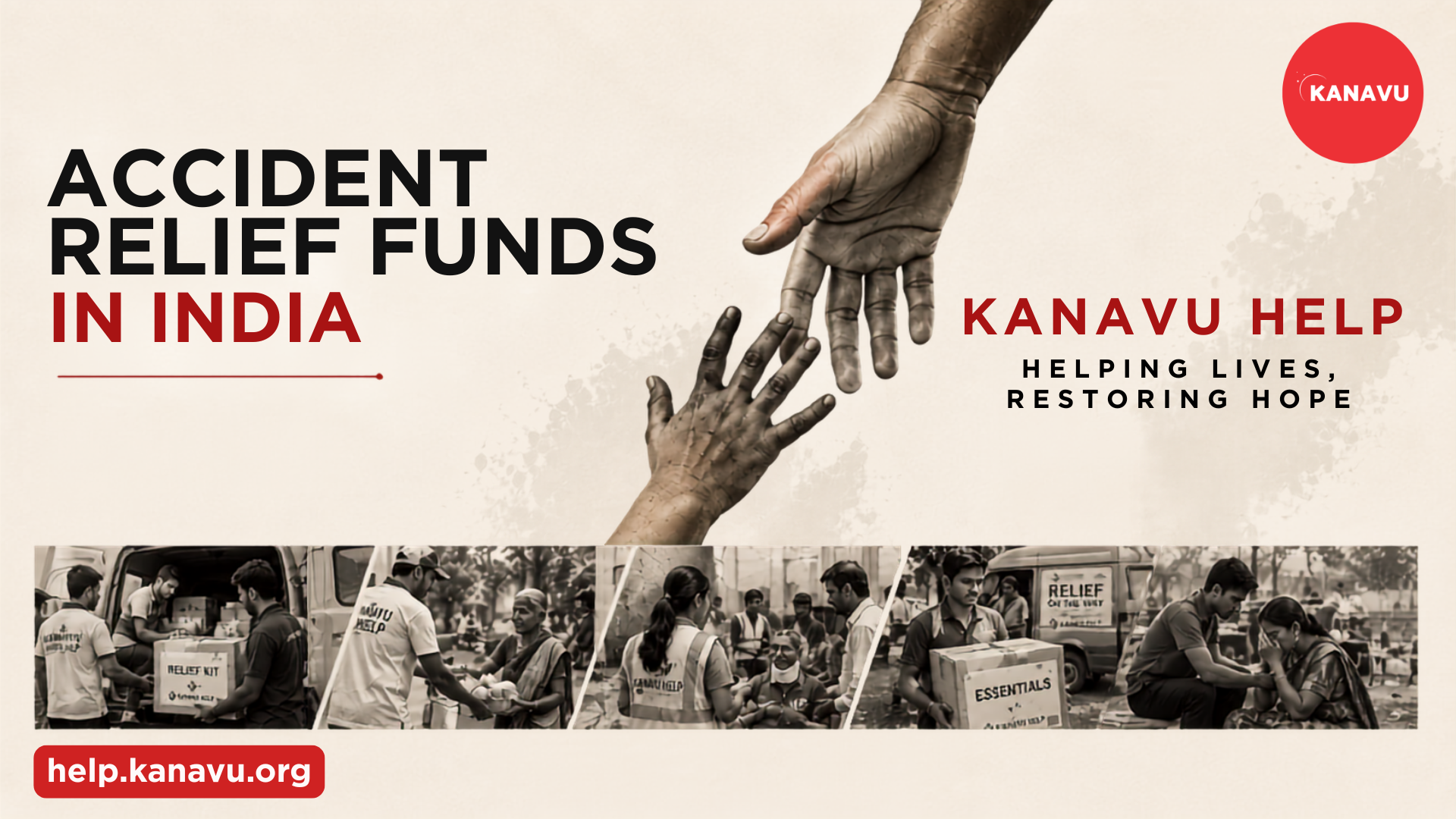
Accident Relief Funds in India: Helping Families Recover After Emergencies A fire, road accident, or sudden disaster can leave families facing unexpected medical costs, property damage, and loss of income. Accident relief funds in India provide financial and emergency assistance to eligible victims and their families. Key Relief Funds in India Prime Minister’s National Relief Fund (PMNRF) The PMNRF provides ex-gratia assistance to families affected by serious incidents, including major fire mishaps. The amount depends on the nature of the incident and government guidelines. SDRF and NDRF The State Disaster Response Fund (SDRF) provides immediate relief for notified disasters, including fires. The National Disaster Response Fund (NDRF) provides additional support when a severe disaster requires assistance beyond state resources. State Accident Relief Schemes State governments may offer additional financial assistance to eligible victims, workers, and economically vulnerable families. Rules and benefits differ between states. PM-RAHAT for Road Accidents The PM-RAHAT Scheme provides cashless treatment of up to ₹1.5 lakh for up to seven days to eligible road mishap victims at designated hospitals. What Should You Do After a Fire or Accident? Finding Additional Support Government assistance may not cover all medical, rehabilitation, rebuilding, or family expenses after an emergency. In such situations, Accident Relief Funds in India can provide support, while Kanavu Help offers another way for individuals and families to seek financial assistance through crowdfunding. For a broader understanding of how crowdfunding can support people facing unexpected challenges, explore this guide on online fundraising in India. If you or your family needs financial support for a genuine emergency, you can also start a fundraiser with Kanavu Help and share your cause with potential donors. Turn Hope Into Help with Kanavu HelpCreate a fundraiser, reach donors, and make a difference when it matters most. A Helping Hand During Emergencies “5,59,612 Funds Raised · 30 Causes · 584 Volunteers · 208 Donors” “Be the reason someone believes tomorrow can be better.” Kanavu Help brings people together when a helping hand matters most. Your support can bring hope, ease a difficult moment, and help someone move forward. Together, even a small act of kindness can make a lasting difference.
How to Donate Online Safely and Make Your Contribution Reach the Right People?
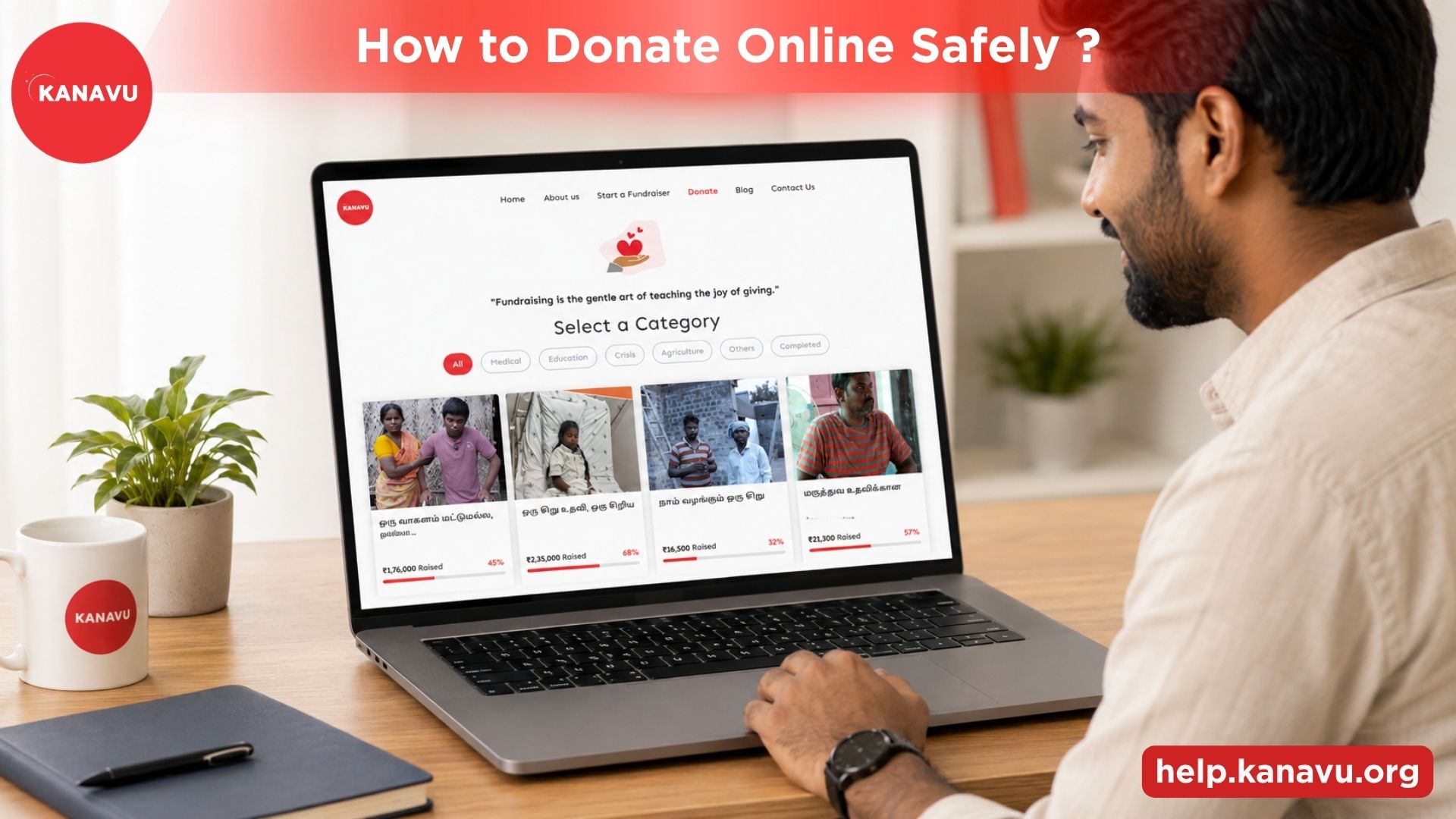
How to Donate Online Safely and Make Your Contribution Reach the Right People? Giving through the internet is an easy way to support a good cause. But before you give, check where your money is going. How to Donate Online Safely starts with checking the organisation and using a secure payment method. If you are planning to raise funds online, understanding how the process works can also help you make informed decisions. Online Fundraising in India Helps People Raise Support for Meaningful Causes explains more about the process. A few simple steps can help your money reach the right people. Why Safe Giving Matters? Digital giving is easy, but not every fundraising request is genuine. Fake websites, copied charity pages, and misleading campaigns can put your money at risk. Checking the organisation first can help you avoid donation scams and give with confidence. How to Donate Online Safely ? Check the Organisation Before Donating Research the charity or fundraiser first. Visit its official website and check its mission, contact details, team, and programmes. Be careful with websites that copy a real organisation’s name or design. Even a small change in the web address can mean it is a fake page. Check the Website Before Payment Before entering your payment details, check the website address. It should begin with https:// and show a lock symbol. It is safer to open the payment page through the organisation’s official website. Avoid unexpected links from emails, messages, or social media. Choose a Secure Payment Method Use trusted payment options such as UPI, credit cards, debit cards, or secure payment gateways. Avoid unusual requests for gift cards, cash, or transfers to unknown accounts. Never share your UPI PIN, card PIN, password, or OTP with anyone. A genuine organisation will not ask for them. Keep Your Payment Records After completing your donation, save the payment confirmation, receipt, and transaction ID. If the organisation provides a donation receipt, keep it safely for your records. Look Beyond the Donation Page A genuine fundraiser should clearly explain who needs help, why funds are needed, and how they will be used. If the information is unclear or the campaign pressures you to act quickly, take time to check it first. Make Your Contribution Count with Kanavu Help Kanavu Help supports children through education, healthcare, and community development. The platform allows people to discover meaningful causes, support fundraisers, and start campaigns. You can also learn more about the organisation in Why Kanavu Help Stands as the Most Trusted Donation Centre in Erode? By choosing trusted charities and using secure payment methods, you can make your contribution with greater confidence. Before giving, pause, verify, and contribute, and keep your transaction records for reference. For more guidance on safe online giving, read What to Know Before You Donate from the Global Cyber Alliance. Frequently Asked Questions
