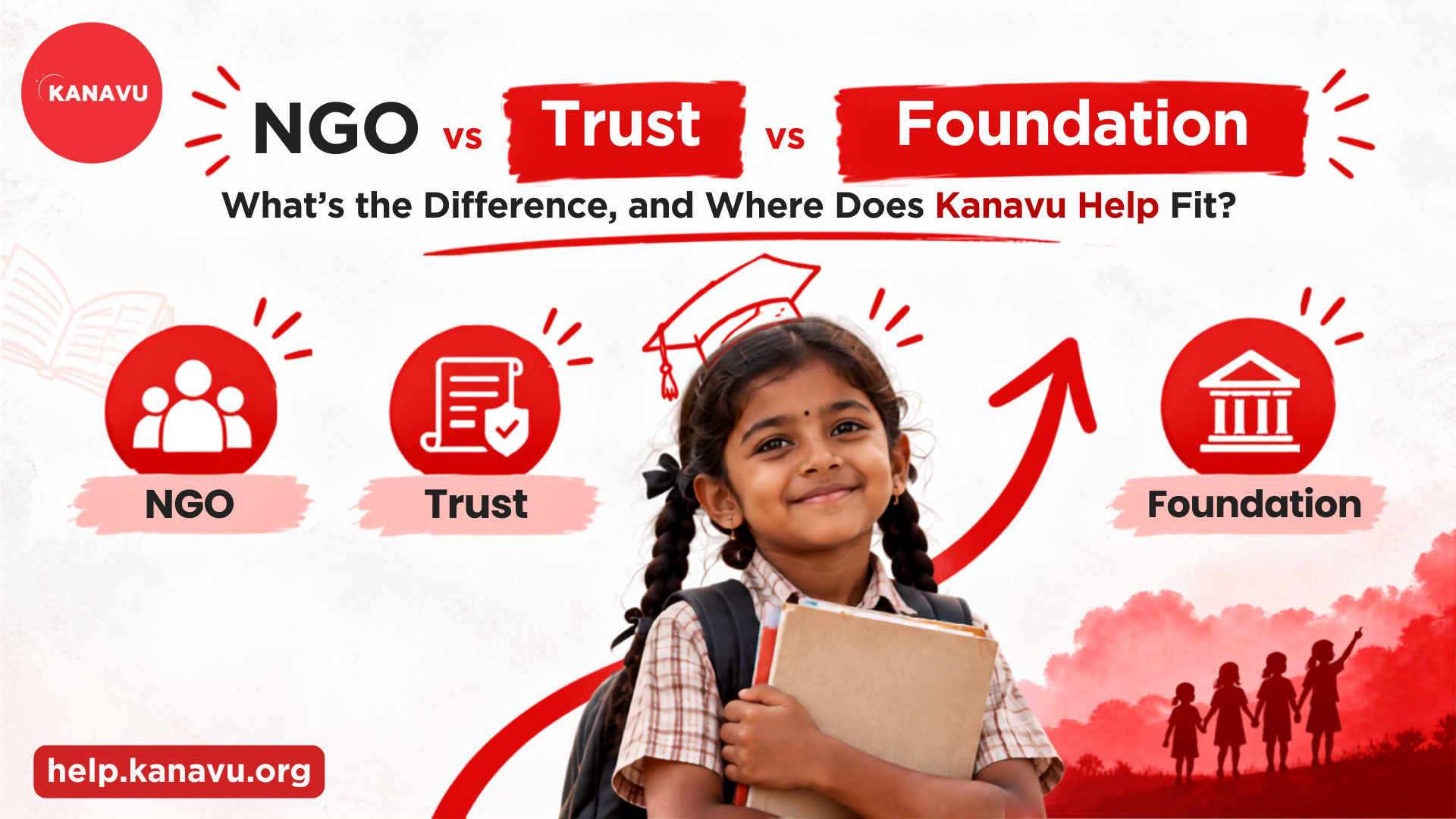
NGO vs Trust vs Foundation: What’s the Difference, and Where Does Kanavu Fit?
When you hear NGO, Trust, and Foundation, the terms may sound similar, but they have different meanings. Knowing the difference makes it easier to understand how organisations support social causes and how Kanavu Help fits into the picture.
What Is an NGO?
An NGO, or Non-Governmental Organisation, is a broad term for an organisation that works independently from government to address social, humanitarian, environmental, educational, or community needs.
An NGO can operate through different legal structures, depending on the country and its registration.
NGOs may work in areas such as:
- Education
- Healthcare
- Disaster relief
- Community development
- Social welfare
- Environmental causes
So, NGO is more about the organisation’s mission and activities than one specific legal structure.
To understand how fundraising works and how real causes receive support, explore How Fundraising Works: Real Stories, Real Impact.
What Is a Trust?
A Trust is a legal arrangement in which trustees manage assets or resources for specific beneficiaries or charitable objectives.
A charitable trust normally operates according to a trust deed that sets out its purpose and administration.
Key features include:
- Managed by trustees
- Created for defined objectives
- Can support charitable activities
- Operates according to its governing trust documents
What Is a Foundation?
A Foundation generally refers to a non-profit organisation established to support charitable or social purposes. Depending on the legal system, foundations may fund projects, provide grants, or operate programmes directly.
A foundation may focus on:
- Funding social initiatives
- Supporting education
- Healthcare programmes
- Community development
- Charitable projects
NGO vs Trust vs Foundation
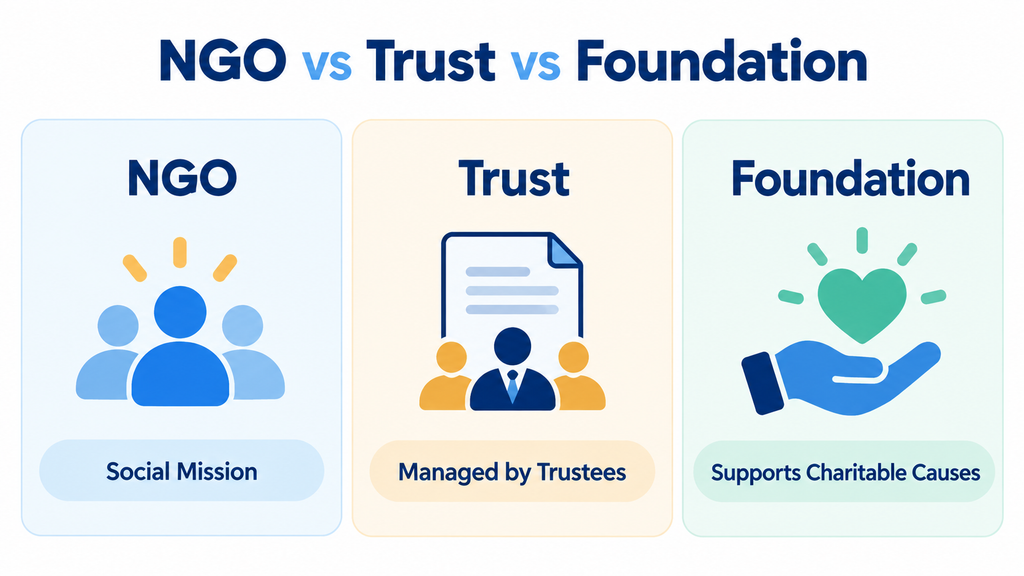
| Type | What It Means | Common Purpose |
| NGO | Broad term for a non-governmental organisation | Social and public benefit |
| Trust | Legal arrangement managed by trustees | Charitable objectives |
| Foundation | Organisation supporting charitable causes | Funding or running social programmes |
Where Does Kanavu Fit?
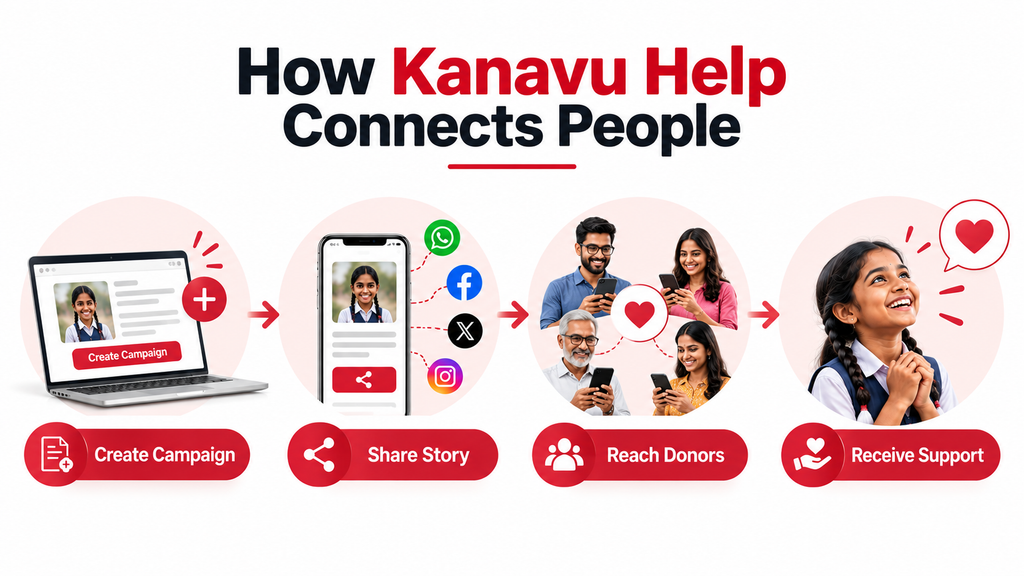
Kanavu Help connects fundraisers with donors through an online platform. People can create campaigns for needs such as education, healthcare, and personal support and share them with potential donors.
KANAVU HELP IN ACTION
Create → Share → Receive Support
Why Does the Difference Matter?
Knowing the difference between an NGO, Trust, and Foundation helps donors understand how organisations operate. Before donating, consider their purpose, legal information, fundraising process, and beneficiaries.
How Kanavu Help Makes a Difference
NGO, Trust, and Foundation describe different organisational concepts, while Kanavu Help connects people who need support with those willing to contribute.
You can also learn how online fundraising can support people facing difficult situations through How the Best Platform for Raising Funds Helped One Family Start Over?
Turning Support Into Action
From education to healthcare, Kanavu Help gives people a simple way to create campaigns, share their stories, and reach donors.
A need creates the cause. A fundraiser shares the story. Donors make a difference.
Frequently Asked Questions
An NGO is a broad term for organisations working for social causes. A Trust is a legal arrangement managed by trustees, while a Foundation generally supports charitable or social initiatives.
A Trust can operate as a non-governmental organisation when it works independently for charitable or social purposes, but the terms do not mean exactly the same thing.
Users can create a campaign, explain their cause, share it with potential donors, and receive contributions through the platform.
Knowing an organisation’s purpose and legal information can help donors make more informed decisions about where they contribute.
For a broader comparison of different NGO structures and their registration and management processes, see Difference in Company, Society and Trust.
