

An accident can bring hospital bills, travel expenses and a sudden loss of income. Financial assistance for accident victims can help families manage these pressures through eligible treatment schemes, insurance and community contributions. Start by identifying immediate costs and checking which support applies. When the person who earns for the family is recovering, the worry can extend beyond hospital bills: “How will we manage groceries, rent and the next hospital visit?” Start With Urgent Care Seek treatment immediately. For road accidents, 112 can help coordinate ambulance assistance and provide information about nearby designated hospitals under PM-RAHAT. Do not postpone care while arranging funds. Once treatment begins, ask the hospital help desk about available coverage and expected expenses. Priority What families can do Treatment costs Request an estimate and check scheme coverage. Insurance Contact the insurer about benefits and claim procedures. Records Keep available bills, reports and incident details together. Family expenses List essential food, travel and household costs. Choose one family member to track expenses and follow up with the hospital. This can reduce confusion and help everyone understand the remaining funding gap. Where Can Families Find Financial Assistance for Accident Victims? Cashless treatment: The government’s PM-RAHAT scheme provides eligible motor vehicle road accident victims with treatment coverage up to ₹1.5 lakh per victim, for a maximum of seven days from the accident date, at designated hospitals. Confirm covered services with the hospital. Other assistance: Ask the district administration whether incident-specific or state assistance applies. Eligibility and benefits differ, so confirm the requirements before applying. For additional context, read Kanavu’s guide to accident relief funds in India. Plan for Recovery Expenses Before discharge, ask the treating team about expected follow-up visits, prescribed medicines and rehabilitation needs. Include these estimates alongside essential household expenses when planning the family’s budget. Review the list as circumstances change. Record confirmed assistance separately from pending requests so the remaining need stays clear. Raising Support for Uncovered Expenses Emergency medical fundraising can help families seek contributions for documented costs that remain uncovered. A clear fundraiser should include: Friends and volunteers can also help with meals, transport and sharing the campaign responsibly. Move Forward With Kanavu Help Kanavu Help enables families to create a fundraiser, share their needs and connect with potential contributors. Funds raised depend on donor participation. Facing unexpected accident expenses? Start a fundraiser with Kanavu Help and let your community understand how they can contribute. FAQs Can families receive cash payments under PM-RAHAT? No, PM-RAHAT provides cashless treatment at designated hospitals rather than direct cash payments. Does every accident qualify for government financial assistance? No, eligibility depends on the accident and the rules of the applicable scheme. Can families start a fundraiser while an insurance claim is pending? Yes, explain the funding gap, disclose the pending claim and update donors when assistance is confirmed.
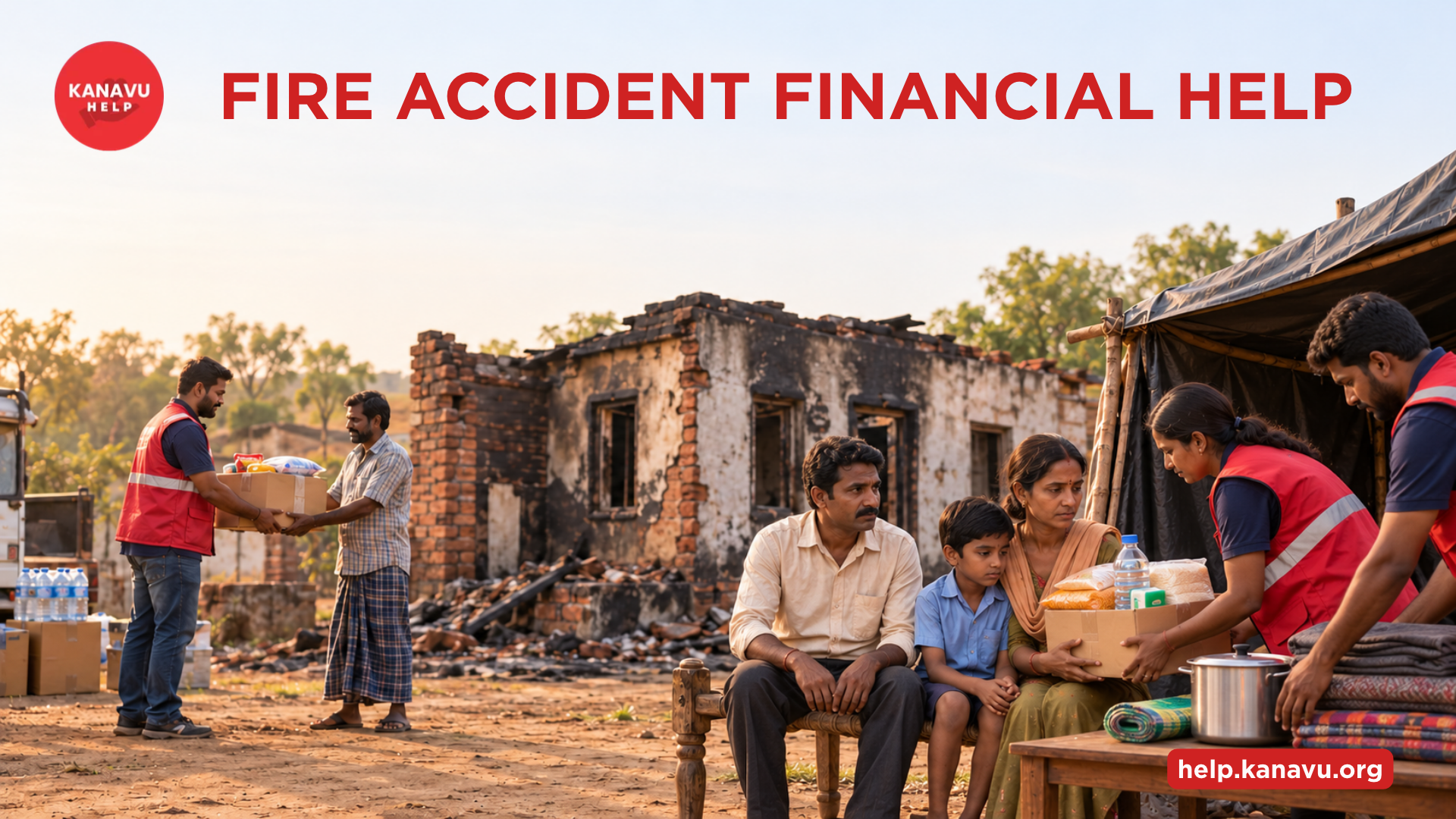
Fire Accident Financial Help: Supporting Families After a House Fire
After a house fire, even ordinary tasks can become difficult. Cooking a meal, getting children ready for school or finding somewhere to sleep may require help. Fire Accident Financial Help can support families with these immediate needs while they work towards a safer, more stable living situation. Recovery begins with making daily life manageable again. What Does a Family Need on the First Night? Once everyone is safe and urgent medical needs are addressed, focus on somewhere secure to stay. Families may need accommodation with relatives, temporary housing or locally arranged shelter. Before collecting supplies, ask: A change of clothes, bedding, drinking water and a ready meal can make the first night more manageable. Coordinate with the family so support matches their needs and avoids duplicate donations. How Can Fire Accident Financial Help Support the Next Steps? Find Out What Relief Applies Contact the local revenue office or district administration for information about damage assessment and fire relief assistance. The Ministry of Home Affairs includes fire among disasters covered by the State Disaster Response Fund. Assistance depends on applicable rules and assessment; payment is not automatic for every house fire. ndmindia.mha.gov.in For background, read Kanavu’s guide to accident relief funds in India. Can Home Insurance Claims After a Fire? If the home or belongings are insured, contact the insurer promptly. Cover for the building, household contents and temporary accommodation depends on the policy; do not assume all three are included. Ask the insurer about: Record losses only when it is safe to do so, and follow the insurer’s instructions. Help to Restore One Daily Routine Community support becomes more useful when it solves a specific problem. For children: Help replace school bags, uniforms or learning materials. For the household: Arrange essential utensils, toiletries or bedding according to available accommodation. For earning members: Ask whether replacing damaged work tools could help them resume their livelihood. Financial assistance after a house fire should reflect the family’s priorities rather than assumptions about what they need. Helping someone rebuild can begin with helping them get through tomorrow. Turn a Needs List Into Community Support with Kanavu For emergency fundraising for families, explain what was lost and identify the expenses still uncovered. Use estimates to set a clear target. Share photographs and supporting records only with consent. Protect personal information and update contributors as needs change or purchases are made. Kanavu Help gives families a way to present their needs and reach potential supporters. Help a family regain its daily routine—contribute, share their fundraiser or offer something they have requested.
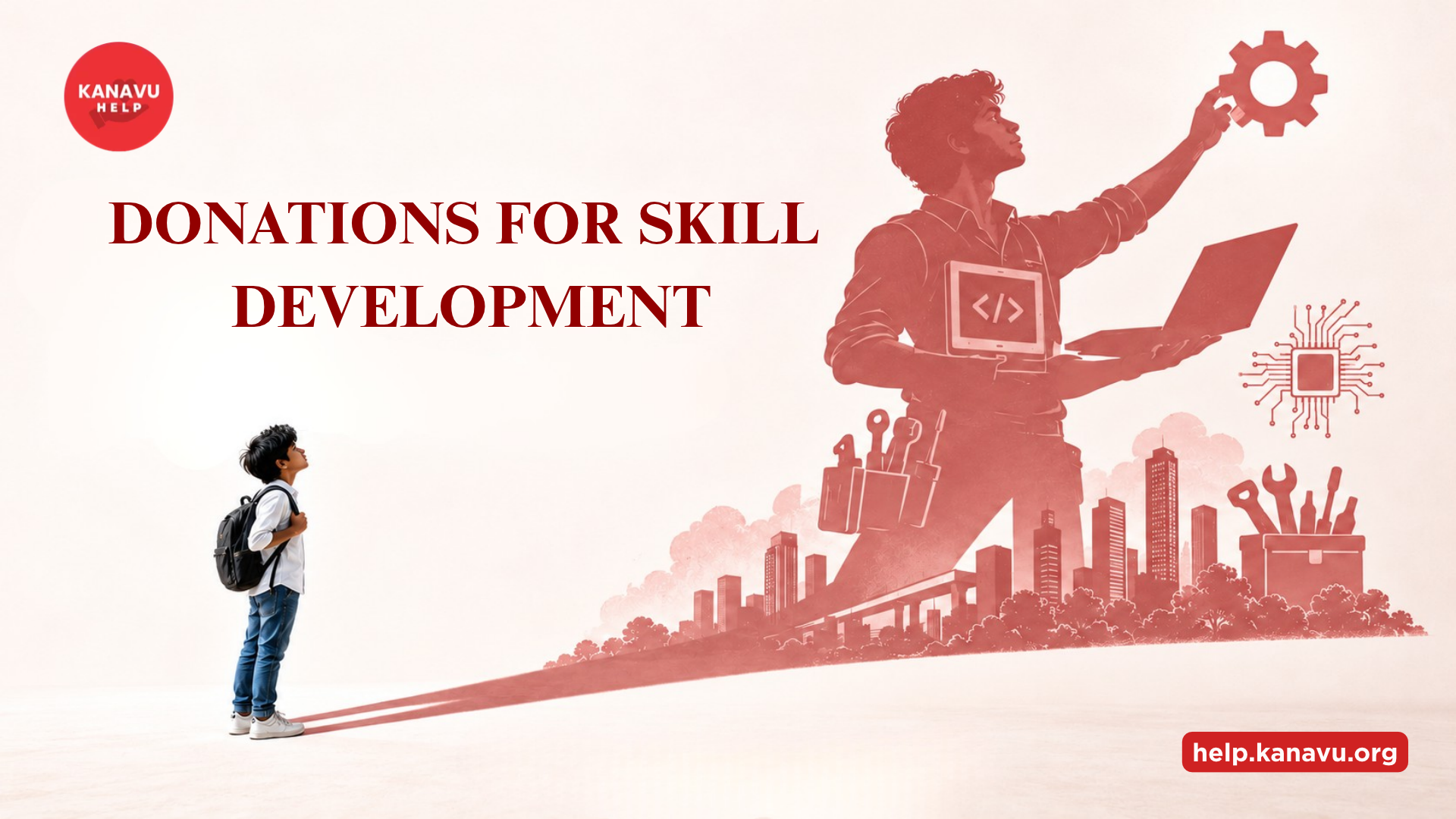
How Can Donations Help for Skill Development Create Better Career Opportunities for Students?
Donations help for skill development by funding vocational courses, practical tools and training expenses. This support helps students practise workplace skills and prepare for career opportunities when money limits their access to learning. The starting point is simple: identify what stands between a student and their next learning opportunity. What Can Your Donation Put Within Reach? A Seat in a Training Course Tools to Practise With A Way to Attend Regularly Before contributing, check the course provider, full cost and available free or subsidised options. Direct financial support for students towards the remaining gap, with a clear purpose for every contribution. How Can Donations Help for Skill Development Build Career Readiness? Useful vocational training support connects learning with tasks students can demonstrate. Support provided What students can practise Computer training Preparing spreadsheets and documents Trade tools Completing supervised practical tasks Communication workshops Explaining ideas and answering interview questions Project materials Creating work samples for a portfolio NSDC’s apprenticeship guidance explains how classroom learning combines with practical workplace training. This connection helps students understand how learning applies at work. ONE NEED. ONE PRACTICAL STEP.Help a learner access the materials needed to finish a project they can proudly demonstrate. What Should Supporters Check? Use these four questions before donating: Career-focused skill development can improve preparation. Employment also depends on ability, available roles and employer requirements. For other learning expenses, read Kanavu’s guide to higher education support beyond tuition fees. Can You Support Skill Development Beyond Donations? A little guidance can help a student feel more confident about entering the workplace. Your support can give them space to ask questions, explore options and take their next step. Support a Student’s Next Step with Kanavu Help . Course fees, practical tools and travel expenses can put skill training out of reach. Through student education fundraising on Kanavu Help, students and families can explain these needs and seek contributions towards their training goals. Explore Kanavu Help to share a learning need or support a fundraiser that clearly explains how contributions will be used. Explore our education fundraising in India guide for more ways to help.

What Educational Resources for Students Are Needed to Succeed in School and College?
Educational resources for students include textbooks, stationery, digital learning tools and study materials that help learners understand lessons and practise independently. The right resources should match the student’s subjects, study level and everyday circumstances. What Should Students Include in Their Everyday Learning Kit? Before buying supplies, start with the school’s requirements or college course outline. Divide the list into three groups: Check existing supplies before replacing them, and confirm textbook editions with teachers. Useful school supplies for students should be suitable, durable and ready when a lesson requires them. If you plan to donate school supplies to children, request a current list first. This helps avoid duplicates and makes each contribution useful. Which Educational Resources for Students Help With Different Study Tasks? “Different study tasks need different resources—from textbooks for understanding concepts to worksheets for practice and flashcards for revision.” Understand → Read and explore Use prescribed textbooks, teacher explanations and selected reference materials that follow the syllabus. Practise → Apply the lesson Keep exercise notebooks, worksheets and practice questions ready. Check answers and revisit mistakes. Investigate → Look beyond the textbook For college assignments, explore library catalogues, academic journals and institution-provided databases. Check authorship and publication details. Revise → Bring learning together Create short summaries, flashcards and a list of difficult topics. Organise study materials for students by subject so revision time goes into learning rather than searching. What Should Students Check Before Choosing Digital Learning Tools? Before choosing digital learning tools, check: DIKSHA’s student resources provides school learning resources and downloadable content. SWAYAM offers online courses with videos, reading materials and self-assessments; optional certification examinations may involve fees. Turn a Resource Gap into a Useful Contribution When you donate for children’s education, begin with what is missing. Contributions can support government school students with identified learning essentials. Student education fundraising can bring donors together around a verified requirement. Similarly, education crowdfunding in India can help families seek contributions towards stated educational expenses. For college needs, read Beyond Tuition Fees. Put Learning Within Reach With Kanavu Help Whether you want to sponsor a child’s education in India, explore a scholarship donation for students, or provide financial support for poor students, check the purpose and process before contributing. For an education donation in Tamil Nadu, explore Kanavu Help and review each campaign’s stated requirement. Your contribution can help provide educational resources for students, one identified need at a time.
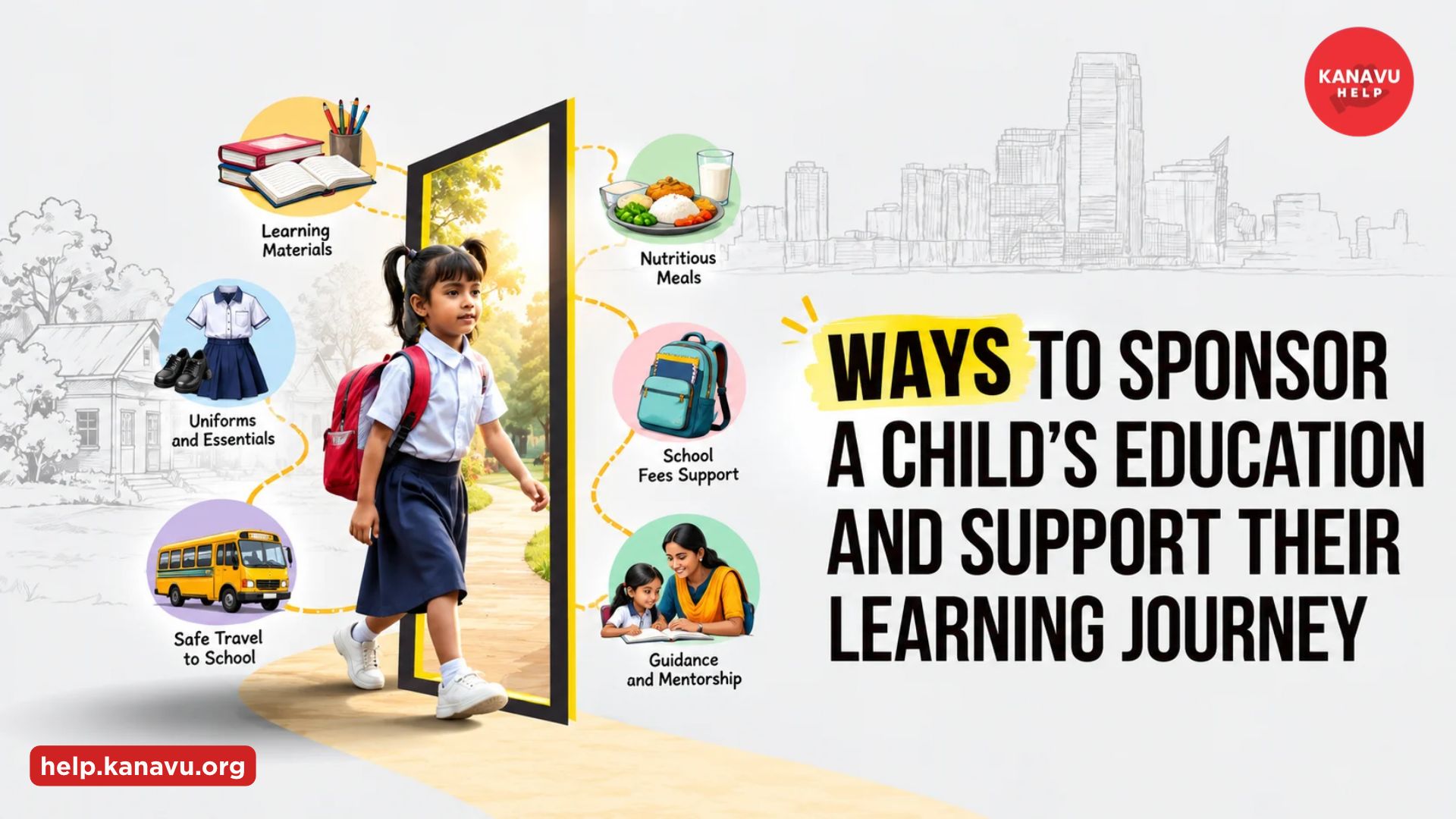
Ways to Sponsor a Child’s Education and Support Their Learning Journey
A new school term brings fresh lessons, but also expenses some families struggle to meet. When you sponsor a child’s education, you can help with essentials such as books, uniforms or transport. The most useful contribution begins with understanding what is missing. A student may have textbooks but need notebooks, or have school supplies but face travel costs. By listening to families and teachers, you can choose support that meets a real need and helps the student continue their learning journey. Start With the Missing Piece Before contributing, ask the school or organisation: These questions help avoid duplicate purchases and direct educational sponsorship towards an unmet need. explore our guide to education fundraising in India and the different ways to support students. Five Practical Ways to Sponsor a Child’s Education 1. Help With School Expenses Contribute towards verified fees or other necessary school costs. Where possible, check the amount, payment deadline and supporting documents before donating. 2. Put Learning Materials Within Reach A useful contribution could include: Ask for a current requirements list so that your donation matches the student’s class and syllabus. 3. Support the Journey to School For families facing transport expenses, reaching the classroom can be another financial concern. Contributing towards an identified transport requirement is one way to support children’s education beyond books and fees.4 4. Make Room for Learning Support Some students may need additional reading practice, subject guidance or access to suitable digital resources. Coordinate with teachers to understand the learning gap before funding classes, devices or materials. 5. Bring a Small Group Together Friends, colleagues or neighbours can share a verified educational expense. Agree on a clear target, nominate one coordinator and keep contribution records accessible to everyone involved. Make Your Support Thoughtful Thoughtful support starts with understanding a student’s needs and choosing a contribution you can sustain. Whether you help with school expenses or learning materials, these four principles can guide your giving while respecting the child’s dignity and privacy. Turn Your Intention Into Action With Kanavu Help If you are exploring an education donation in Tamil Nadu, Kanavu Help’s published guidance describes school-identified requests for expenses such as fees, uniforms and transport. Review each campaign’s stated requirement before contributing. help.kanavu.org Explore Kanavu Help for ways to sponsor a child and choose an educational need you can help fulfil. A thoughtful contribution can help a student take their next step in learning. SourcesKailash Satyarthi Children’s Foundation (KSCF)
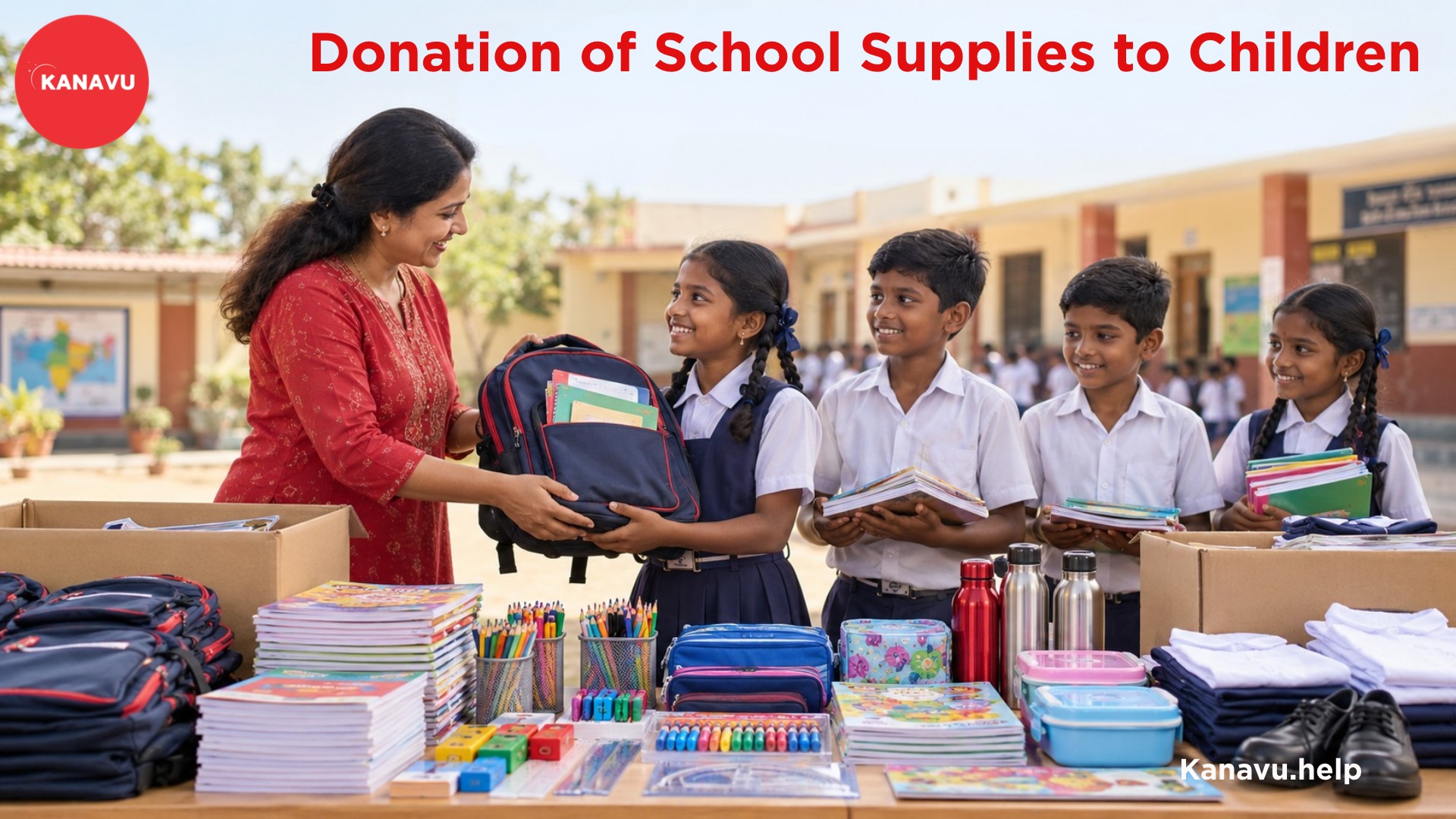
How to Donate School Supplies to Children in Need of Educational Resources
Every child needs basic school supplies to learn effectively. However, some families struggle to afford notebooks, stationery, school bags and textbooks. Choosing to donate school supplies to children can help reduce this burden and provide students with essential learning materials. Explore more about education fundraising and support for children to understand how community contributions can help students access essential learning resources. Why School Supplies Matter? School supplies help children complete assignments, participate in classroom activities and develop good study habits. Without these essentials, students may find it difficult to follow lessons and complete their homework. Providing learning materials can help children participate more confidently in their education. What School Supplies Can You Donate? Before donating, consider the everyday items students need throughout the academic year. School supplies How they help children Notebooks and writing materials Help students take notes and complete assignments. School bags Allow children to carry books and stationery safely. Textbooks and workbooks Support classroom learning and revision. Geometry boxes and rulers Geometry boxes and rulers Help students complete mathematics and geometry activities. Help students complete mathematics and geometry activities. Choose clean, good-quality supplies suitable for the children’s ages and school requirements. Steps to Donate School Supplies to Children 1. Contact Local Schools or Organisations: Reach out to schools or trusted educational organisations to identify children who need school supplies. 2. Identify Essential Supplies: Ask which materials, such as notebooks, stationery, textbooks and school bags, students need most. 3. Collect School Materials: Gather suitable supplies from individuals, friends or community groups to support children’s educational needs. 4. Check the Quality of Supplies: Ensure all donated items are clean, usable and appropriate for the children’s age groups. 5. Ensure Proper Distribution: Confirm how the supplies will be distributed so that the donated materials reach the children who need them. These steps can help ensure donations reach children who need educational support. The Impact of School Supply Donations on Students School supply donations help support government school students by providing essential learning materials and reducing educational expenses. Through an education donation in Tamil Nadu, individuals can donate for children’s education by contributing useful school supplies. Community collection drives also encourage education fundraising and help more children access the resources they need. Every school supply donation can help a child prepare for learning. How Can You Make Your Donation Meaningful? Identify the school supplies children need most and work with trusted organisations to ensure donations reach the right students. You can donate for children’s education by contributing essential learning materials or participate in education fundraising initiatives. Through Kanavu Help, you can explore fundraising opportunities that encourage community support for educational needs and help support government school students in accessing essential learning resources. You can also explore ways to support education initiatives in rural India through school supplies, learning materials and community support. FAQs 1. What school supplies can I donate to children? You can donate notebooks, pens, pencils, school bags, textbooks and other essential learning materials. 2. Where can I donate school supplies? Contact local schools or trusted educational organisations to learn about their requirements and donation procedures. 3. How do school supply donations help children? They help students access essential learning materials, complete schoolwork and participate in classroom activities. Sources Namma School Namma Ooru
Education Crowdfunding in India: Helping Students Overcome Financial Barriers
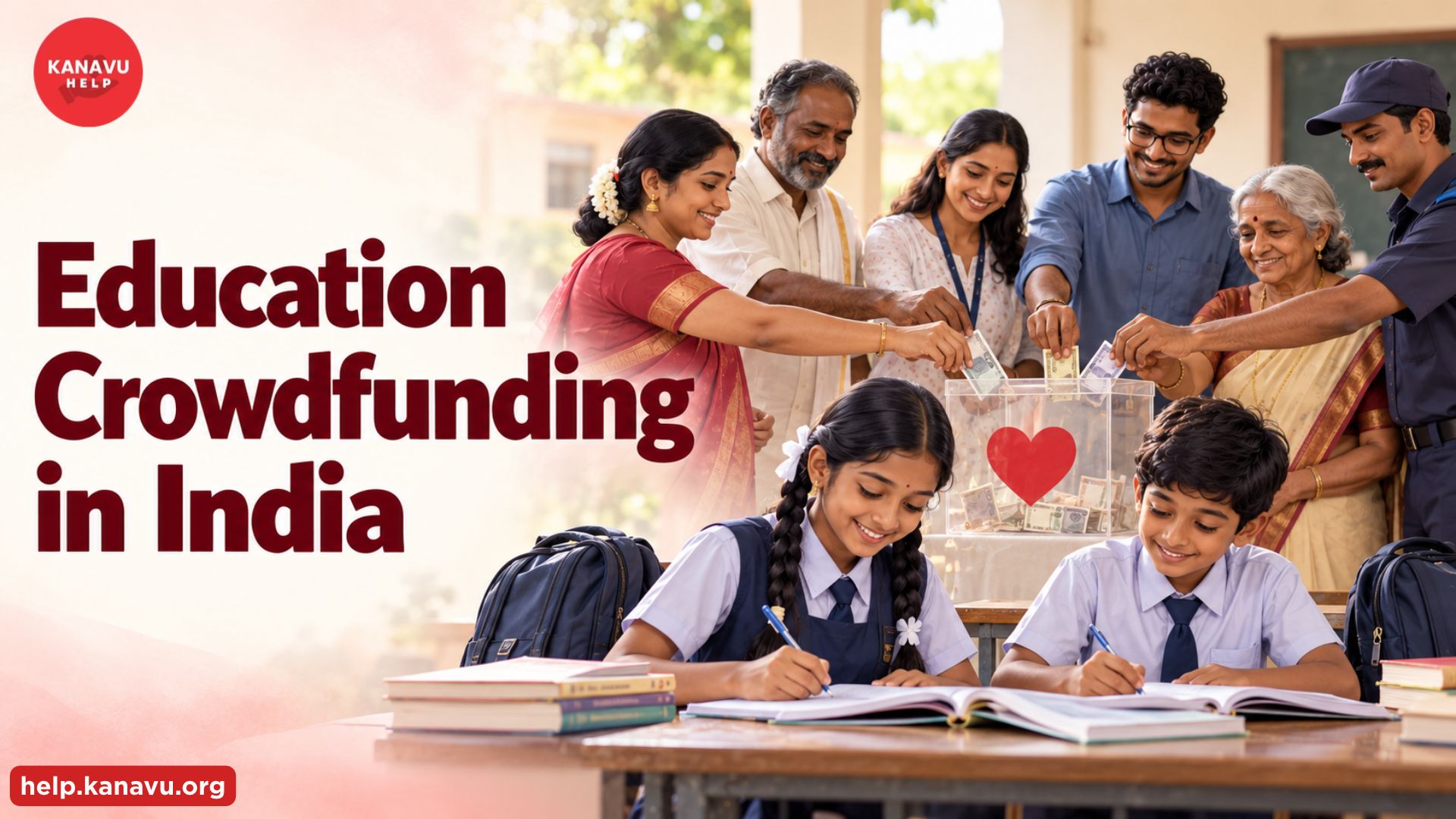
Education crowdfunding in India helps students raise funds for tuition fees, books and other educational expenses through contributions from multiple supporters. It provides a way to seek financial support for poor students when families cannot meet these costs alone. For a family managing a tight budget, even one semester’s fees can be challenging. Smaller contributions from a wider community can help meet that need. What Is Education Crowdfunding? Education crowdfunding means collecting contributions from a group of people to support a student’s educational needs. Student education fundraising starts with an online campaign explaining who needs help, the amount required and how the funds will be used. People can donate and share the appeal within their communities. For example, a fundraiser may help cover one semester’s fees or essential study materials. Explore more ways communities can support students in our guide to education fundraising in India. What Can Contributions Support? Depending on the campaign and platform requirements, education fundraising may cover: Educational Need What Contributions Can Cover How It Helps Students Tuition Fees School fees, college semester fees and examination fees Helps students continue their studies and appear for exams Study Materials Textbooks, notebooks, stationery and required reference books Provides resources for lessons, assignments and exam preparation Uniforms and Essentials School uniforms, footwear and school bags Helps students attend school with everyday essentials Course Equipment Calculators, drawing tools, lab kits or required digital devices Supports practical work and course-related learning Transport Bus passes and travel expenses between home and the institution Helps students reach classes regularly Accommodation Essential hostel fees for students studying away from home Helps students access education beyond their hometown One student’s educational need can become a shared community effort. Here’s how smaller contributions can add up. Trust Grows When Supporters Can Follow the Progress Responsible education fundraising makes the need understandable and the use of contributions visible. Show the requirement: Provide relevant fee notices and estimates. Respect privacy: Obtain consent and protect sensitive details. Share official links: Direct supporters to the campaign page. Close the loop: Post updates after payments or purchases. Crowdfunding outcomes are uncertain. Families should also explore scholarships and institutional assistance. Our guide to higher education support explains other options students can consider. Families can also explore scholarships, education loans and other assistance through our guide to higher education support. Take the Next Step with Kanavu Help Every student deserves an opportunity to learn without financial difficulties standing in the way. Community support and responsible fundraising can help students move closer to their academic goals. Kanavu Help offers a way to explore fundraising initiatives and support meaningful causes. By choosing appropriate campaigns and learning how to support students’ education, donors can contribute towards creating better learning opportunities. Every contribution, when directed towards a genuine need, can help make a student’s educational journey a little easier. Explore Education Fundraisers on Kanavu Help and contribute what you can. Sources:

How Can Donations for Girls’ Education Help More Students Continue Their Studies?
Education helps girls build confidence, develop skills, and explore better career opportunities. However, financial difficulties can prevent many from continuing their studies. Expenses such as fees, uniforms, books, and transportation can burden families with limited incomes. Donations for girls’ education can reduce these barriers and help more students continue learning. Explore more ways to support students through Education fundraising in India, including school supply donations, educational sponsorships, and skill development initiatives. How Do Financial Challenges Affect Girls’ Education? For some families, educational expenses go beyond school fees. The cost of books, transportation, and examination fees can make it difficult for girls to continue attending school. Financial support for girls education can help families manage these expenses and give students a better chance of completing their studies. How Can Donations Support Girls at Different Stages? Educational needs change as students progress from school to higher education. Contributions can address these needs in different ways. Educational Stage Common Need How Donations Can Help School education Books, uniforms, and stationery Help provide essential learning materials Secondary education Examination fees and transportation Reduce barriers to regular attendance Higher education College fees and study resources Help eligible students pursue further studies Individuals can donate for children’s education to support essential learning needs. Similarly, a scholarship donation for students can help eligible girls access further educational opportunities. Community Fundraising for Better Educational Access Community fundraising helps girls continue their studies by bringing together contributions from people who want to support education. Through education crowdfunding in India, multiple donors can collectively help cover tuition fees, school supplies, transportation, and other essential educational expenses. Depending on the campaign’s purpose, these contributions can reduce the financial burden on families and help students continue their education. Before donating, individuals should review the campaign details to understand the students’ needs and how the funds will be used. Kanavu Help’s Role in Supporting Girls’ Education Kanavu Help connects donors with campaigns that support girls facing financial barriers to continuing their education. Through education crowdfunding in India, families can seek support for educational expenses, while a scholarship donation for students can help make further studies more accessible. People looking for girls’ education financial support can explore relevant campaigns on Kanavu Help. They can also donate for children’s education and share campaigns to encourage wider community support. To learn more about how Kanavu Help supports students facing financial difficulties in continuing their education, you can also read this story about educational support for government school students FAQs 1. How can donations help girls continue their education? Donations can help cover tuition fees, books, uniforms, transportation, and other essential educational expenses. 2. How can I contribute to girls’ education in India? You can support education-related fundraising campaigns, contribute towards school supplies, or fund eligible students’ scholarships. 3. How can Kanavu Help support girls’ education? Kanavu Help allows people to explore fundraising campaigns and contribute towards educational and other essential needs.

Education Fundraising in India: Ways to Support Students and Improve Access to Education
1. How to Donate School Supplies to Children in Need of Educational Resources Learn how Education Fundraising in India can help children access the resources they need to learn, by donating books, stationery, school bags, and other essentials. 2. How Can Donations for Girls’ Education Help More Students Continue Their Studies? Learn how contributions can help girls from financially disadvantaged families access educational opportunities and continue their schooling. 3. Education Crowdfunding in India: Helping Students Overcome Financial Barriers Additionally, learn how Education Fundraising in India can support students funding tuition, study materials, and other educational expenses through crowdfunding. 4. Ways to Sponsor a Children and Support their Learning Journey Understand how educational sponsorship can help children from low-income families continue their studies and access essential learning resources. 5. What Educational Resources for Students Are Needed to Succeed in School and College? Discover the books, stationery, digital learning tools and study materials students need to support their learning and academic progress. 6. How Can Donations Help for Skill Development Create Better Career Opportunities for Students? Additionally, Discover how Education Fundraising in India can help students access vocational courses, practical training, and career-focused skill development. Also read Student Scholarship Support in Tamil Nadu

Before You Donate: Tips for Spotting Charity Fraud When Donating
Donating to a good cause can support children, patients, and families in need. However, fake charities and misleading fundraising campaigns can misuse people’s generosity. These tips for spotting charity fraud will help you recognise warning signs, check whether a fundraiser is genuine, make secure payments, and understand what to do if you suspect a scam. Understanding Charity Fraud Charity fraud occurs when someone misleads donors about an organisation, beneficiary, or the purpose of collecting money. Scammers may copy genuine organisations’ details or create fake fundraising campaigns. These schemes can appear on social media, messaging apps, and websites offering charity online donation. Warning Signs to Look for Before Donating Recognising the signs of charity fraud can help you identify suspicious fundraising appeals before sending money How to Verify a Charity or Fundraising Campaign? Before donating through Kanavu Help or another fundraising platform, take a few minutes to review the campaign and its organiser. Check the organisation’s identity: Look for its official website, contact information, and relevant registration details where applicable. Review the campaign details: Understand why funds are being collected, who will benefit, and how the money is expected to be used. Look for supporting information: Check relevant documents, independent information, or campaign updates where available. Confirm the payment recipient: Make sure the recipient details are consistent with the fundraiser’s explanation. Ask questions if anything seems unclear. Safe Practices for Online Donations A few simple precautions can help protect your money and personal information. If you are need to know safer ways to donate read How to Donate Online Safely Make Every Donation Count Charity fraud should not discourage people from helping those in need; instead, it highlights the importance of donating responsibly. By checking campaign details and recognising the signs of charity fraud, donors can make more informed decisions. Kanavu Help provides a platform to explore fundraising campaigns and learn about causes that need support. When using an online donation platform in India or making a charity donation online, review the campaign details and organiser information carefully before contributing. A small check before donating can help you give with greater confidence. Sources Also read Kanavu Help from Origins to Today’s Impact
