
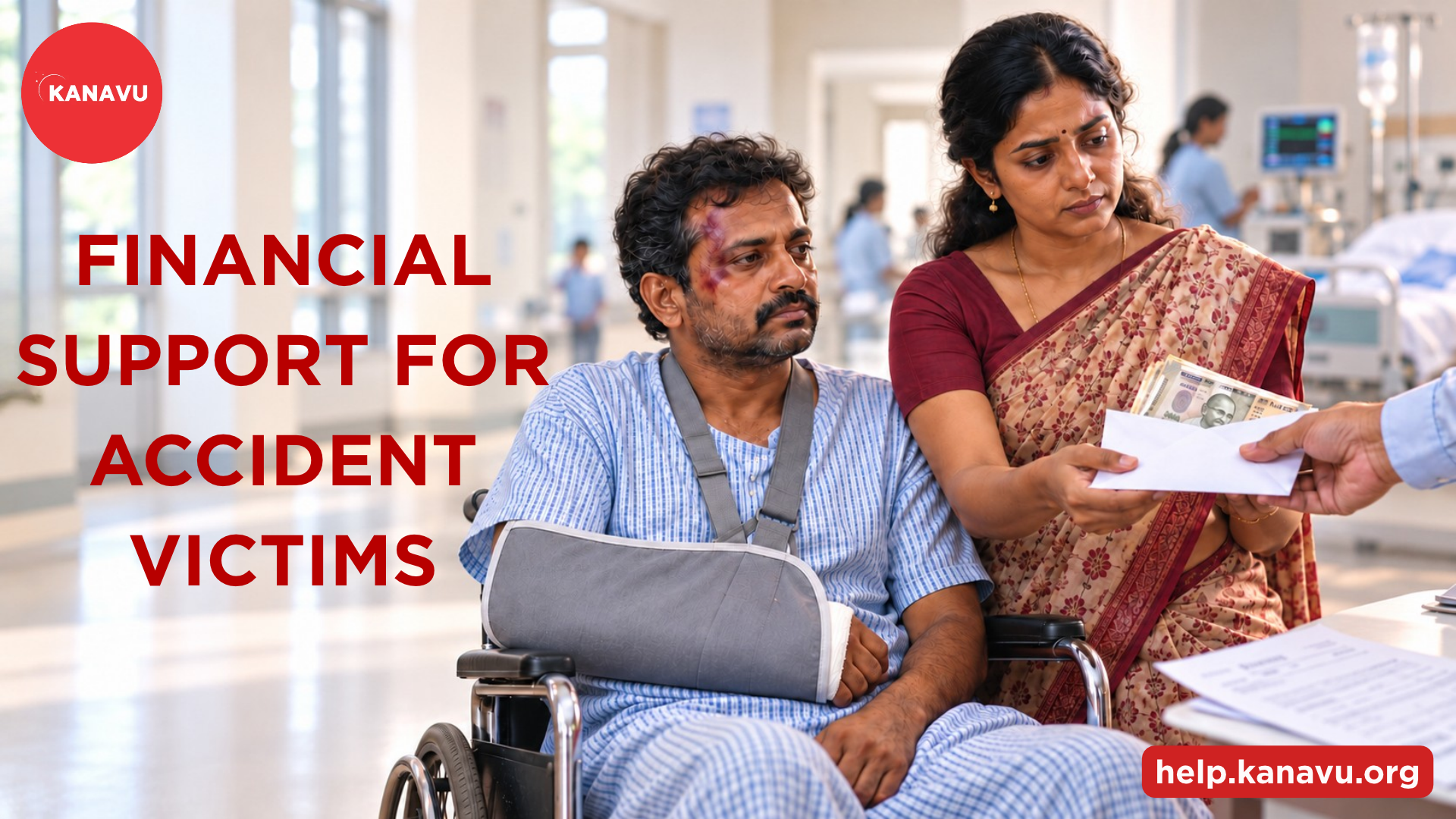
An accident can bring hospital bills, travel expenses and a sudden loss of income. Financial assistance for accident victims can help families manage these pressures through eligible treatment schemes, insurance and community contributions. Start by identifying immediate costs and checking which support applies.
When the person who earns for the family is recovering, the worry can extend beyond hospital bills: “How will we manage groceries, rent and the next hospital visit?”
Start With Urgent Care
Seek treatment immediately. For road accidents, 112 can help coordinate ambulance assistance and provide information about nearby designated hospitals under PM-RAHAT. Do not postpone care while arranging funds.
Once treatment begins, ask the hospital help desk about available coverage and expected expenses.
| Priority | What families can do |
| Treatment costs | Request an estimate and check scheme coverage. |
| Insurance | Contact the insurer about benefits and claim procedures. |
| Records | Keep available bills, reports and incident details together. |
| Family expenses | List essential food, travel and household costs. |
Choose one family member to track expenses and follow up with the hospital. This can reduce confusion and help everyone understand the remaining funding gap.
Where Can Families Find Financial Assistance for Accident Victims?
Cashless treatment: The government’s PM-RAHAT scheme provides eligible motor vehicle road accident victims with treatment coverage up to ₹1.5 lakh per victim, for a maximum of seven days from the accident date, at designated hospitals. Confirm covered services with the hospital.
Other assistance: Ask the district administration whether incident-specific or state assistance applies. Eligibility and benefits differ, so confirm the requirements before applying.
For additional context, read Kanavu’s guide to accident relief funds in India.
Plan for Recovery Expenses
Before discharge, ask the treating team about expected follow-up visits, prescribed medicines and rehabilitation needs. Include these estimates alongside essential household expenses when planning the family’s budget.
Review the list as circumstances change. Record confirmed assistance separately from pending requests so the remaining need stays clear.
Raising Support for Uncovered Expenses
Emergency medical fundraising can help families seek contributions for documented costs that remain uncovered.
A clear fundraiser should include:
- A brief explanation of the accident and current needs.
- A funding target based on available estimates.
- Relevant documents shared with consent and sensitive details hidden.
- Updates explaining contributions received and expenses paid.
Friends and volunteers can also help with meals, transport and sharing the campaign responsibly.
Move Forward With Kanavu Help
Kanavu Help enables families to create a fundraiser, share their needs and connect with potential contributors. Funds raised depend on donor participation.
Facing unexpected accident expenses? Start a fundraiser with Kanavu Help and let your community understand how they can contribute.
FAQs
Can families receive cash payments under PM-RAHAT?
No, PM-RAHAT provides cashless treatment at designated hospitals rather than direct cash payments.
Does every accident qualify for government financial assistance?
No, eligibility depends on the accident and the rules of the applicable scheme.
Can families start a fundraiser while an insurance claim is pending?
Yes, explain the funding gap, disclose the pending claim and update donors when assistance is confirmed.
