

Digital payment apps making donations easier across India Donating money or resources to a cause you care about has never been easier. With the rise of digital donation apps in India, people can contribute to charities, NGOs, and community initiatives right from their smartphones. The process is quick, transparent, and accessible to anyone with an internet connection. Whether it’s helping during a natural disaster, funding education for underprivileged children, or supporting animal welfare, these apps have made giving more convenient than ever. How digital payment apps changed the donation process ? In the past, making donations often involved visiting an office, writing cheques, or dealing with lengthy bank transfers. Today, technology has simplified this process. A few taps on your phone are all it takes to send funds directly to an organization. These apps not only make transactions faster but also provide instant receipts and records, making the process more trustworthy and accountable. At the same time, organizations are learning smart tips to encourage donor support in crowdfunding for social causes, helping them build stronger connections with supporters and increase participation in online giving initiatives. Popular platforms making an impact Several well-known platforms in India have transformed how people contribute to causes. Apps like Paytm, Google Pay, PhonePe, and Razorpay have integrated donation options directly into their systems. Many NGOs also have their own dedicated apps for fundraising. The user-friendly interface, secure payment gateways, and instant confirmations give donors peace of mind while ensuring funds reach the intended recipients without delay. Transparency and trust in giving One of the most important features of these platforms is the ability to track where your money goes. Many apps now provide updates on how donations are used. For example, if you donate to a food relief program, you might receive updates showing how many meals your contribution helped fund. This level of transparency helps build long-term trust between donors and organizations. For new donors, a simple guide to online fundraising, donating, and campaign tracking can help them better understand how digital giving works and how to monitor the impact of their contributions. Growing role of digital donation apps in India Mobile technology has extended the reach of charitable giving to remote corners of the country. People living in smaller towns and villages can now support causes they care about without traveling long distances. Many platforms also support multiple languages and payment options, including UPI, debit cards, and net banking. This flexibility ensures that anyone, regardless of location or financial background, can participate in charitable activities. Encouraging small but consistent giving One of the biggest benefits of these apps is the ease of making small contributions. Even if someone can only afford to donate ₹10 or ₹20, it can still make a difference when combined with thousands of other small contributions. Apps often allow recurring donations, enabling individuals to commit to monthly giving without extra effort. Over time, this creates a steady flow of funds for organizations to plan and sustain their projects. This is why a small donation can create a lasting impact, especially when many people come together to support a meaningful cause. Security and ease of use When it comes to money, security is critical. These platforms use advanced encryption and secure servers to protect user data. Two-factor authentication and UPI PINs add an extra layer of safety. At the same time, interfaces are designed to be simple so that even first-time users can donate without confusion. Clear navigation, minimal steps, and visible confirmation messages make the process stress-free. The future of digital giving in India As smartphone usage and internet access continue to grow, digital donations are likely to become even more common. Artificial intelligence and data analytics could help personalize giving by recommending causes based on a donor’s interests. Integration with social media will also allow donors to share their contributions, inspiring others to give. With these advancements, charitable giving will not only be more convenient but also more impactful. In the end, the shift to digital donation apps in India is about more than just technology – it’s about making generosity a part of everyday life. By removing barriers like distance, complex paperwork, and slow processing times, these apps have made it possible for anyone to contribute to a better society with just a few clicks. The combination of trust, convenience, and accessibility is set to keep digital giving on the rise.
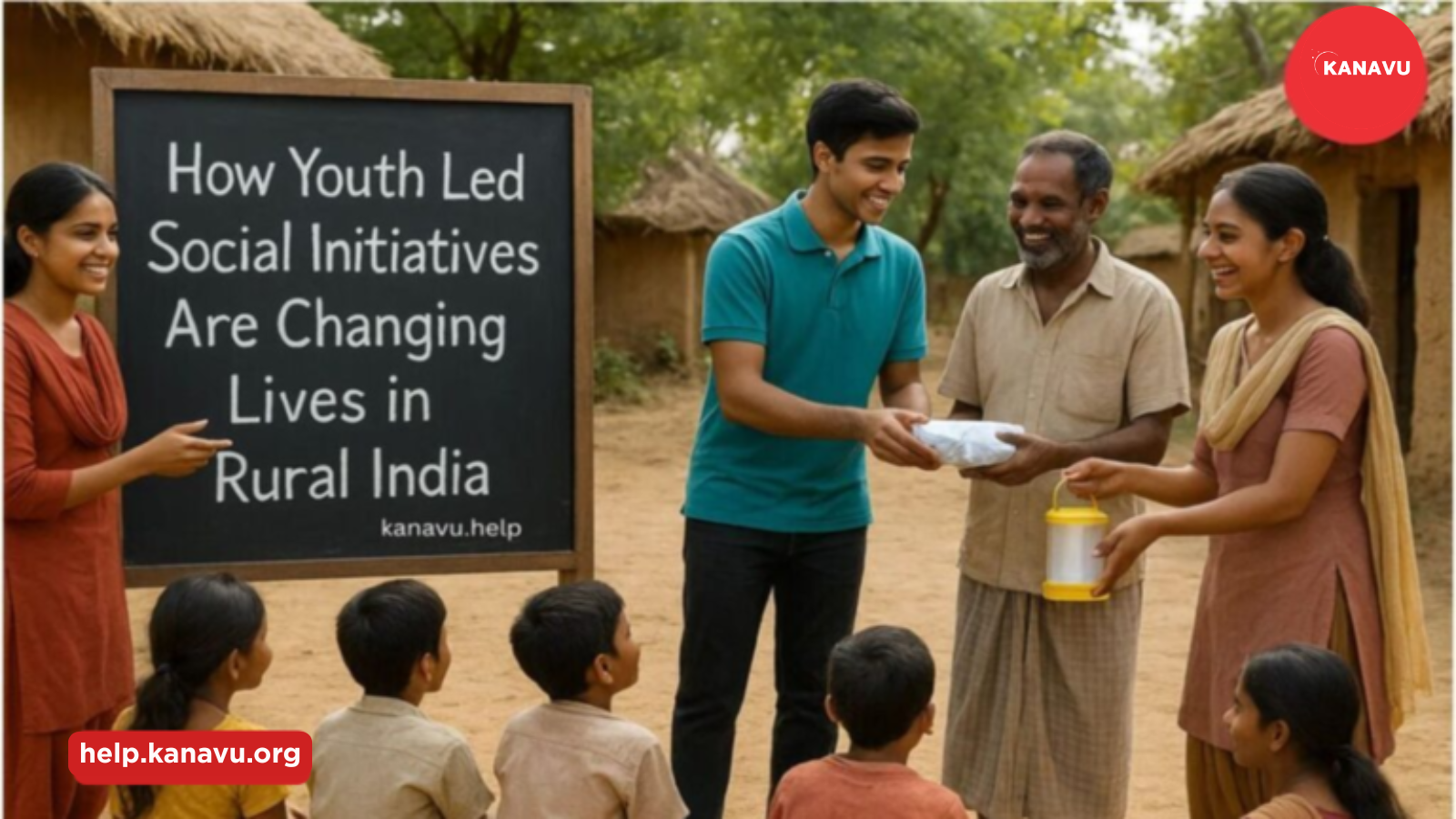
How Youth Led Social Initiatives Are Changing Lives in Rural India
How youth led social initiatives are changing lives in rural india Across the heartlands of India, a quiet revolution is unfolding. It is not powered by major organizations or government schemes, but by determined young individuals. These changemakers are proving that youth led social initiatives in rural India are not just idealistic experiments—they are reshaping communities, transforming livelihoods, and redefining what leadership looks like in the 21st century. In many cases, their efforts are also inspiring community growth through volunteering in India, where local people come together to support meaningful change. The Rise of Purpose-Driven Youth Today’s youth are more connected, informed, and socially aware than ever before. With access to education, technology, and inspiration from global platforms, many are choosing to stay back in their villages—or return after studying in cities—to solve problems their communities face. From education and sanitation to digital literacy and climate action, these young leaders are addressing critical gaps with passion and innovation. They often use limited resources creatively, forming grassroots groups that deliver long-term impact without heavy funding. Why Youth Led Social Initiatives in Rural India Matter At the core of youth led social initiatives in rural India is one powerful truth: local problems are best solved by local minds. Young changemakers understand the culture, language, and emotional pulse of their communities better than external agents. They bring fresh perspectives to deep-rooted challenges. Whether it’s launching mobile libraries in remote areas, teaching girls about menstrual hygiene, or setting up organic farms using sustainable practices, these efforts are personal, relevant, and deeply impactful. Many of these initiatives also contribute to community progress through women empowerment programs in India, helping women gain confidence, education, and leadership roles within their villages. Examples of Transformative Youth-Led Action 1. Empowering Girls Through Education In parts of Bihar and Rajasthan, youth-run education circles are helping bridge gender gaps in learning. Young women are mentoring girls to stay in school, pursue higher education, and challenge early marriage customs. 2. Clean Energy Awareness in Tribal Regions A group of engineering students from Jharkhand launched a solar literacy campaign. They introduced affordable solar lamps in villages lacking electricity and trained locals on maintenance. The result? Safer homes, better study environments, and new micro-enterprises. 3. Agricultural Innovation by Youth Collectives In Maharashtra, a youth farming collective introduced organic pest control techniques and improved crop cycles. These methods increased yields while preserving soil health, boosting both income and environmental sustainability. These are just a few examples. Thousands of similar stories exist across the country—quiet but powerful. Building the Future: Rural Leadership Starts Young To create sustainable change, we need to support and nurture these young leaders. Programs that offer mentorship, seed funding, and visibility can amplify their reach. Encouraging storytelling and recognition at local, state, and national levels can also motivate more youth to step forward, as storytelling as a path to healing and connection in Indian communities helps share experiences, inspire empathy, and unite people around meaningful change. Importantly, schools and colleges must promote problem-solving beyond academics. When students are taught to observe, question, and act early on, they become lifelong agents of transformation. Conclusion: A Movement Taking Root The momentum of youth led social initiatives in rural India is unstoppable. With each project, these young heroes are not just solving local issues—they are inspiring a generation to believe in the power of grassroots change. They prove that leadership doesn’t require a title, only a commitment to serve. As more young minds rise to meet their communities’ challenges, rural India is quietly but steadily stepping into a brighter, self-sustained future. Whether in a remote hill village or a dusty farming hamlet, change is not coming—it is already here, carried on the shoulders of the youth who dare to lead.
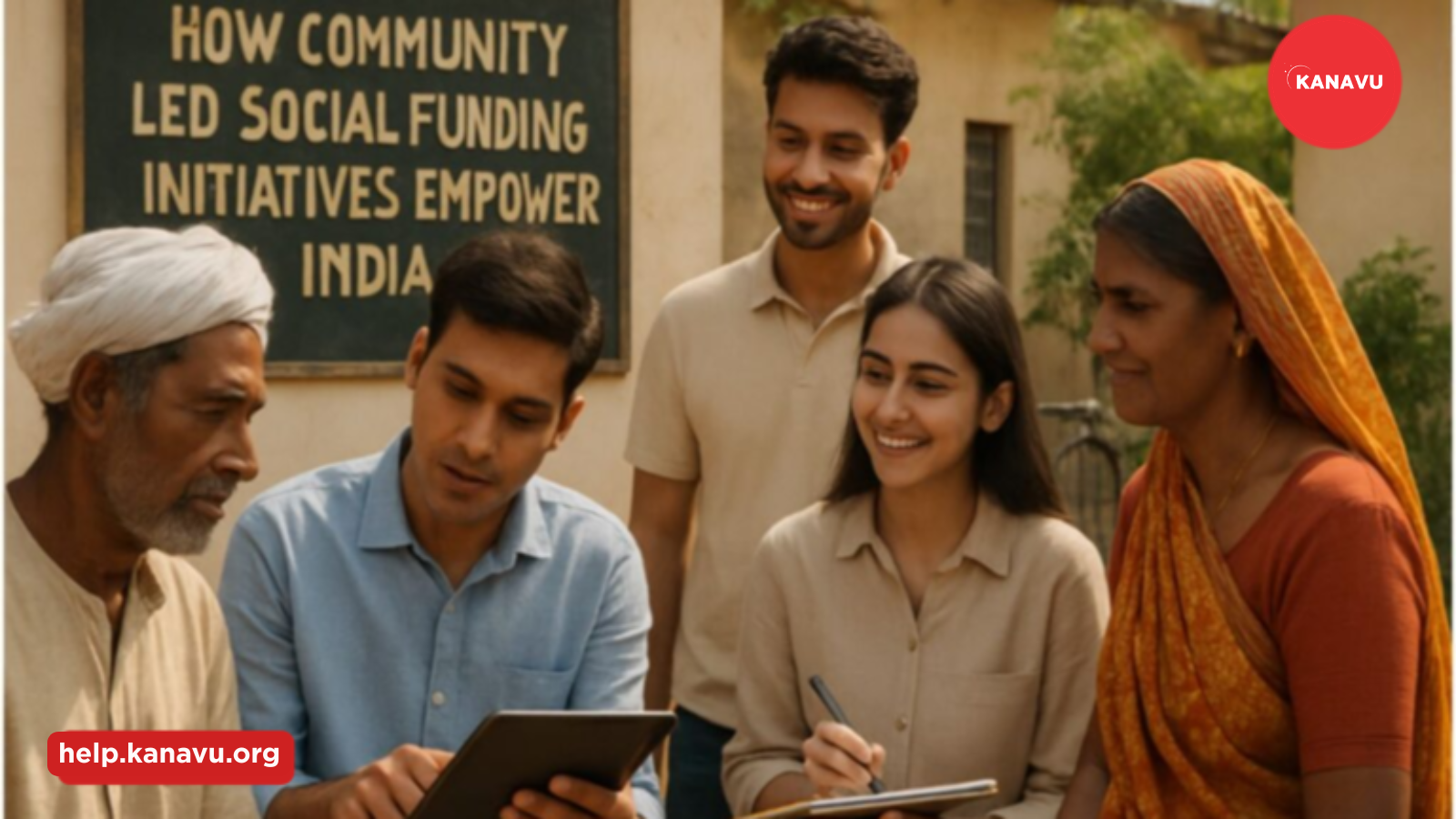
How community led social funding initiatives empower India?
How community led social funding initiatives empower india ? In India, where diversity spans regions, religions, and resources, community led social funding initiatives are emerging as a practical and people-driven solution to bridge gaps in healthcare, education, livelihood, and disaster relief. These initiatives are built on trust, collective effort, and the belief that real, lasting change comes from within communities—not from outside interventions. Unlike traditional charity models that rely on one-way giving, community-led efforts empower people to both contribute and benefit, building stronger and more self-reliant societies. This approach reflects community-led crowdfunding driving local solutions, where collective action directly addresses real community needs. What makes community-led initiatives truly powerful At the heart of community led social funding initiatives is ownership. These projects don’t start with donors or institutions; they begin with people who understand their own challenges better than anyone else. Whether it’s a group of farmers pooling money for irrigation or urban youth funding night schools, the community plays a central role in decision-making and execution. Here’s what makes them effective: Local solutions to local problems: Who better to identify issues than those directly affected? Collective responsibility: Everyone has a role—from contributing funds to offering skills or time. Transparency and accountability: With local oversight, funds are used where they matter most. Trust and social capital: These efforts deepen community bonds, strengthening social networks. When people are involved in the solution-making process, they are far more invested in its success and longevity. Inspiring real-world examples from India 1. The Library Built by Farmers – Maharashtra In a drought-prone village in Maharashtra, a group of farmers collectively funded a children’s library. Each family contributed Rs. 100 a month. Within six months, they established a reading space with second-hand books, donated furniture, and volunteer teachers. Today, it serves over 200 children and has improved literacy rates in the region. 2. Healthcare in the Hills – Himachal Pradesh Remote hamlets in Himachal lacked immediate access to clinics. Through community-led crowdfunding, locals built a basic medical outpost. Retired nurses and doctors from nearby towns volunteer twice a week. Travel time to get medical care dropped from four hours to 20 minutes. 3. Youth Sports Empowerment – Karnataka In Bengaluru’s outskirts, local youth formed a sports club to keep children off the streets. With contributions from shopkeepers, families, and ex-students, they purchased equipment, rented grounds, and even funded school fees for athletes. Participation grew from 15 children to over 150 in two years. How are these better than traditional charity models? Many well-intentioned charities fail because of misaligned goals, bureaucratic delays, or lack of cultural understanding. In contrast, community led social funding initiatives work because: They are need-driven, not donor-driven They prioritize long-term impact over short-term optics They empower the community, not just assist it They create shared success and pride Most importantly, they avoid the saviour complex. Beneficiaries are not passive recipients—they are co-creators. To strengthen such initiatives further, applying effective tips to boost donor engagement in crowdfunding for social causes can help sustain participation and increase long-term impact. Technology is making grassroots funding easier India’s digital growth is fuelling a new wave of community action. Crowdfunding platforms, UPI payments, WhatsApp groups, and mobile apps make it easier to: Launch local fundraising drives Spread the word quickly across states Ensure real-time accountability and updates Involve the diaspora and urban supporters Even a small campaign—like rebuilding a well or helping a flood-affected family—can now receive national and global support in days. This shift also connects to broader questions like how technology has improved access to affordable healthcare in rural India, showing how digital tools can drive impact across sectors. Why urban citizens should support rural community-led efforts Urban dwellers often want to help but don’t know how. Instead of donating to large organizations, supporting local, transparent efforts can create visible change: Donate directly to verified village projects Share community fundraisers on social media Mentor rural youth or help with digital access Volunteer time or expertise in short-term bursts When urban skills meet rural passion, transformation accelerates. Conclusion: Change begins with a circle of trust India’s social progress doesn’t depend only on government schemes or foreign aid. It lies in the hands of its people—especially those willing to act together. Community led social funding initiatives are the quiet revolutions shaping a stronger, more inclusive India. Every rupee given, every hour volunteered, and every campaign shared brings us closer to a future where no one is left behind—because everyone is lifting each other.
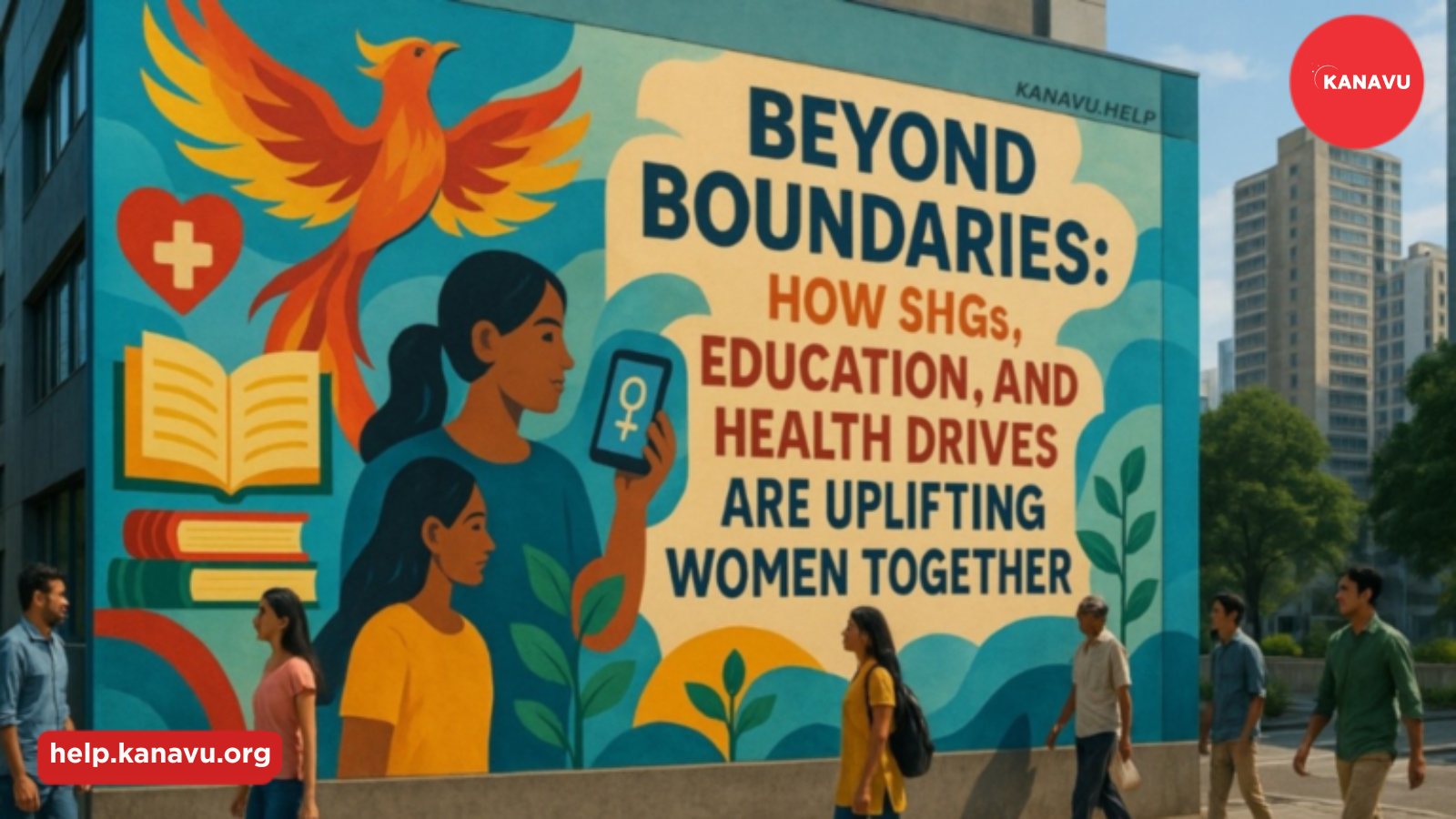
Women Empowerment Programs in India: Local Change Agents
Women Empowerment Programs in India Local Change Agents In India, women’s empowerment isn’t just about policy—it’s about people. At the heart of this transformation lie women empowerment programs in India, including self-help groups (SHGs), education efforts, and community health drives. Together, these grassroots initiatives are unlocking potential, fostering independence, and enabling generational change. 1. SHGs: Small Groups, Big Impact SHGs have redefined what local economic empowerment can look like. By pooling resources and creating small rotating savings, women launch businesses in: More importantly, SHGs teach decision-making, negotiation, and financial literacy—skills that ripple into families and communities. 2. Skill-Based Education: More Than Just Literacy Modern empowerment programs are focused on holistic learning. These include: Organizations like SEWA, Pratham, and local NGOs offer skilling programs that allow women to access both employment and dignity. 3. Health Awareness: The Foundation of Growth Without access to health, no empowerment model is complete. Community-led drives on: …help ensure women remain physically strong and informed. Health camps and mobile clinics are becoming integral to empowerment models in both villages and towns. 4. The Power of Integration What’s unique is how these three pillars—economic support, education, and health—are now interconnected. For instance, an SHG might host a menstrual health session, followed by a digital training program funded by microcredit earnings. 5. Challenges Still Remain While progress is real, challenges like patriarchal resistance, dropout rates, and access to resources remain barriers. However, the growing momentum—and measurable outcomes—are shifting the narrative. Conclusion Empowerment doesn’t happen overnight. But with the right tools and the right ecosystem, women across India are stepping beyond boundaries—redefining roles, reclaiming voice, and reshaping their futures. From small villages to bustling towns, they are becoming entrepreneurs, community leaders, and changemakers. As support systems continue to strengthen, these women are not just participating in progress—they’re leading it. The journey is ongoing, but the direction is clear: a more inclusive, resilient, and empowered India.
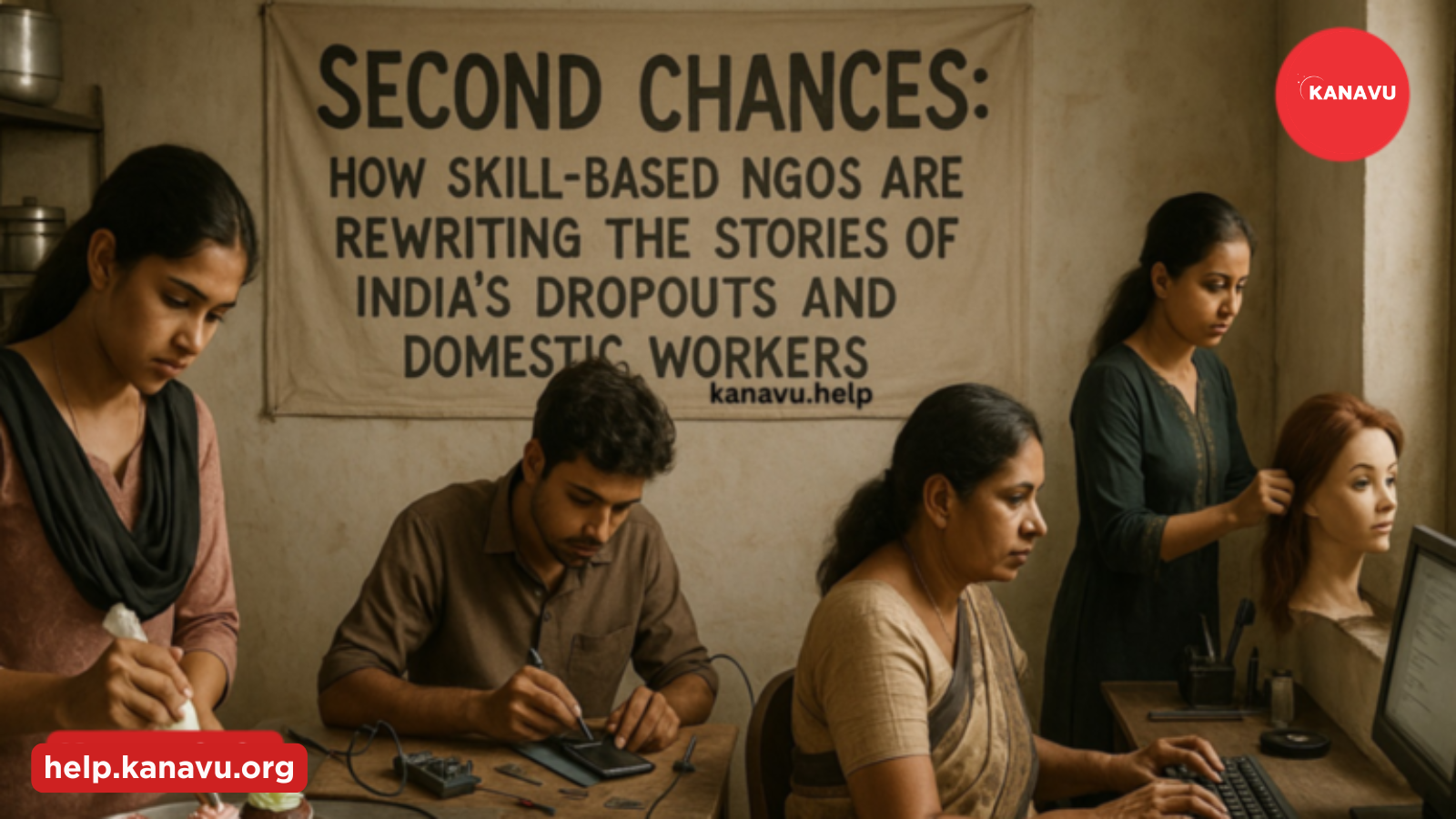
Second Chances: How Skill-Based NGOs Are Rewriting the Stories of India’s Dropouts and Domestic Workers
Second Chances: How Skill-Based NGOs Are Rewriting the Stories of India’s Dropouts and Domestic Workers In the bustling lanes of India’s cities and the quiet corners of its villages, countless stories remain untold — stories of young school dropouts forced by circumstance to abandon their education, and Second Chances: How Skill-Based NGOs Are Rewriting the Stories of India’s Dropouts and Domestic Workers who silently labour without recognition or opportunity. But amidst these struggles, a quiet revolution is taking shape, led by skill development NGOs in India determined to change the narrative. The Turning Point: How Skill-Based NGOs Empower Through Training India is home to one of the world’s largest youth populations, yet millions still remain on the fringes due to poverty, gender inequality, or lack of access to quality education. For many, dropping out of school is not a choice, but a compulsion driven by financial hardship, family responsibilities, or early marriage. Similarly, domestic workers — often women from marginalized communities — are denied dignity, upward mobility, and basic rights. This is where skill development NGOs in India step in. Organizations like SEWA, Pratham, teach for India, Goonj, and Lend a Hand India are championing a mission beyond charity — empowerment through education, livelihood training, and confidence-building. They identify untapped potential, provide relevant vocational skills, and help people regain control over their lives. Stories of Transformation and Hope Take Meena, a domestic worker in Delhi who once earned a meager ₹2,000 a month. After attending a beauty and wellness training course offered by an NGO, she now runs her own home salon, earning five times more and inspiring others in her locality. Or Ravi, who dropped out of school at 14 to support his family. After joining a skill development program, he was trained in electrical repair and now works as a certified electrician with a steady income and a sense of pride. These stories aren’t isolated. They are part of a larger movement driven by skill development NGOs in India that believe in second chances and practical empowerment. Bridging the Gap Between Skill and Opportunity One of the key contributions of these organizations is building a bridge between the informal workforce and the formal economy. They not only provide training but also connect individuals to job opportunities, internships, and micro-finance support to start their own businesses. Moreover, soft skills like communication, confidence, and self-presentation are emphasized — traits often ignored in traditional education but crucial in the modern workplace. Through such holistic approaches, skill development NGOs in India help people not just earn a living, but reclaim their confidence and voice. A Ripple Effect That Touches Generations When one person in a family becomes financially independent, the ripple effect is profound. Children stay in school longer, women have a greater say in family decisions, and entire communities slowly start to shift towards progress. The efforts of skill development NGOs in India are not only uplifting individuals but are shaping a future where opportunity is not dictated by birth, but by access and support. Challenges Ahead, but Hope Prevails Despite their efforts, these NGOs face significant challenges — limited funding, social stigma, lack of infrastructure, and policy-level hurdles. However, their determination, grassroots involvement, and innovative training models continue to make a tangible difference in people’s lives. Continued support from the government, private sector, and the public is essential for these initiatives to grow and reach more people in need. Conclusion: A Nation Rewritten, One Story at a Time The work of skill development NGOs in India is not just about job creation — it’s about dignity, empowerment, and rewriting destinies. In a country where millions are denied a second chance, these organizations are giving them the tools to dream again — and more importantly, to achieve those dreams. As a society, supporting these efforts — through donations, volunteering, hiring trained individuals, or simply spreading awareness — is not just a gesture of goodwill; it is an investment in a stronger, more inclusive India.
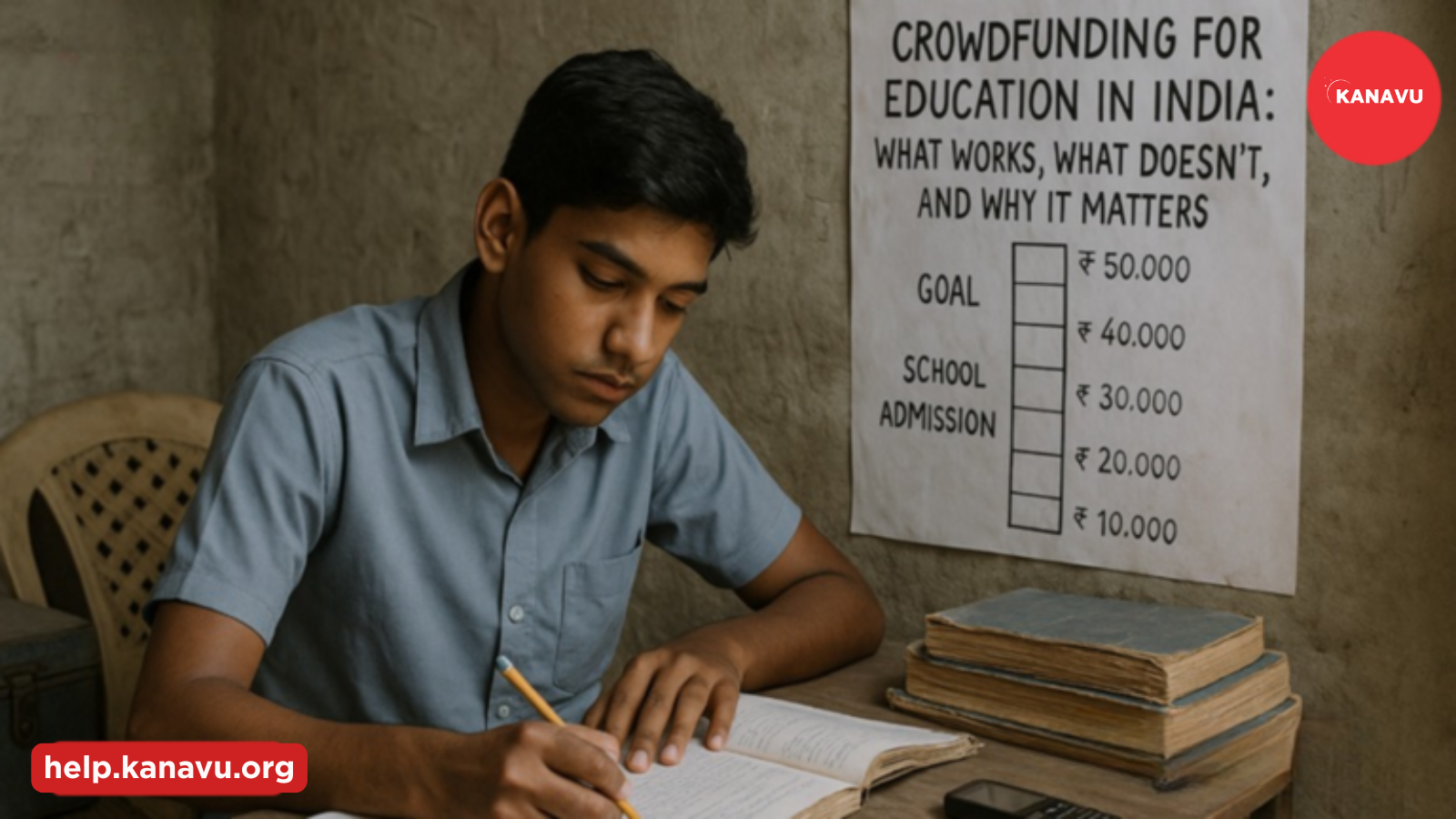
Crowdfunding for Education in India: What Works, What Doesn’t, and Why It Matters
Crowdfunding for Education in India What Works, What Doesn’t, and Why It Matters When you think of crowdfunding, you might picture medical emergencies, tech gadgets, or indie films. But across India, a quieter, deeper movement is gaining momentum — one that doesn’t just save lives, but shapes futures. Crowdfunding for education is no longer a trend — it’s becoming a lifeline. From Class 10 toppers in remote Jharkhand villages raising money to attend coaching in Kota, to government school teachers launching campaigns to buy projectors, crowdfunding has opened a new window of hope. But behind the feel-good stories and viral campaigns, the reality is far more complex. This blog dives into what works, what fails, and why crowdfunding for education matters more than ever in a country still fighting for equitable access to learning. Why Crowdfunding for Education Took Off in India India’s education system has always battled gaps — of access, quality, infrastructure, and affordability. And while policy changes and private interventions help, they often take time. Crowdfunding, by contrast, is immediate, people-powered, and emotionally compelling. Here’s why it clicked: 1. Digital Access, Emotional Stories Platforms like Ketto, Milaap, and ImpactGuru gave families and teachers a platform to share real struggles — and real dreams. A photo of a student who walks 5 km to school, or a handwritten note from a child wanting to be a doctor, moves people more than statistics. 2. Community Power Indians, especially in the diaspora, are willing to contribute when there’s a direct link. Many campaigns succeed because they’re shared within alumni networks, language communities, or cultural circles. 3. The Rise of Social Trust NGOs and verified users with transparent goals and frequent updates tend to get funded quickly — especially when there’s a measurable outcome like “Rs. 50,000 needed to enroll a student into NEET coaching.” But Here’s What Doesn’t Work Not every campaign succeeds. In fact, most don’t. Here’s why: 1. Poor Storytelling A campaign with a generic title like “Help My Education” and no emotional narrative rarely gains traction. Crowdfunding is not a transaction — it’s a conversation. 2. No Visuals, No Trust Campaigns without clear photos, documents, or updates feel suspicious. Donors today want transparency — not just sincerity. 3. Over-asking, Under-updating Campaigns that ask for large sums without breaking it down (“Need 5 lakhs for tuition”) or disappear after receiving money erode public faith in the model. 4. Platform Fatigue With hundreds of causes vying for attention, educational needs often get drowned out by more urgent appeals like medical emergencies. What Actually Works: Strategies from Successful Campaigns Micro Goals, Clear MilestonesExample: “Rs. 18,000 to buy a smartphone for online classes” performs better than “Rs. 2,00,000 for school fees.” Smaller goals feel achievable. Authentic, Local Language VideosA 45-second clip of a student or teacher speaking in their mother tongue can convert more donors than a professionally written pitch in English. Social Proof and Network EffectsWhen the first 20–30% of funding comes from friends, alumni, or local networks, the campaign gains momentum. Most successful campaigns hit 30% within 72 hours. Frequent Updates Build CredibilityDonors want to know: Did the student attend college? Was the projector installed? A single update can bring repeat donors. Why It Matters — Beyond Just Rupees Raised Crowdfunding is more than charity — it’s citizenship. It shifts the mindset from “wait for government help” to “let’s build this together.” In a country where lakhs of children still drop out due to fees, where teachers pay for chalk out of pocket, and where digital gaps still silence rural students, crowdfunding brings dignity, voice, and agency to the educational crisis. It also teaches young fundraisers the art of communication, accountability, and community building — skills as essential as any textbook. Final Word Crowdfunding won’t fix India’s education system overnight. But it’s already rewriting who gets to dream — and who gets left behind. What works? Stories that feel human. Goals that feel possible. Communities that feel connected. What doesn’t? Silence, vagueness, and the assumption that good intentions are enough. And why does it all matter? Because every rupee raised is more than money. It’s momentum. Add Your Heading Text Here
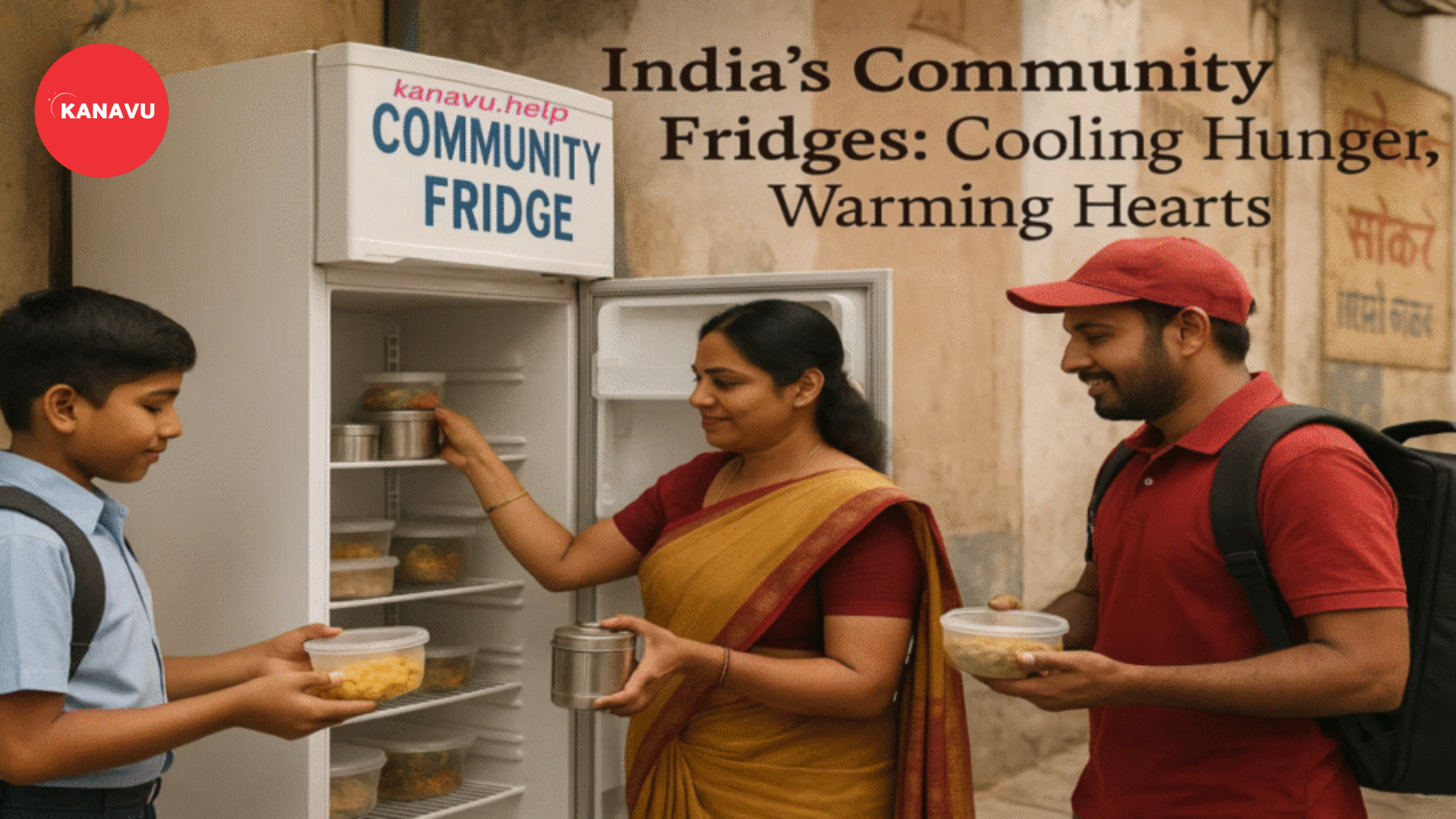
India’s Community Fridges: Cooling Hunger, Warming Hearts
India’s Community Fridges Cooling Hunger, Warming Hearts In the dense lanes of India’s cities — where towering high-rises cast shadows over street vendors and daily wage workers — a quiet revolution is humming behind a glass door. Community fridges, a citizen-driven innovation, are slowly turning into life-saving beacons of hope, tackling both urban hunger and food wastage with a single, simple gesture: sharing. Social help in India is traditionally imagined as top-down — government subsidies, NGO food drives, or ration cards. But the rise of public fridges flips that narrative. It’s grassroots, low-cost, and trust-based. Anyone can leave food. Anyone can take it. No paperwork. No surveillance. No judgment. How It Works Each community fridge is essentially a public refrigerator, usually powered and protected by a nearby building, shop, school, or temple. Volunteers ensure cleanliness, label food with dates, and often post real-time updates on WhatsApp or community apps when the fridge is restocked. Donors include: Apartment households with leftovers Bakeries and restaurants with unsold items Wedding caterers post-events Individuals who cook extra meals intentionally These fridges often operate under the mantra: “Don’t waste it. Plate it. Share it.” The Impact So Far Over 400+ fridges are active in Indian cities as of mid-2025, according to grassroots collective reports (no centralized database exists yet). In Hyderabad’s Secunderabad area, a single fridge has helped reduce 2 tons of food waste in 8 months. In Chennai, NGOs like No Food Waste and Robin Hood Army have started tagging community fridge zones for volunteers. An estimated 10,000 meals per day are being accessed via such fridges — a number growing steadily with urban adoption. Changing Social Mindsets Perhaps the most beautiful aspect of this movement is its ability to break the giver-receiver hierarchy. A domestic worker placing her leftover rotis in the fridge the next morning. A security guard donating bananas from his own bunch. A child leaving chocolates “for a hungry bhaiya.” These micro-acts of kindness create a culture of shared responsibility, nudging India away from transactional charity towards reciprocal community support. Beyond Food: A Broader Vision Some fridges are now being expanded into “compassion corners”, offering: Sanitary pads and hygiene kits Clean water bottles Used books and toys for kids Masks, hand sanitizers, and raincoats during monsoons In Mumbai’s Bandra area, a fridge is stocked with pet food, helping street dog feeders. In Kolkata, students from Jadavpur University have proposed adding QR codes for free educational downloads on fridge doors — merging nourishment of body and mind. What Lies Ahead? India’s community fridge movement is still in its infancy, but it holds immense potential: Corporate CSR funding could scale fridge networks across slums and railway stations. Integration with Swiggy/Zomato to redirect canceled orders safely. AI-powered inventory tracking to reduce spoilage and optimize restocking. Solar-powered fridges to enable 24/7 rural operation.
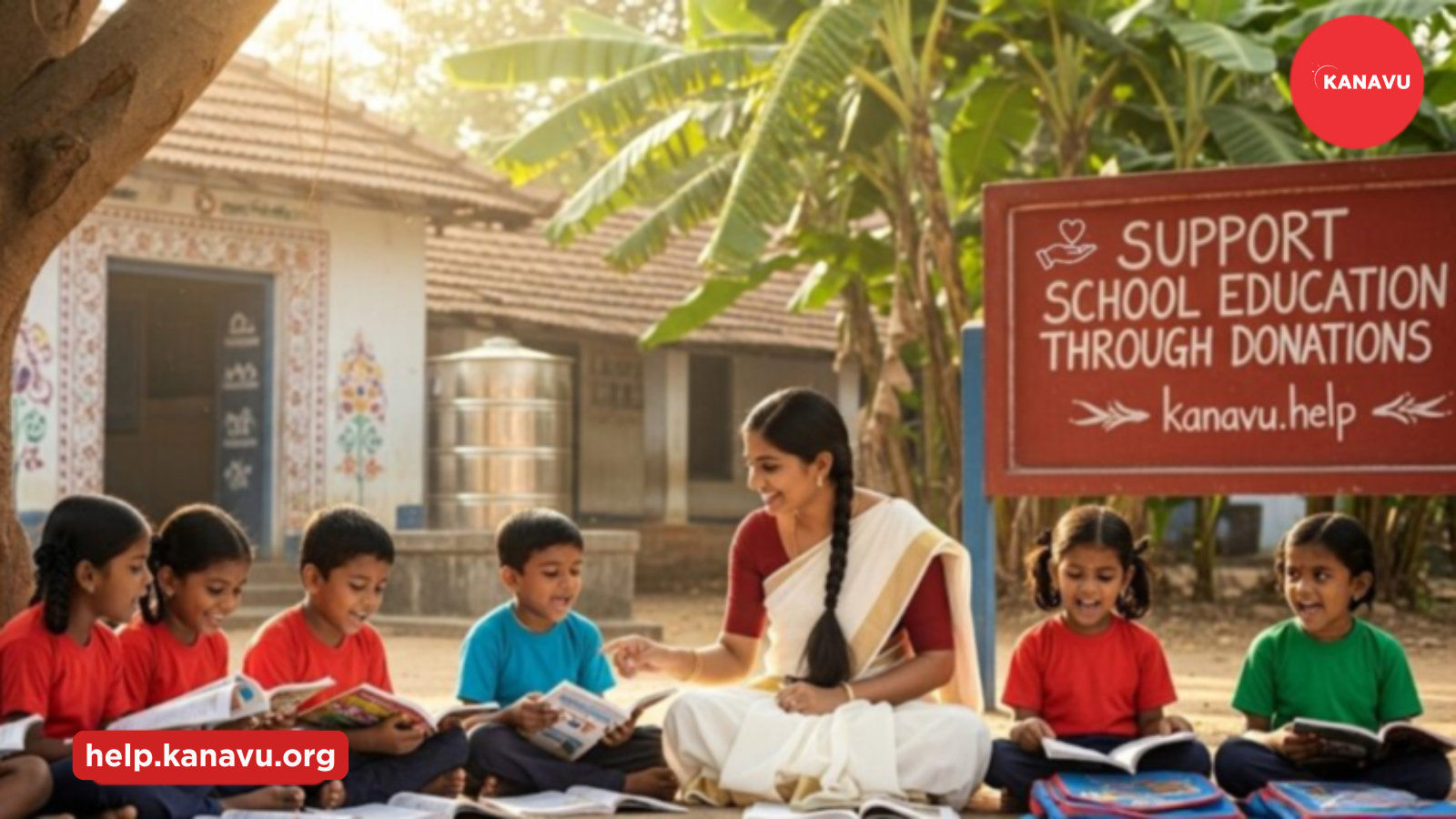
Top Reasons to Support School Education Through Donations
Top Reasons to Support School Education Through Donations Education is the foundation of every thriving society. Yet, for millions of children, this basic right remains out of reach due to poverty, lack of infrastructure, or social inequalities. In such a scenario, charitable giving becomes more than generosity—it becomes a force for transformation. When individuals or organizations support school education through donations, they are not just giving money—they are building futures. In this blog, we’ll explore why education donations are one of the most meaningful forms of impact and how you can play a part in shaping a better world through education. 1. Unlocking Equal Opportunities for Every Child In many parts of the world, education remains a privilege, not a right. Children from low-income families often study in schools without basic facilities—no benches, no books, and sometimes, no teachers. A lack of financial support leads to overcrowded classrooms, outdated curriculums, and high dropout rates. Donating to school education helps address these disparities. Your contribution can provide essentials like uniforms, digital learning tools, classroom materials, or even meals. These are small things to some, but life-changing to others. A student who once walked miles barefoot now gets a bicycle; a child who once read torn pages now gets access to e-learning tablets. When you support school education through donations, you’re offering more than access—you’re offering opportunity. 2. Investing in Long-Term Social Impact Education has a multiplier effect. An educated child is more likely to escape poverty, raise healthier children, participate in democratic processes, and positively contribute to the economy. According to international surveys, a person’s salary might actually rise by up to 10% for each extra year of education. The social return on investment from educational donations is higher than almost any other form of aid. By enabling learning, you’re breaking cycles of poverty, reducing crime, improving public health, and driving economic progress. It’s a legacy rather than merely a donation. This is especially true in developing countries where education is often the only ladder out of generational hardship. Your support today leads to thousands of brighter tomorrows. 3. Empowering the Most Vulnerable Groups Girls, children with disabilities, and those from marginalized communities often face the steepest barriers in accessing education. Cultural taboos, early marriages, lack of hygiene facilities, and bias all contribute to school dropouts—particularly among girls. Donations targeted towards inclusive programs can change this narrative. With your support, schools can build separate sanitation facilities, run awareness programs for parents, provide mental health support, and create inclusive classrooms that accommodate every child’s needs. When we prioritize equity in education, we do more than uplift individuals—we uplift entire communities. 4. Creating a Ripple Effect of Positive Change The effects of supporting a child’s education go beyond the classroom. Educated individuals tend to invest back in their communities, support the education of their siblings, and become role models for others. Each child who gets educated because of your help can inspire ten more. It’s a ripple effect—and it starts with a single act of giving. When combined with additional donations, even a little gift can have a significant impact. Whether you’re an individual sponsor or part of a CSR initiative, your action helps create real and measurable change. 5. Experience Fulfillment with Real Impact Giving to education offers profound personal fulfillment in addition to financial advantages and societal recognition. Knowing that your contribution has enabled a child to read, write, and dream big is a reward in itself. Philanthropy doesn’t always have to be large-scale. Even a modest monthly donation can fund textbooks, support school meals, or pay for internet access. Every rupee, dollar, or euro has the power to change a life. So when you choose to support school education through donations, you’re not only giving funds—you’re giving hope, dignity, and a future. Conclusion In a world where so many children are held back by circumstances they didn’t choose, education can be the turning point. And you can be the reason a child learns to read, writes their first story, or dreams of becoming a scientist or teacher. Now is the time to act. Choose to support school education through donations—and take one step toward a more educated, equal, and empowered world.
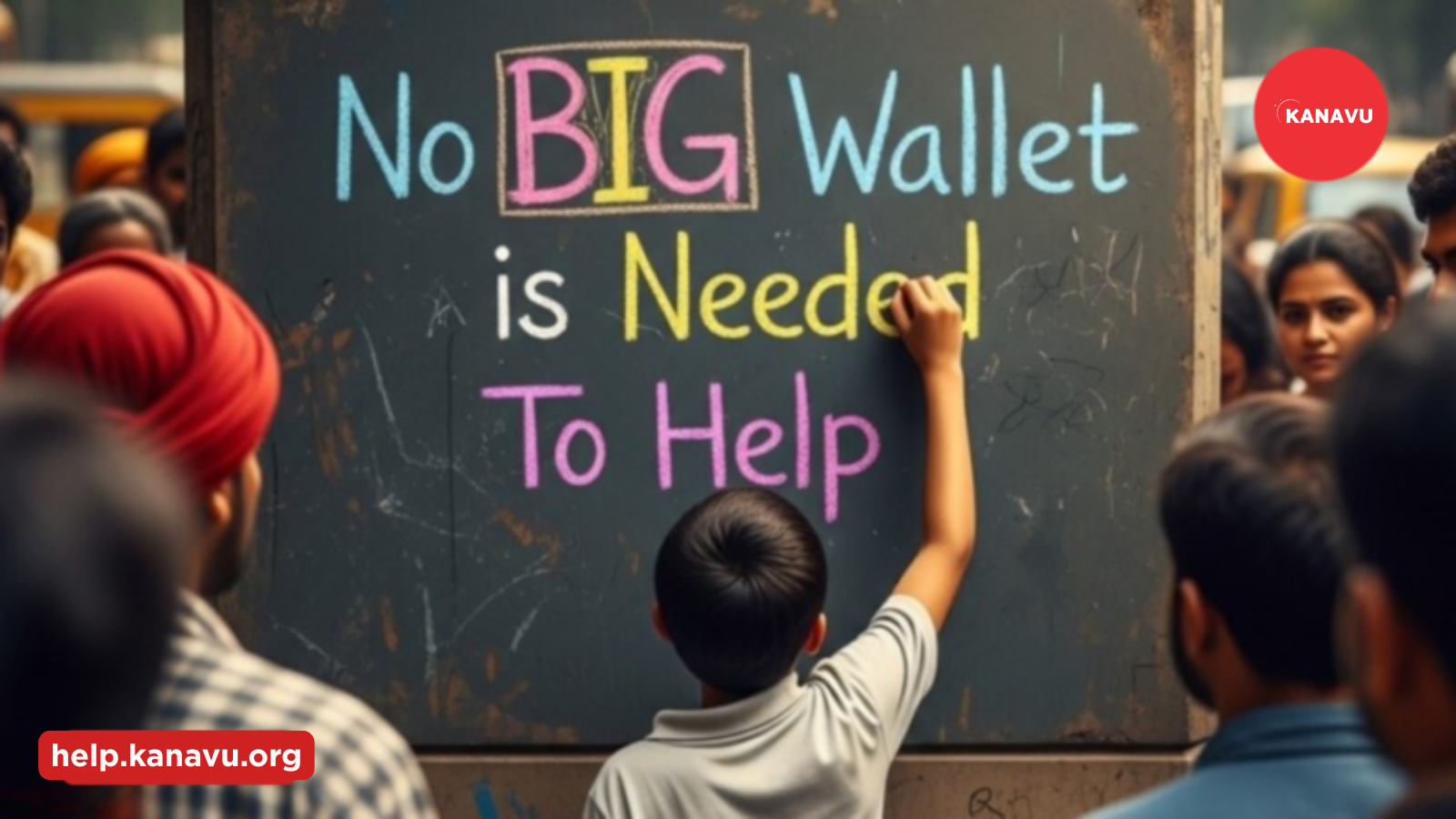
No Big Wallet Needed: Help Others Online with Just a Big Heart
No Big Wallet Needed: Help Others Online with Just a Big Heart What if your simple act of kindness could create a ripple effect of hope? What if all it took to make a difference was not money—but intention? At Kanavu.help, we believe that real change starts not with wealth, but with the willingness to care. In today’s digital world, it’s easier than ever to help others online with just a big heart. The days when communities could only be improved by the wealthy and powerful are long gone.Now, anyone with access to the internet can become a force for good. You don’t need grand gestures or large donations. A thoughtful share, a few kind words, or a modest contribution can help someone find a way forward. At Kanavu.help, we’ve built a platform that transforms these small acts into life-changing moments. Why Giving Doesn’t Require Wealth The common misconception is that meaningful giving must be big and bold. But the truth is, collective kindness is more powerful than individual wealth. A hundred people contributing in their own small way often have a bigger impact than one large donor. That’s where Kanavu.help comes in. Designed to be inclusive and trustworthy, our platform makes it easy for people from all backgrounds to help others online with just a big heart. Whether you’re a student with limited resources or a busy professional with little time, you can still make an impact without financial strain. The Power of Digital Compassion Digital giving is more than just a transaction—it’s a mindset. It’s about building a culture where people look out for one another, even if they’ve never met. On Kanavu.help, you’ll find stories that inspire you to act, causes that connect with your values, and a community that believes in shared humanity. Think of it as planting seeds. One post shared online could inspire dozens of others to give. One word of encouragement could uplift a struggling family. One small donation could bridge the gap between fear and hope. When you help others online with just a big heart, you’re not just donating—you’re empowering people, validating their struggles, and reminding them that they are not alone. Kanavu.help: A Trusted Home for Hope At Kanavu.help, every campaign is verified and every contribution is tracked, so donors and supporters can trust the platform they’re using. Our focus is not just on raising money, but on building meaningful connections between people who want to help and those who truly need it. Whether you’re passionate about education, healthcare, or social justice, Kanavu.help gives you a simple way to act. No complex processes, no hidden agendas—just real people helping each other through a platform built on transparency and trust. Here’s how you can get involved today: Explore causes that resonate with you Share campaigns across your network Start a fundraiser for someone in need Support with skills, time, or kind words Waiting for a special event or the “right moment” is not necessary. The right time to care is now. Building a Future of Shared Kindness The world doesn’t need more millionaires to make it better—it needs more kindness, more empathy, and more people willing to take action, no matter how small. By joining the Kanavu.help community, you’re not just giving—you’re shaping a future where help is accessible, compassion is visible, and hope is never out of reach. Let’s move past the idea that charity is reserved for the wealthy. Let’s create a space where help is measured not in money, but in meaning. No big wallet needed: help others online with just a big heart—only on Kanavu.help.
How to Donate and Educate: One Click Can Change a Child’s Future
How to Donate and Educate: One Click Can Change a Child’s Future In the heart of every village, slum, and low-income neighbourhood, there are children with boundless dreams but limited means. They aspire to work as educators, physicians, engineers, and artists.Yet, what stands between them and their future is often something as small as a missing school bag or unpaid tuition. In a digital world filled with distractions, knowing How to Donate and make a real impact has never been more important—or easier. Why Education Still Feels Out of Reach for Many Despite rapid development and digital transformation, India still struggles with educational inequality. Millions of children drop out of school each year—not due to lack of talent, but due to lack of support. Their families can barely afford food, let alone fees for school supplies, uniforms, books, or transportation. When education becomes a luxury, the consequences are long-lasting. A child pulled out of school often faces a future of labor, low income, and repeated cycles of poverty. But when given a chance—when provided even modest support—their lives can transform. The Power of Small Donations There is a widespread misperception that change can only be brought about by significant contributions. The truth is, small donations—₹50, ₹100, ₹500—are the backbone of grassroots impact. Just a few hundred rupees can help buy a student a full set of books, or cover a month’s worth of transport to school. Through crowdfunding platforms focused on education, like Kanavu.help, small donations come together to create lasting change. When people from across the country contribute a little, they help build a bigger future for someone else. How to Donate Effectively with Kanavu.help If you’re wondering how to donate in a way that creates real, traceable impact—Kanavu.help makes it simple, secure, and powerful. This platform is built around the idea that small contributions, when pooled together, can change lives. With a clear focus on education, every fundraiser is verified, every child’s story is real, and every donation—no matter the size—goes directly to helping students in need. 1. Visit Kanavu.help Browse active education campaigns and read genuine stories from students who need your help to stay in school. 2. Select a Cause Whether it’s helping a girl student with school fees, providing books for a village classroom, or supporting a child’s dream to become a nurse or teacher—you can choose a cause that resonates with you. 3. Make a Secure Donation Donating is fast and safe. Kanavu.help accepts UPI, debit/credit cards, net banking, and even international payments. 4. Get Updates and Stay Connected After you donate, you’ll receive updates so you know exactly how your support is helping. Kanavu.help believes in total transparency, ensuring your trust is honored. By choosing Kanavu.help, you’re not just giving money—you’re becoming part of a child’s journey to education and dignity. A Story That Shows What One Click Can Do Take the case of Arun, a 12-year-old from a remote village in Tamil Nadu. With both parents working as laborers, Arun nearly dropped out when he couldn’t afford exam fees. A small fundraiser helped him continue. He didn’t just pass—he topped his class. That one moment of help sparked something much greater. There are hundreds of such children, waiting for that same chance. Your click can be the difference between a dropout and a graduate. Education Creates Ripples That Last Generations When you help one child stay in school, you’re not just supporting an individual—you’re uplifting an entire family and communityBetter jobs, healthier families, and knowledgeable people are all results of education. It breaks generational poverty. It creates hope where there was none. The Impact Begins With You You don’t need to change the entire system to make a difference. You just need to start. Whether it’s ₹50 or ₹500, every rupee matters when placed in the hands of someone who truly needs it. One donation. One child. One future changed. Still wondering how to donate? It starts with one click on kanavu.helpBe a part of a story that changes a child’s tomorrow by helping them today.
