
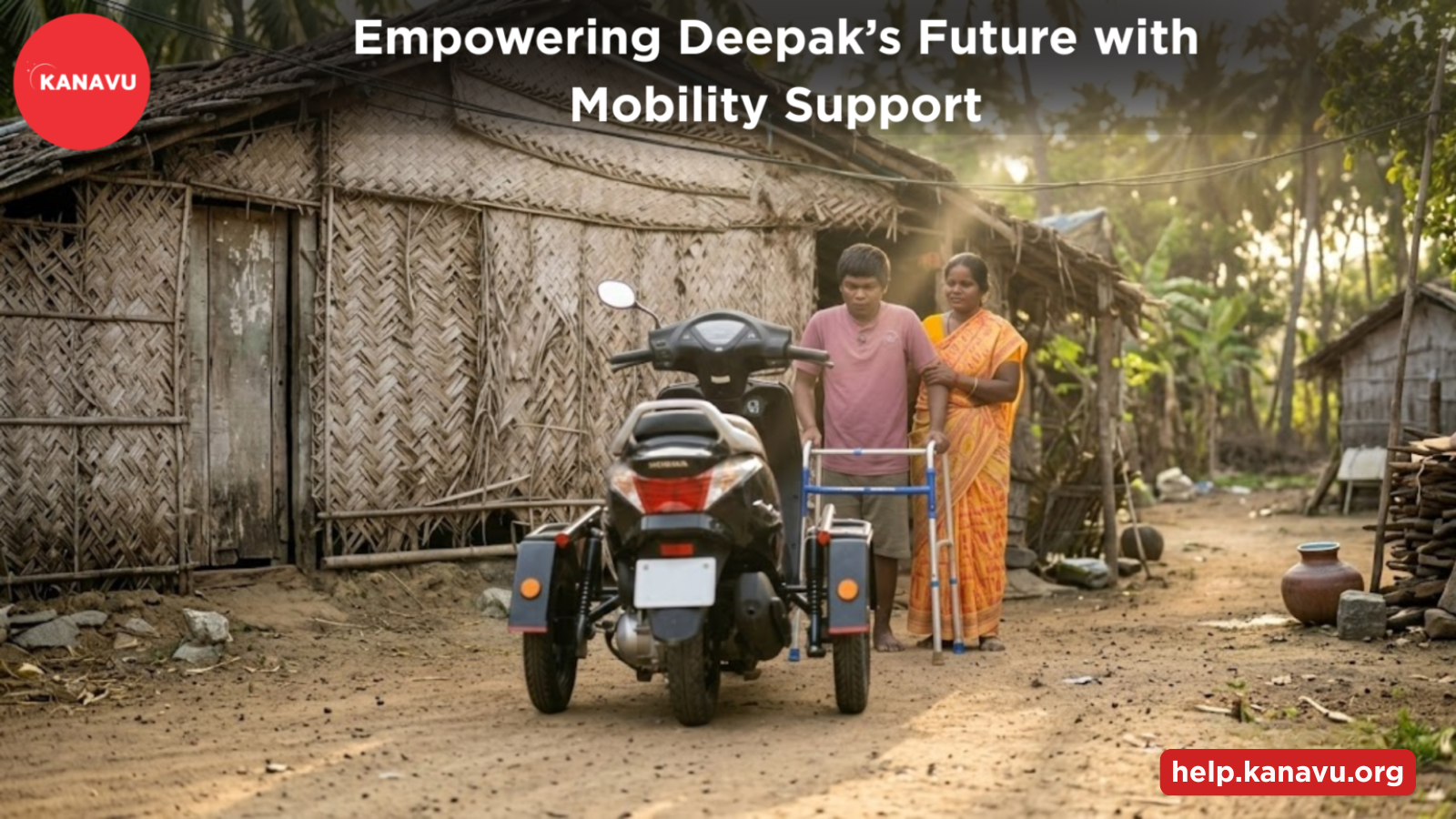
Support for differently-abled students in tamil nadu: empower deepak’s future with a two-wheeler Education can change a person’s life. It gives hope, confidence, and a path toward a better future. However, many students still struggle to continue their studies because of financial and physical challenges. Changing lives through Kanavu Help: donations that strengthen schools and communities plays an important role in ensuring that deserving students receive the support they need. Support for Differently-Abled Students in Tamil Nadu is important to help talented students continue their education with dignity. Deepak from Kombupalayam in Erode district is one such student whose determination deserves attention and support. Deepak’s story: a brave student with big dreams Deepak is a differently-abled youth who studies with great dedication. His life became very difficult after his father passed away a year ago. Since then, his mother has been the only person supporting the family. She works as a daily wage laborer to take care of Deepak and his sister. Even though the family faces many struggles, Deepak continues to study sincerely. He dreams of completing his college education and building a better future for his family. However, traveling to college every day is not easy for him. Public transport is often uncomfortable and tiring for a student with physical challenges. His family’s situation includes: Stories like Deepak’s show why education support for disabled students in India and mobility support for differently-abled students are so important. Support for differently-abled students in tamil nadu: helping dreams move forward For students like Deepak, even a small support can make a big difference. A two-wheeler can help him travel to college safely and comfortably. It can reduce physical strain and give him the confidence to continue his studies without daily struggle. Helping children achieve their dreams through Kanavu Help’s support shows how community contributions can remove barriers and create new opportunities for students in need. Helping students with transportation is one of the most meaningful ways to encourage education. It improves independence and allows them to focus on learning rather than worrying about travel difficulties. This is why Support for Differently-Abled Students in Tamil Nadu is essential. Community awareness and NGO support for differently-abled students can create opportunities for students who truly deserve them. A small support can change deepak’s future Deepak’s story reminds us that many talented students are waiting for a chance to continue their education. His determination shows that he is ready to work hard and achieve his dreams. What he needs now is a little support to overcome the challenges in his path. By encouraging Support for Differently-Abled Students in Tamil Nadu, communities can help students like Deepak continue their journey. Initiatives that promote charity for disabled students education bring hope to families who are struggling but still believe in the power of education. Building a better education system for differently-abled learners in today’s India is an important step toward ensuring that every student receives equal opportunities to learn and grow. A small act of kindness today can help Deepak move closer to a brighter future tomorrow.
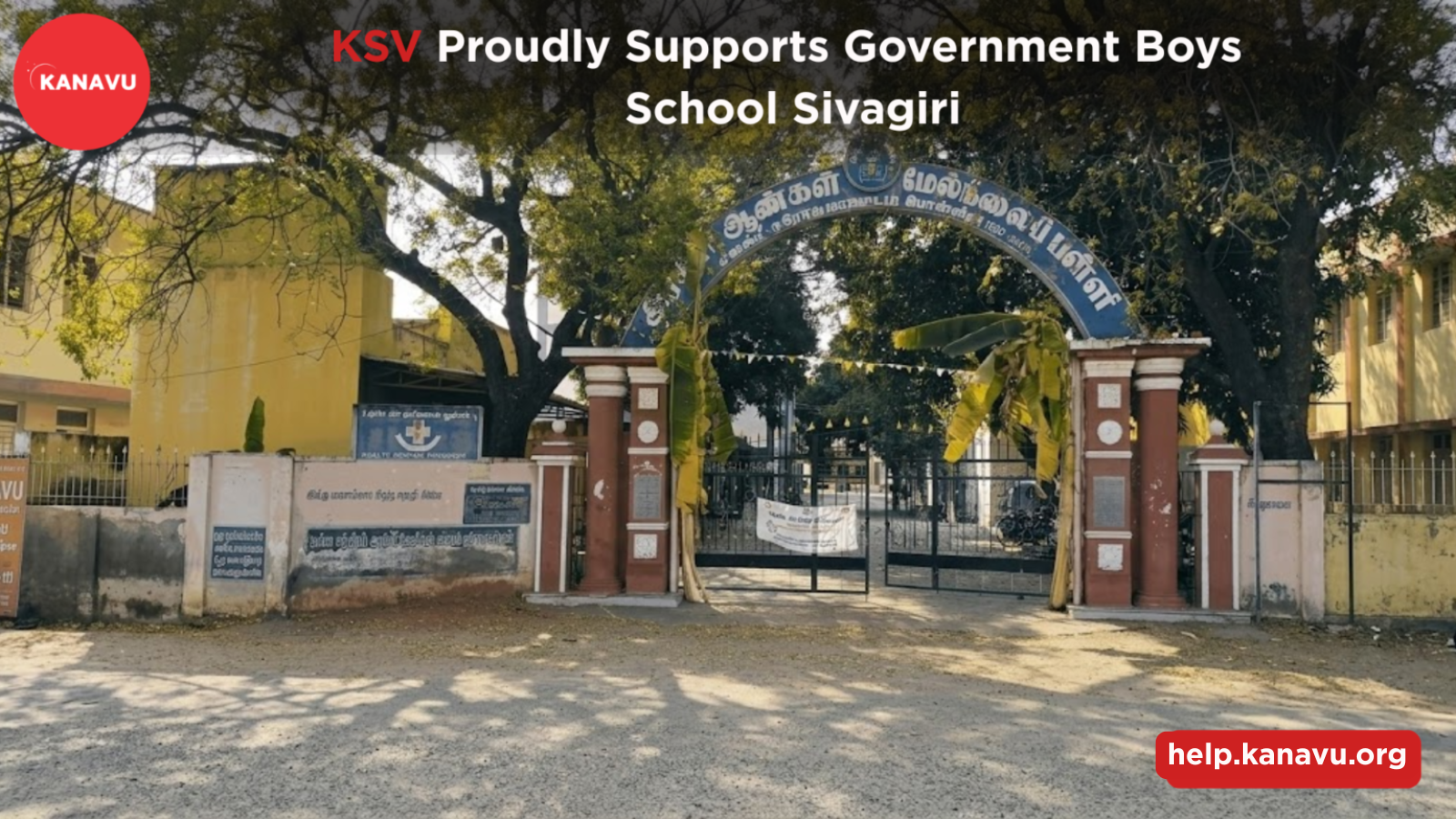
Ngo support for schools in tamil nadu -proudly supported by ksv benefiting government boys higher secondary school
NGO support for schools in tamil nadu -proudly supported by ksv benefiting government boys higher secondary school Education is every child’s fundamental right. Yet, many students continue to face challenges that limit their access to quality learning. If we truly want to improve the standard of education, each of us has an important role to play. Through NGO support for schools in Tamil Nadu, meaningful change becomes possible when communities come together with a shared purpose. Donations through Kanavu Help are changing lives in education and community development, showing how collective efforts can create real opportunities for students who need support the most. At Government Boys Higher Secondary School, the need was not just about facilities, but about opportunity. Many students have dreams, talent, and determination, but lack the structured support required to move forward confidently. This is where collective action makes a difference. Even a small contribution can create a powerful ripple effect in a student’s life. Empowering Young Minds Through NGO support for schools in Tamil Nadu When we extend the right support at the right time, transformation begins. Through NGO support for schools in Tamil Nadu, schools receive assistance that strengthens academic environments and uplifts student morale. Kanavu helps government school students by supporting their educational needs, ensuring that the right resources and opportunities reach those who need them most. Support can help provide: These are not just additions; they are foundations for a brighter future. A simple initiative can help a child gain confidence. A workshop can inspire a new ambition. A better classroom can make learning more engaging. Through structured NGO support for schools in Tamil Nadu, we can ensure that students are not held back by circumstances beyond their control. Your Support Can Create Lasting Impact Every contribution matters. What may seem small to one person can be life-changing for a student. When you choose to support educational initiatives, you are not just helping a school you are shaping a generation. Through consistent NGO support for schools in Tamil Nadu, institutions can grow stronger, teachers can deliver better learning experiences, and students can pursue their dreams without barriers. Quality education builds confidence, encourages innovation, and prepares young minds to become responsible leaders of tomorrow. Today, you have the opportunity to be part of that change. By supporting educational development, you help create classrooms filled with hope, ambition, and possibility. How NGO programs in Tamil Nadu villages are guiding parents to nurture children’s early growth also plays an important role in strengthening the foundation of a child’s learning journey. Together, we can build schools that nurture talent, encourage growth, and provide every child with the education they deserve. Let us join hands to create a brighter, more empowered future for the next generation because when we support education, we invest in tomorrow.

Transforming Futures: The Impact of Donations Through Kanavu help in Education, Community, and School Support
Transforming Futures: The Impact of Donations Through Kanavu help in Education, Community, and School Support Education is the foundation of progress, yet many students in Tamil Nadu struggle due to financial hardship and poor infrastructure. The impact of donations through Kanavu Help is transforming lives by improving classrooms, providing learning materials, and offering essential support to underprivileged children. Through financial aid, school renovations, and nutritional assistance, Kanavu Help is helping education thrive in disadvantaged communities. At the heart of Kanavu.help’s mission lies the power of small donations—each contribution, no matter how modest, has the potential to create a ripple effect that leads to lasting and profound change. In fact, your small donation can create a lifelong impact by opening doors of opportunity that might otherwise remain closed. These donations go directly into initiatives that provide scholarships, educational materials, food programs, and support for school infrastructure, all aimed at empowering students and creating more equitable opportunities for the next generation. The impact of donations through Kanavu help has proven to be transformational, not just for individual students but for entire communities. In this blog, we’ll explore the impact of donations through Kanavu help, and how every contribution, whether large or small, plays a critical role in transforming the lives of students and the broader community. By donating to Kanavu help, you’re not just contributing to one child’s future—you’re helping to create a stronger, more educated society, one step at a time. Transforming Futures: How Your Small Donation Makes a Big Impact in Education At first glance, a small donation may seem like a modest contribution, but when combined with others, it becomes a powerful force that has the potential to transform a student’s life. Every penny donated to Kanavu.help directly supports initiatives that provide educational resources, scholarships, and essential tools for underprivileged students. These contributions go beyond just books and supplies—they shape the trajectory of a child’s future, offering them the chance to dream big and achieve even bigger. When you donate, you’re not just supporting a student’s education; you’re helping to build a brighter future for an entire community. 1.The Power of Small Donations in Education A small donation can be the key that unlocks a world of opportunities for a student. In a society where many children are deprived of the chance to study due to financial constraints, your donation acts as a beacon of hope. Kanavu help uses these donations to provide critical educational materials, fund school admissions, and give underprivileged children the resources they need to continue their education. This simple act of kindness has the power to empower a child, open doors to new possibilities, and set them on a path to success. 2.How Donations Help Overcome Barriers to Education In Tamil Nadu, many students face financial barriers that prevent them from pursuing their academic dreams. Whether it’s the inability to pay for tuition, purchase books, or cover transportation costs, these obstacles often prevent children from accessing the education they deserve. Kanavu help works tirelessly to remove these barriers by using the impact of donations to provide essential support. Your donations help provide scholarships and financial aid, allowing students to overcome these challenges and continue their education. Key Points: 3.The Ripple Effect of Giving When you donate to Kanavu.help, you’re not just giving to one student—you’re sparking a ripple effect that extends far beyond the classroom. Through Kanavu Help’s mission to support a child’s dream and change futures, your contribution provides more than just academic resources; it builds confidence and empowers students to dream big. Inspired by the support they receive, these students are now motivated to pursue their passions and work towards becoming the leaders of tomorrow. Your generosity creates a lasting impact, shaping individuals who will one day give back to their communities, just as you have done. Key Points: Empowering the Future Generation Education is the foundation of a better future, and your support to Kanavu.help is helping build that foundation. By donating, you’re giving underprivileged students access to the resources they need to succeed academically. Your contribution doesn’t just provide tools for education it nurtures a passion for learning, inspiring children to overcome challenges. With every donation, you’re empowering them to become future leaders and change-makers. Together, we can shape a generation that thrives in an ever-changing world. Key Points: Nourishing Young Minds by Serving Food to 500 Students Nutrition plays a pivotal role in a student’s ability to focus, learn, and thrive. Without proper nourishment, even the brightest minds can struggle to reach their full potential. Kanavu help recognizes the critical connection between a child’s health and their academic success, which is why the organization has committed to organizing food distribution programs for underprivileged students. By providing meals, Kanavu help ensures that these children are not only well-fed but also equipped with the energy and focus they need to excel in the classroom and beyond. Every meal distributed through Kanavu.help is a step toward creating a healthier, more educated generation. The Role of Nutrition in Education Your support to Kanavu help ensures that underprivileged students have the resources they need to succeed in school. With every donation, you’re not just providing educational tools, but helping foster a passion for learning that empowers students to become tomorrow’s leaders. Key Points: Feeding the Body and Mind Nourishing young minds goes hand-in-hand with providing a strong educational foundation. At Kanavu help, we understand that education is about more than just academics—it’s about fostering holistic development, including physical health, emotional well-being, and social engagement. For families facing financial and health challenges, Kanavu help also provides free social support services to ensure that students receive the stability they need to continue their education. Through its food programs, Kanavu help ensures that students receive the necessary nutrition to thrive physically, while also creating a sense of community. By sharing meals together, students build friendships, enhance self-esteem, and feel supported in their educational journey. Key Points: The Importance of Community Support in Feeding Students The success of
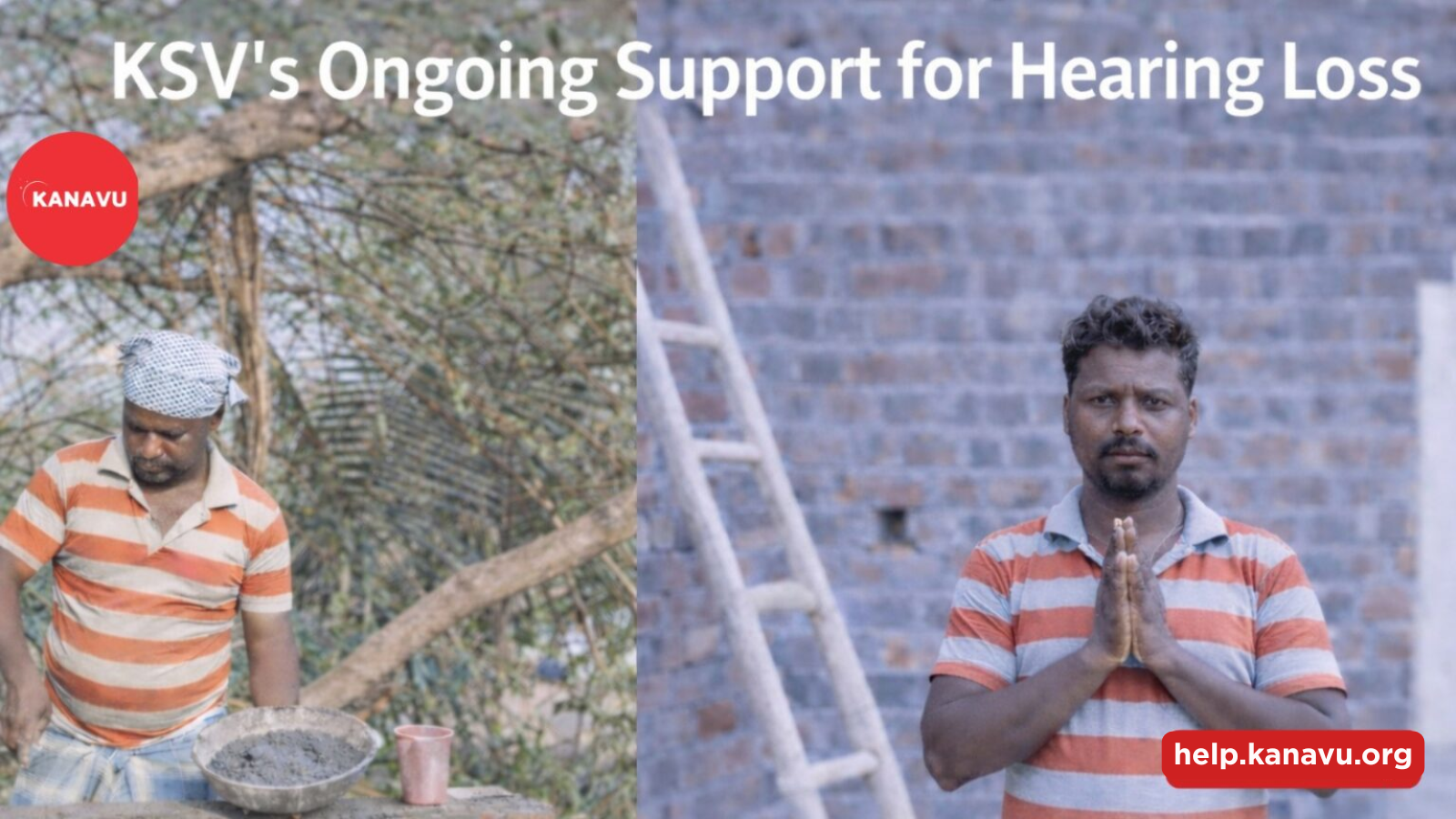
The Impact of Hearing Loss on Families: Kanavu’s Role in Providing Support
The Impact of Hearing Loss on Families: Kanavu’s Role in Providing Support Hearing loss can have a profound impact on families, not just on the person who suffers from it, but on everyone around them. The Impact of Hearing Loss can be deeply emotional and life-changing for loved ones. For many families, the emotional, physical, and financial challenges of dealing with hearing loss can feel overwhelming. This is the story of Vinoth from Raaya vellore, a hardworking father who has faced the difficult consequences of hearing loss and is now seeking help for his family. Stories like his are among the real medical help stories shared by families on Kanavu.help, where people open up about their struggles and search for timely support. Vinoth’s Struggle: The Impact of Hearing Loss on His Family Vinoth, a skilled laborer from Raayavellore, tragically lost his hearing in an accident, which turned his life upside down. Before the incident, he worked hard in construction to support his two children, but now, the impact of hearing loss has put his job and family’s livelihood at risk. His inability to communicate effectively has made work harder, and he is now burdened with medical costs and emotional stress, struggling to provide for his children. Vinoth’s struggles include: Kanavu’s Role in Providing Support to Families Affected by Hearing Loss Kanavu stands as a beacon of hope for families like Vinoth’s, offering essential support to navigate the impact of hearing loss. With financial aid, emotional support, and vital resources, Kanavu helps families in crisis continue their lives despite the challenges. When facing such hardships, having a supportive community is crucial, and Kanavu plays an invaluable role in providing that help. Your small donation creates lifelong impact by giving families the strength and stability they need during their most difficult times. Kanavu’s mission is simple but powerful: How You Can Help: Support Vinoth’s Family and Others Affected by Hearing Loss Your donation can make a huge difference. Whether it’s through contributing to the medical costs or providing the emotional support that families need, every little bit counts. Hearing difficulties: a silent disruptor of lifestyle, often affect not just communication but also confidence, employment, and daily living. Kanavu offers a direct avenue to help, ensuring that all donations go directly to supporting families like Vinoth’s. Current Fundraising Status for Vinoth: The impact of hearing loss can be devastating, but with your help, we can ease the stress and provide hope. By donating to Kanavu, you can make a direct impact on a family’s life, ensuring they don’t have to face this challenge alone. Your Help Can Change Their Future Vinoth’s story is just one of many families affected by hearing loss, and for those in need of support, Kanavu offers a lifeline. With your help, we can ensure that families like Vinoth’s don’t face this challenge alone. A small donation today can change their tomorrow support Kanavu and provide relief to those struggling with the impact of hearing loss. Visit Kanavu Help’s website and make a difference. Kanavu in making a real difference – your support today can change Vinoth’s family’s tomorrow. Donate now to Kanavu Help and give families like Vinoth’s a brighter future.

Donate for Leukemia Treatment and Save a Child’s Life with Kanavu Help
Donate for Leukemia Treatment and Save a Child’s Life with Kanavu Help Life moves fast. A day that begins with a normal routine can end with news no one is ready to hear. Six-year-old Saakshika from Senmalai never showed clear signs of illness. She played, studied, and laughed like any other child her age. After finishing her school exams, she developed what seemed like a simple fever. Her parents thought it would pass. Instead, further tests brought painful news — Donate for Leukemia Treatment. When a Fever Turned into a Bigger Battle Saakshika is a six-year-old girl from Senmalai who seemed healthy until a simple fever led to shocking news. Routine tests revealed blood cancer, and she now needs ongoing treatment at PSG Hospital in Coimbatore. Her father runs a small barber shop, and the family cannot manage the rising medical costs alone. This is why we must Donate for Leukemia Treatment when support matters most. Similar real-life medical support stories are shared by families seeking help through platforms like Kanavu.help. They now face: • Continuous hospital treatment expenses• Costly medicines and medical tests• Travel between Senmalai and Coimbatore• Loss of daily income during treatment days Kanavu Help: Standing for a Child’s Life Kanavu Help stepped forward to stand beside Saakshika and her family. We believe no child should lose hope because of financial limits. Every small contribution has the power to create a lifelong impact on a child’s future and recovery. Our mission is simple: When a child fights for life, the community must stand with her. Together, we can protect her chance to grow and live. How You Can Help: Your Donation Makes a Difference Helping is simple. Visit Kanavu Help’s website and give what you can. Your donation goes directly toward treatment, medicines, and hospital care. Current Fundraising Status: Your Help Can Change Her Future Saakshika’s family needs urgent help with rising medical costs. They can’t handle it alone. You can make a difference by donating for leukemia treatment, sharing her story, and encouraging others to help. Every little act of kindness brings Saakshika closer to recovery. Let us Donate for Leukemia Treatment and give Saakshika the future she deserves. For many families in India, medical emergencies become a silent crisis that drains both health and financial stability at the same time. A small act today can change her tomorrow Visit Kanavu Help and help save a young life. Let us stand together for Saakshika. Your support today can protect her tomorrow. Donate, share her story, and help keep her treatment going.
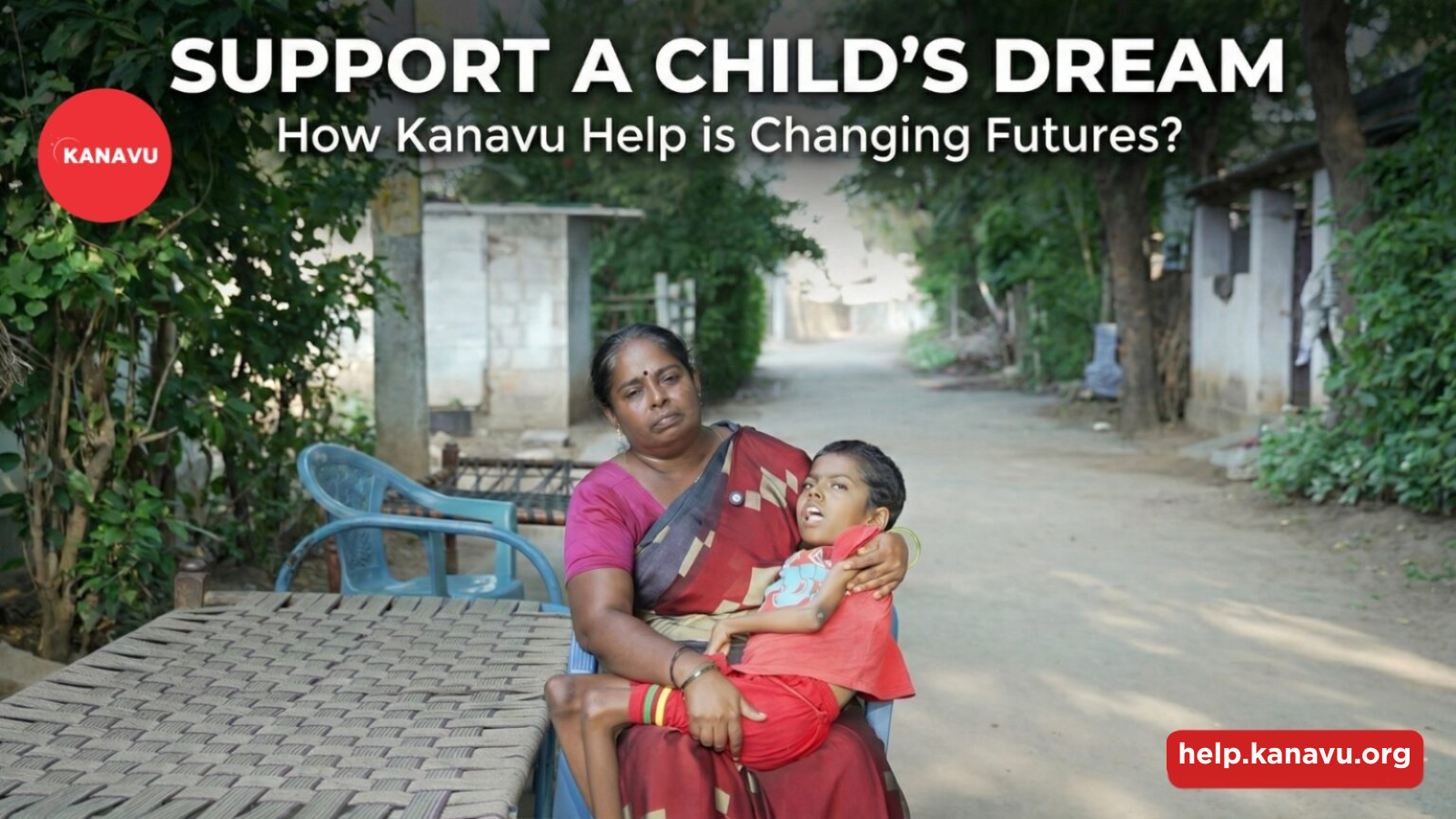
Support a Child’s Dream: How Kanavu Help is Changing Futures
Support a Child’s Dream: How Kanavu Help is Changing Futures Life moves fast, but sometimes, we forget about the struggles of others. Imagine a child who can’t walk, speak, or even eat without help. For many children, this is their daily reality, and their future can seem uncertain. But there’s always hope. Support a child’s dream and help us make a real difference in their lives today. Through initiatives like Kanavu, educational support is also extended to government school students in need, giving them opportunities for a brighter future. Support a Child’s Dream Through Struggles Meet Ezhilsaran, a 13-year-old boy from a small village in karur. He is unable to walk, talk, or feed himself. He survives on liquid food, relying on his parents for everything. Despite their love, his parents face many challenges. Here’s a glimpse of their daily struggles: • No steady source of income• Constant worry about medical costs and basic needs• The Living in poverty, struggling to meet even basic daily expenses• Limited access to healthcare and medical support These are the struggles families like Ezhilsaran’s face every day. But they don’t have to do it alone. Support a child’s dream and help bring hope to their lives. Kanavu Help: Support a Child’s Dream Kanavu Help is dedicated to supporting children and families in need, like Ezhilsaran’s. We believe that with community support, we can create real change. Every donation helps provide essential resources like wheelchairs, medical treatment, and education. Be part of the change by supporting a cause you truly believe in through Kanavu.help. By supporting us, you are giving hope to children who are facing the toughest challenges. Support a child’s dream today and help light the way for a brighter future. How Your Donation Can Support a Child’s Dream: How You Can Help: Your Donation Makes a Difference Helping is easy. Just visit Kanavu Help’s website and donate to the fundraising campaigns. Your donation can provide the essential support these children need. Current fundraising status: Whether it’s a wheelchair, medical care, or education, your small gesture can make a world of difference. Support a child’s dream and help them live a brighter, healthier life. For many vulnerable children, education becomes uncertain, and dreams can fade when support is missing. Transform a Child’s Future There’s no greater gift than changing a child’s life. By supporting Kanavu Help, you’re doing more than donating — you’re giving children like Ezhilsaran a chance for a better future. Even the smallest effort can create a powerful impact. Your support helps us continue to support children in need. Visit Kanavu Help today, and support a child’s dream by giving a child a brighter future. Let’s be the change that these children need. Thank you for your kindness and support.
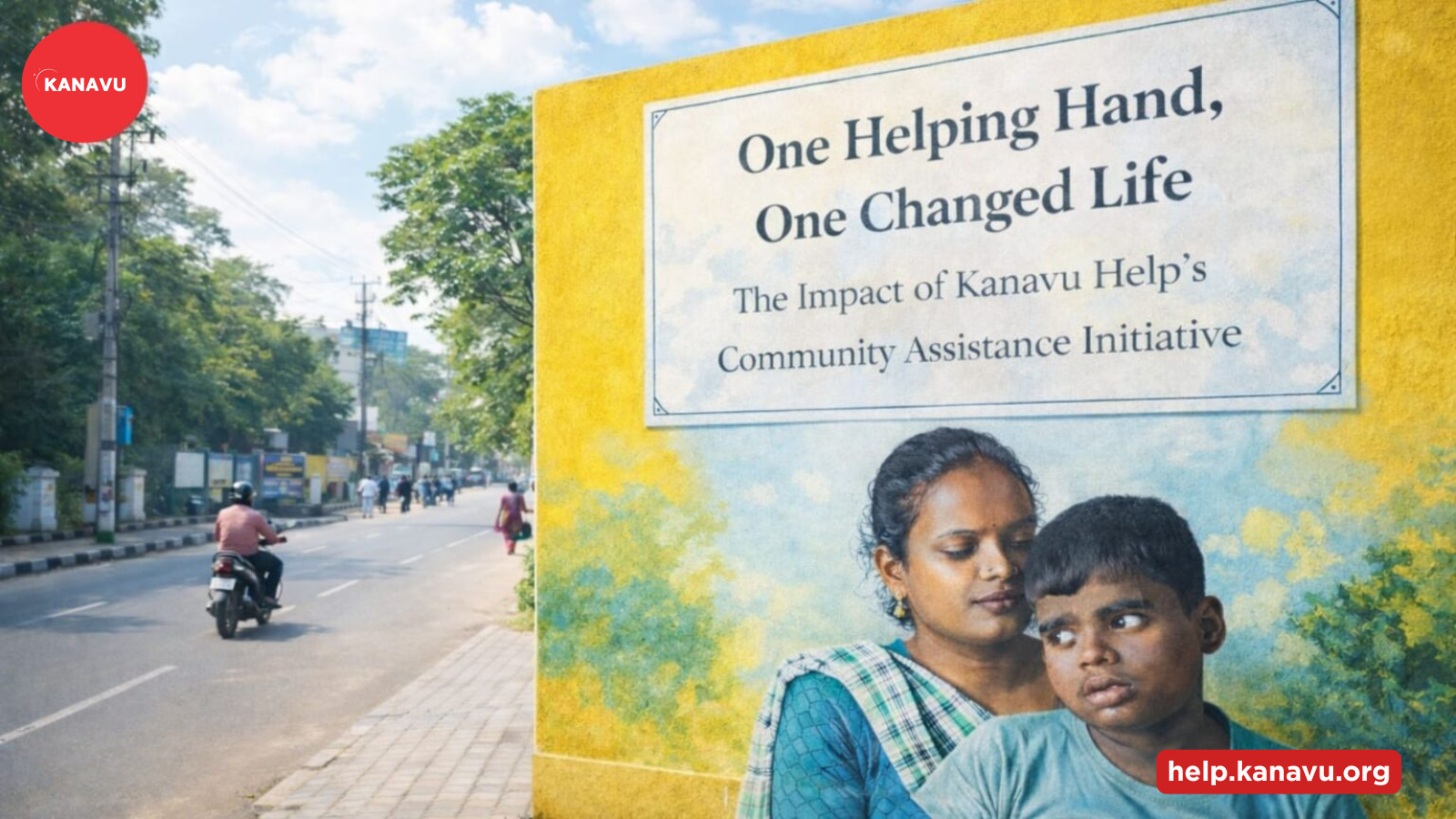
One Helping Hand, One Changed Life: The Impact of Kanavu Help’s Community Assistance Initiative
One Helping Hand, One Changed Life: The Impact of Kanavu Help’s Community Assistance Initiative In many rural families, life is a daily struggle. Limited income, unexpected medical needs, and lack of support make survival difficult. For some families, even basic needs become a challenge. Kanavu Help’s community assistance initiative exists to support such families during their most difficult times. This is the real story of a mother who is fighting silently to save her child’s life. A Mother’s Struggle from Sivagiri Village Muthulakshmi is a resident of Sivagiri village. She does not have a permanent source of income, and she does not have her husband’s support. She is raising her two sons entirely on her own. Her current situation includes: No regular or permanent income Work available only two days a week Living in a small hut with very basic facilities Complete responsibility for two children Despite these challenges, she continues to move forward with courage. True Medical Support Stories Shared by Families on Kanavu.help. A Child in Need of Continuous Medical Care Muthulakshmi’s younger son, Vinoth Kumar, is severely affected by a brain development disorder. His condition requires continuous medical care to protect his life and health. His treatment involves: Regular hospital visits Ongoing medical supervision Continuous expenses for care and medicines Without treatment, his condition can worsen, making this care unavoidable. Medical Expenses Beyond Her Means Vinoth Kumar’s medical treatment is ongoing and unavoidable. The family spends up to ₹10,000 every month on medical care. For a mother without a steady income, managing these expenses has become extremely difficult. Even so, Muthulakshmi has not given up. Her only hope is simple: That her children study well That they grow up with dignity That they have a better life than hers She believes education is the only way her children can escape poverty. Why This Fundraising Is Important Through Kanavu Help’s community assistance initiative, this family is now seeking support to continue Vinoth Kumar’s medical treatment. Current fundraising status: ₹200 raised out of ₹25,000 1 supporter so far 27 days remaining Every small contribution matters. Each donation brings this family closer to relief. A Message That Reflects True Humanity Muthulakshmi believes that the meaning of life lies not in what we receive, but in what we give. Today, she is asking for help not for comfort or luxury, but for her child’s survival. Through the community assistance initiative, Kanavu Help aims to reduce her burden and ensure that Vinoth Kumar continues to receive the care he needs. How Your Support Can Help Your donation can make a real difference by helping to: Support ongoing medical treatment Reduce the financial burden on the mother Ensure continuity of care for Vinoth Kumar Give emotional strength to a struggling family This is not just a donation. It is an act of compassion. Online Help Comes from Compassion, Not a Heavy Wallet. Be the Helping Hand That Changes a Life Kanavu Help’s community assistance initiative exists to support families like Muthulakshmi’s — families who fight quietly against overwhelming odds. If you are able to help, this is the moment to act. Your support can turn a mother’s tears into hope and protect children to secure a better future. One helping hand can truly change one life.
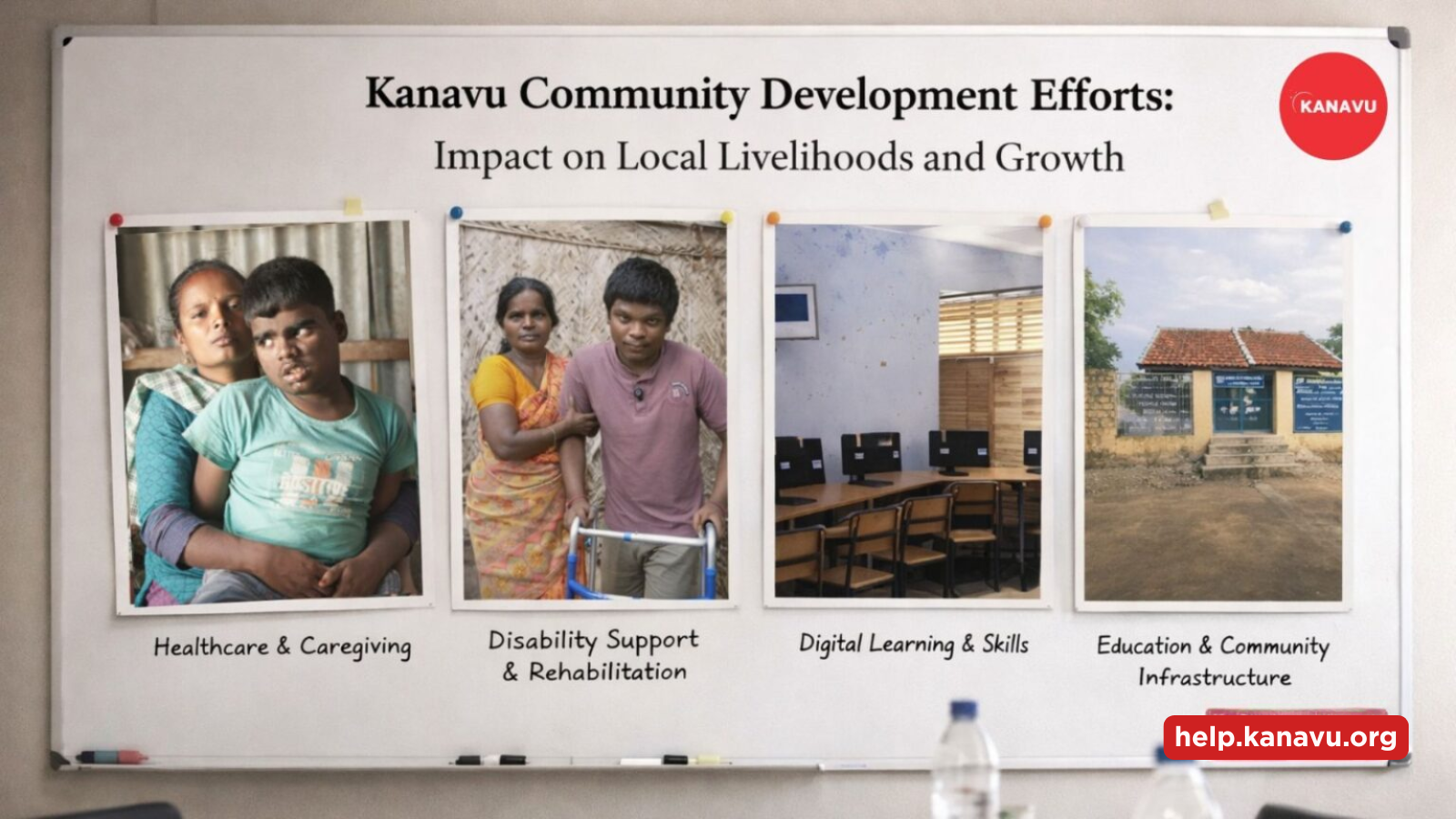
Kanavu Community Development Efforts: Impact on Local Livelihoods and Growth
Kanavu Community Development Efforts: Impact on Local Livelihoods and Growth Community Development focuses on improving the quality of life of people by supporting education, employment, health, and social welfare. Kanavu has been actively working to strengthen rural areas by creating opportunities for learning, skill development, and financial support for families in need. Through various initiatives, Kanavu helps individuals become self-reliant and encourages long-term growth in villages. Supporting Education for a Strong Future Education is a key part of Community Development at Kanavu. The organization supports students from rural backgrounds so they can continue their studies without financial stress. Some important efforts include: These steps help young people gain knowledge and build better career opportunities. Improving Livelihood Opportunities Kanavu works closely with local families to improve income sources and daily living conditions. Key livelihood support includes: This approach of Community Development helps rural households become more stable and confident. Health and Social Welfare Assistance Health and well-being are also important parts of Kanavu’s work. The organization supports: Such efforts reduce financial pressure and help families recover faster. Transparency and Trust Kanavu ensures that all support activities are genuine and trustworthy by: This transparent system strengthens Community Development and builds confidence among supporters. Long-Term Growth for Rural Areas Kanavu’s continuous focus on education, livelihood, and welfare creates long-term benefits such as: Through consistent Community Development efforts, Kanavu is helping rural families move toward a secure and hopeful future.
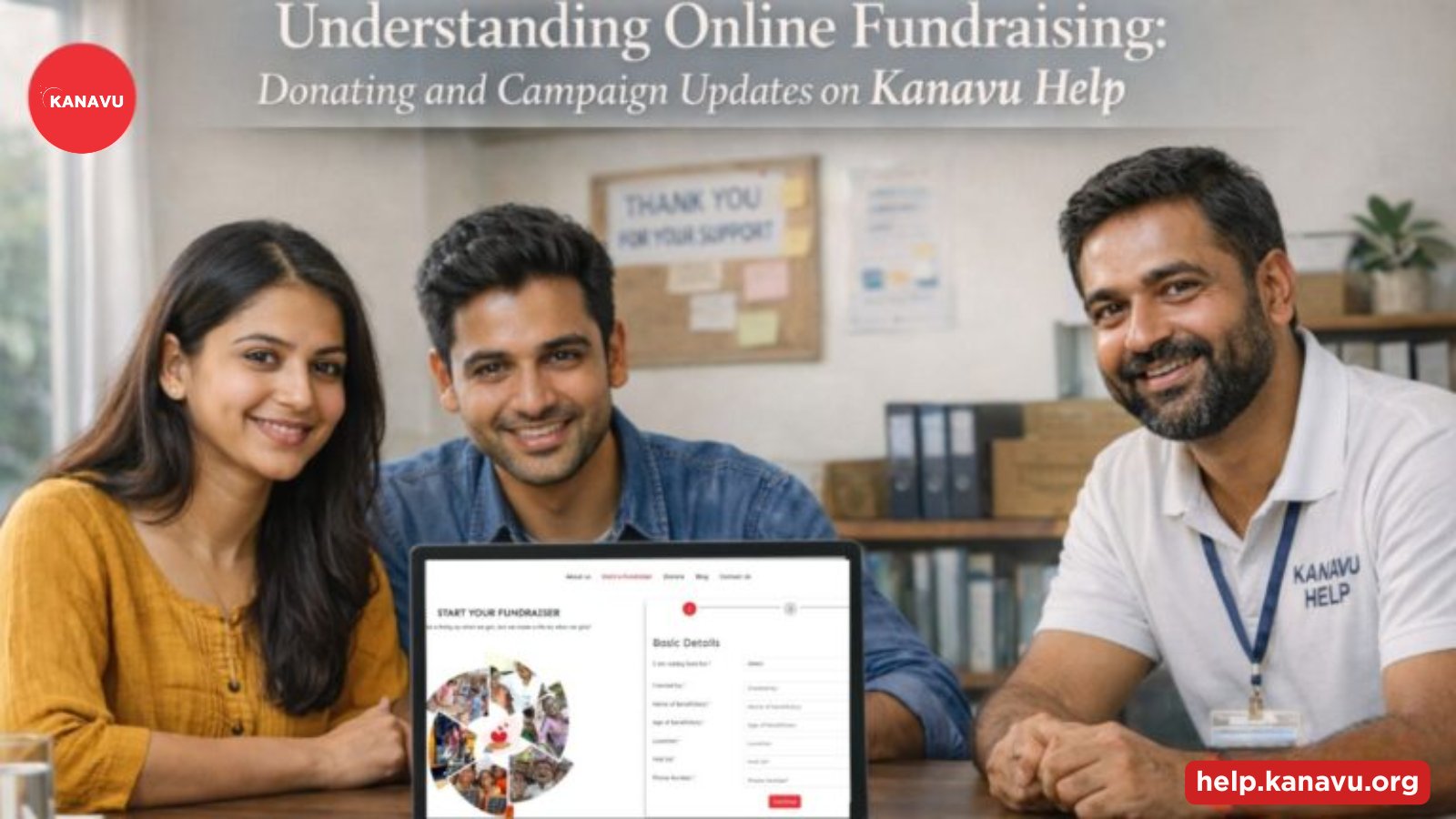
Understanding Online Fundraising: Donating and Campaign Updates on Kanavu Help
Understanding Online Fundraising: Donating and Campaign Updates on Kanavu Help Online fundraising allows people to support meaningful causes through the internet. kanavu.help is a platform that connects donors with verified campaigns in healthcare, education, and social welfare. It makes donating easy, secure, and transparent for anyone, anywhere. How Online Fundraising Works On (kanavu.help), online fundraising means creating campaigns to collect funds for a specific need. Campaign creators share details about their cause and fundraising goal. Donors can view campaigns, contribute online, and follow updates about how funds are used. The platform ensures that contributions are safe and go directly to the intended cause. Donating Through the Platform Here are the detailed steps to donate through online fundraising on Kanavu Help: Find a Cause:Visit the (kanavu.help)website and browse live campaigns. Use filters to find causes that matter to you, such as medical support, education, or community welfare. Read Campaign Details:Click on a campaign to see full information, including the fundraising goal, purpose, and beneficiary details. Supporting documents, such as medical estimates or school requirements, may also be available. Choose Your Donation Amount:Decide how much you want to give. You can donate a small or large amount, and every contribution helps. Provide Donor Information:Enter your name, email, and contact number. This allows the platform to send you receipts and updates about your donation. Select Payment Method:Choose from secure online payment options, such as credit/debit cards, net banking, or UPI. Complete the Payment:Follow the instructions to finish the payment. After the transaction is successful, you will receive confirmation and a receipt. Get Campaign Updates:Donors can follow updates from the campaign creator. These updates show progress, how funds are being used, and stories of beneficiaries. Why Updates Matter Regular updates make online fundraising transparent. Donors can see the impact of their contributions and trust that their support reaches those who need it. This builds confidence in both the platform and the campaigns. Benefits of Online Fundraising Easy Access: Anyone can donate from anywhere. Fast Support: Donations reach campaigns quickly. Transparency: Campaign updates keep donors informed. Inclusivity: Small and large donations both make an impact. Online fundraising on (kanavu.help) helps people support real causes safely and conveniently. By following the donation steps and engaging with updates, donors can make a meaningful difference in healthcare, education, and social welfare campaigns. It is a simple way to contribute to positive change every day.
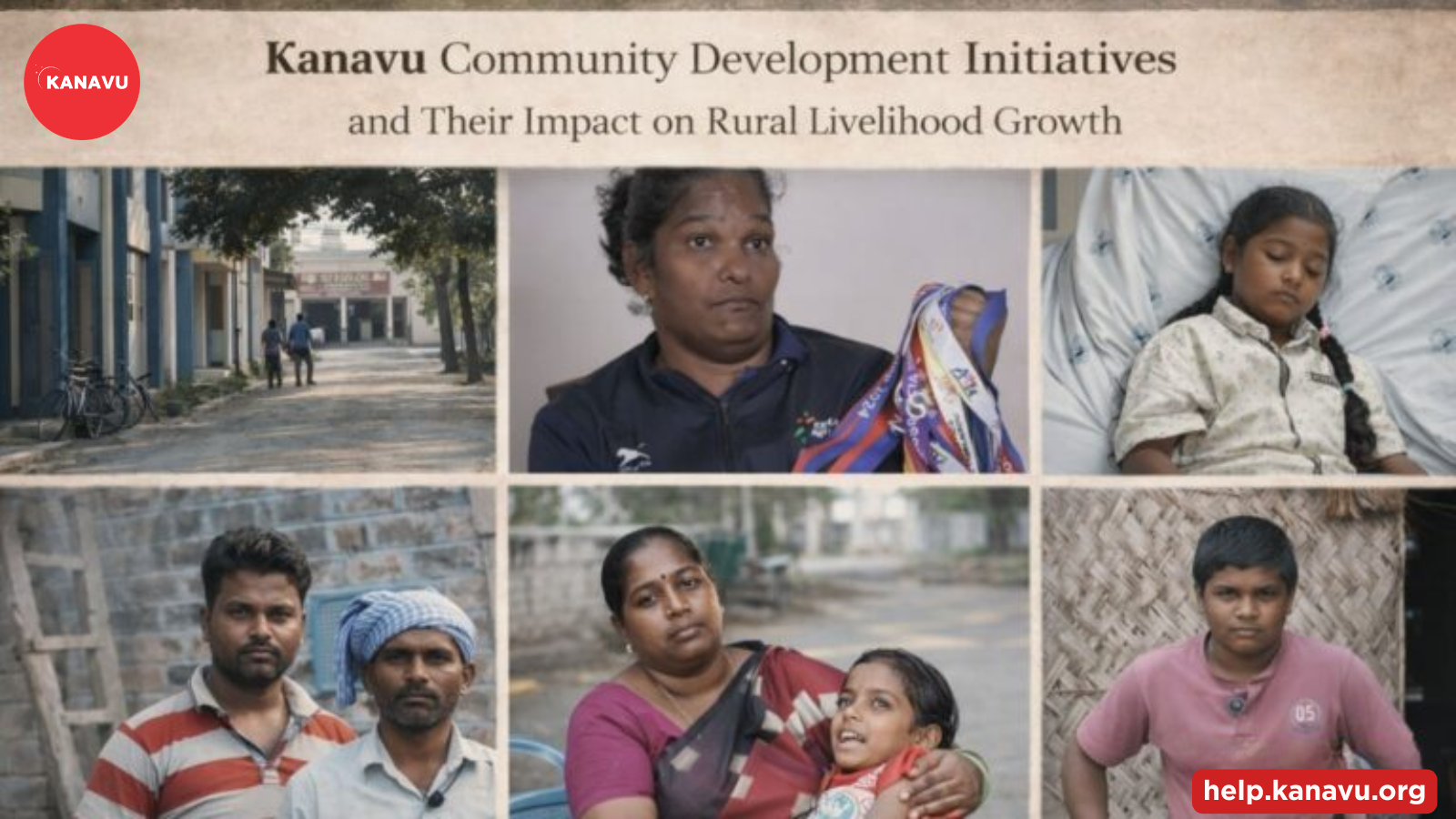
Kanavu Community Development Initiatives and Their Impact on Rural Livelihood Growth
Kanavu Community Development Initiatives and Their Impact on Rural Livelihood Growth Rural communities often face persistent challenges related to education access, healthcare affordability, and financial stability. Kanavu addresses these issues through structured community development initiatives that focus on transparency, participation, and long-term impact. Through its crowdfunding platform, kanavu.help, Kanavu connects real community needs with individuals and institutions willing to support meaningful causes. The Need for Community Development Initiatives in Rural Areas In many villages, families struggle to manage unexpected expenses and essential requirements. Common challenges include: Difficulty in paying school fees and educational expenses Limited access to timely medical support Financial instability due to irregular income sources Lack of emergency support systems Kanavu’s community development initiatives aim to reduce these pressures by enabling communities to access support in a structured and transparent manner. Kanavu’s Step-by-Step Approach to Community Development Kanavu follows a clear and realistic approach to ensure its initiatives create real impact. Step 1: Identifying Genuine Community Needs Kanavu works closely with schools, local leaders, and community members to identify real and urgent needs such as: Educational support for children Medical assistance for families Emergency relief during financial hardship This ground-level understanding ensures that community development initiatives are need-based and relevant. Step 2: Enabling Support Through kanavu.help The kanavu.help platform plays a central role in Kanavu’s development efforts. It allows individuals and institutions to raise funds transparently for verified causes. Key features of the platform include: Clear presentation of each cause Defined fundraising goals Updates on fund utilization and progress Essential Practices for Gaining Donor Trust in Social Cause Crowdfunding This system builds trust and accountability, strengthening the effectiveness of community development initiatives. Step 3: Real-Time Examples from kanavu.help Several ongoing and completed campaigns on kanavu.help reflect the practical impact of these initiatives. Education Support ExampleA rural government school initiated a fundraiser to support students who were unable to afford exam fees and school materials. With contributions from multiple donors, the required amount was partially raised, allowing students to continue their education without interruption. Family Support ExampleA community-led campaign was created to support a family facing financial hardship. Small contributions from local supporters helped meet essential needs during a difficult period, reducing immediate financial stress. School Infrastructure and Supplies ExampleSome campaigns focus on improving school resources, such as classroom supplies and learning materials. These initiatives benefit not just one child, but entire classrooms, contributing to long-term educational improvement. These examples show how community development initiatives translate into direct, measurable outcomes. Step 4: Encouraging Community Participation Kanavu’s model emphasizes collective responsibility. Schools, individuals, and local supporters often take the lead in initiating campaigns. This approach: Encourages local ownership of development efforts Builds stronger community networks Ensures sustainability beyond one-time support Active participation is a key reason these community development initiatives succeed. Impact on Rural Livelihood Growth The outcomes of Kanavu’s initiatives extend beyond immediate support. Key impacts include: Improved access to education, reducing school dropout rates Financial relief during medical and personal emergencies Greater confidence among families to plan for the future Strengthened community bonds through shared support By addressing essential needs, community development initiatives help rural families move from survival to stability. Transparency as a Core Strength Transparency is central to kanavu.help and Kanavu’s broader mission. The platform ensures: Clear visibility into where funds are directed Responsible use of donated resources Regular communication with donors and supporters This transparency builds long-term trust and credibility for community development initiatives. Kanavu’s community development initiatives, supported through platforms like kanavu.help, demonstrate how structured community support can create lasting change. By focusing on education, emergency assistance, and collective participation, Kanavu contributes meaningfully to rural livelihood growth. These initiatives show that when communities and supporters work together, sustainable development becomes achievable and impactful.
