
The 80/20 Rule in Fundraising: Why a Few Donors Matter Most
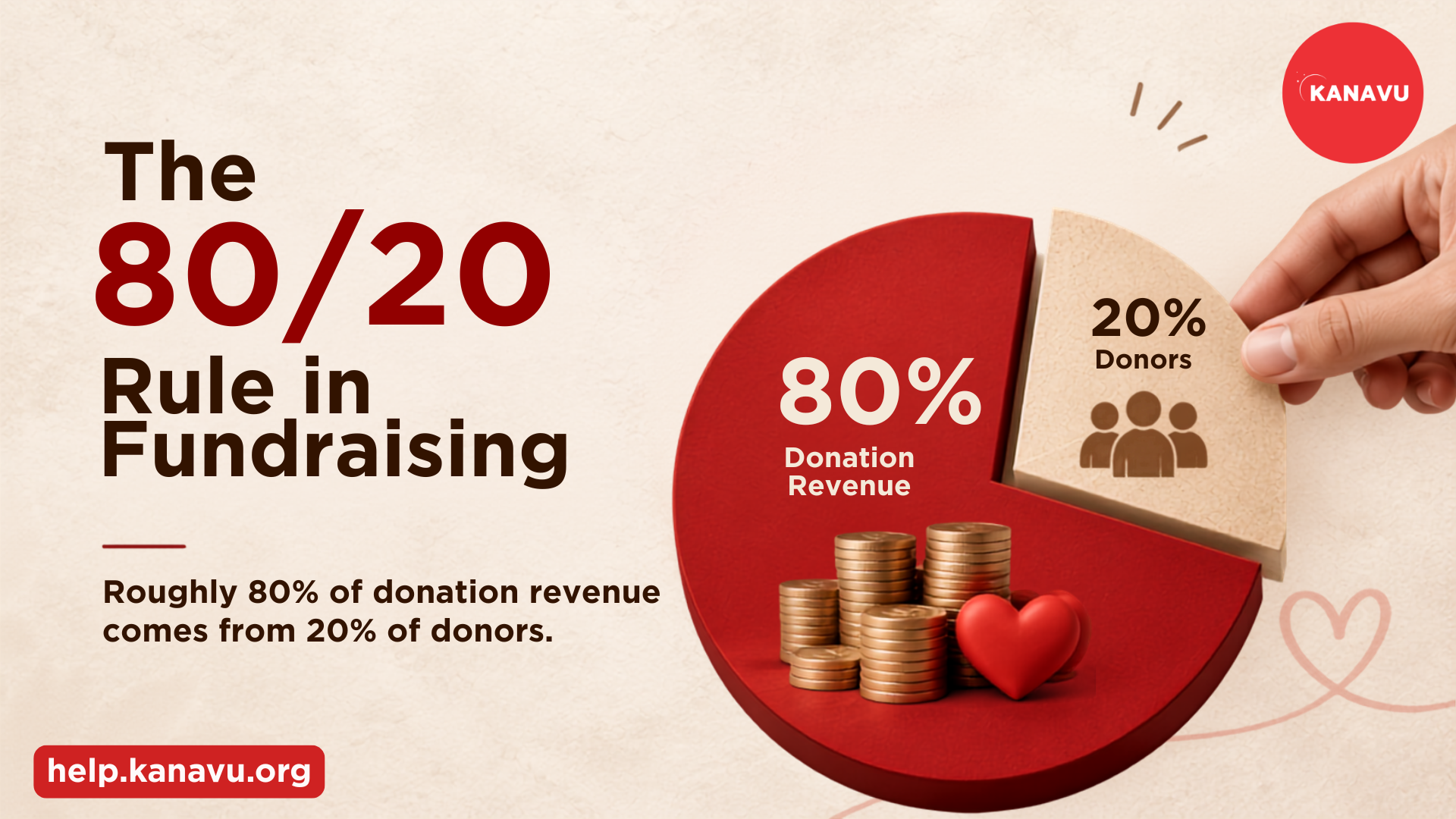
Fundraising does not always grow evenly. A small group of donors may contribute a large share of an organization’s total donations. This idea is often explained using The 80/20 Rule in Fundraising, based on the Pareto Principle.
In Simple Terms: The 80/20 rule suggests that roughly 80% of results can come from 20% of the causes. In fundraising, this can mean that a smaller group of donors provides a large part of the funds.
Why a Few Donors Can Matter More
Some donors give larger or more frequent donations, making them important to fundraising efforts.
Building strong relationships with these supporters can help organizations maintain long-term support.
Important: The 80/20 split is not a fixed rule. The actual percentage can be different for every organization.
How the 80/20 Rule Helps Fundraising?
The principle can help fundraising teams decide where to focus their time and resources.
Build Strong Donor Relationships
Keep major supporters engaged through personal communication, updates, and regular appreciation.
Find Your Most Valuable Donors
Review donation records to understand which supporters contribute the most.
Keep Smaller Donors Engaged
Smaller donors also matter. They can continue supporting campaigns and may become larger contributors over time.
When donors choose to support a cause online, following simple safe online donation practices can also help them make informed contributions.
Every Donor Matters: Major donors provide significant support, while smaller donations help build a wider donor community.
How to Apply the 80/20 Rule?
You can start with a simple review of your donor data:
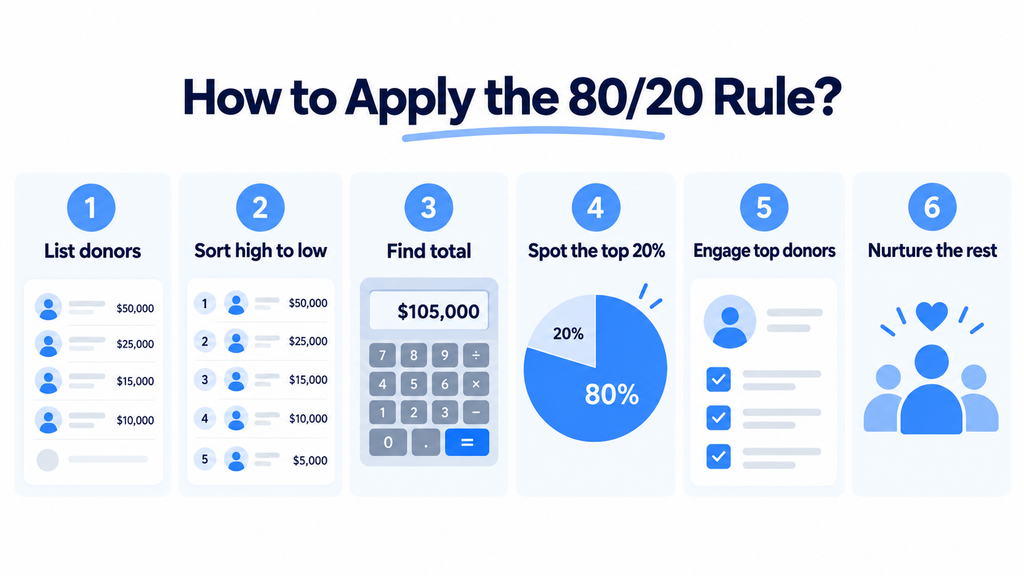
- List your donors and their total contributions.
- Sort the donations from highest to lowest.
- Calculate the total amount raised.
- Identify the group contributing the largest share.
- Plan more personalized engagement for those donors.
- Continue nurturing the rest of your donor community.
The Pareto Principle can help organizations focus on important priorities and use resources more efficiently.
Donor Relationships Matter
The 80/20 Rule in Fundraising helps organizations understand where their fundraising efforts have the greatest impact.
Focusing on important donors while keeping the wider donor community engaged can support stronger, long-term fundraising.
Strong donor relationships turn contributions into lasting support.
Platforms like Kanavu Help make it easier for people to create fundraisers, reach donors, and receive funds securely. This helps connect people with causes that need support.
Frequently Asked Questions
The 80/20 Rule in Fundraising suggests that a small group of donors may contribute a large share of an organization’s total donations.
No. The 80/20 ratio is not fixed. The actual percentage can vary between organizations.
It can help organizations understand their donor base, prioritize important relationships, and use fundraising time and resources more effectively.
Fundraising is not only about how much money is raised.
It is also about building trust, maintaining donor relationships, and creating long-term support for meaningful causes. Understanding how fundraising works can help fundraisers see how different donors contribute to a campaign and why every contribution matters.
Source: Understanding the Pareto Principle: The 80/20 Rule Explained
