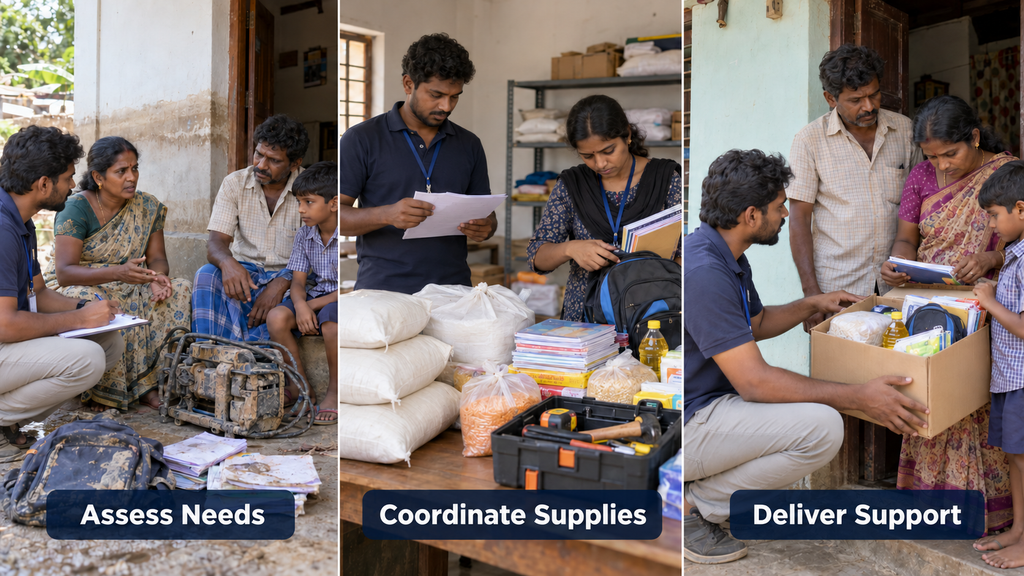
Support for disaster victims should help families move from surviving an emergency to managing life independently again. Once immediate relief ends, lost earnings, interrupted education and damaged workplaces can continue affecting a household.
Recovery therefore needs a clear direction: identify what has stopped functioning, understand what the family wants to restart and provide assistance that makes that possible.
What Prevents Families From Returning to Normal Life?
A damaged home is only one part of the disruption. A shopkeeper may lose stock, a worker may lose equipment, and children may face a longer journey to school after relocation.
These problems are connected. Without income, transport becomes difficult to afford. Without transport, returning to work or school becomes harder.
Start by asking the family:
- What activity needs to restart first?
- What is preventing it?
- Would a repair, replacement or service resolve the problem?
Choosing the right starting point can make later recovery steps easier for everyone.
Support for Disaster Victims Through Livelihood Recovery
Livelihood support after disasters means helping people restore their ability to earn. Assistance should suit their occupation and current circumstances.
For example, replacing a sewing machine is useful only when the tailor also has a safe workspace, electricity and access to customers. Discuss the complete requirement before funding one item.
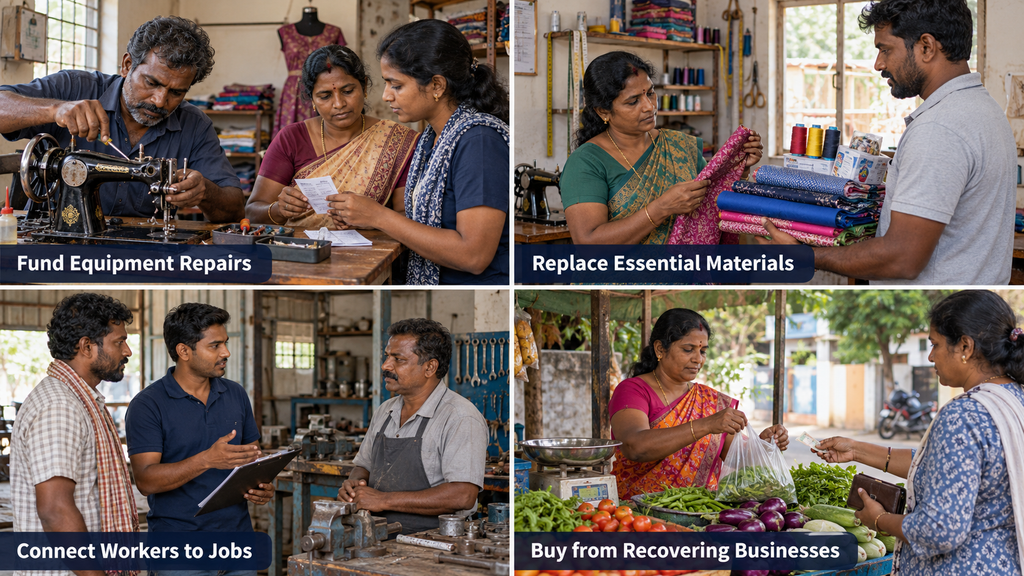
Practical contributions may include:
- Paying for repair of usable work equipment.
- Replacing essential materials in manageable quantities.
- Connecting workers with local employment opportunities.
- Purchasing goods or services from recovering businesses.
These are possible community actions, rather than benefits automatically available to every household.
Reconnecting Families With Everyday Services
Effective disaster recovery assistance also helps people regain access to services.
| Disruption | Useful next step |
| Lost documents | Help contact the relevant issuing office |
| Interrupted schooling | Coordinate with teachers about returning and missed lessons |
| Relocation | Identify practical routes to work and school |
| Interrupted care | Help reconnect with existing care providers |
Keep the family involved in decisions. Assistance should strengthen their choices and independence.
Keep the family involved in decisions. Assistance should strengthen their choices and independence.
The UNDRR explanation of recovery includes restoring livelihoods and services while reducing future disaster risk.
For long-term disaster recovery, discuss safer storage for documents and work materials, alongside advice from qualified professionals where repairs are required.
For related background, read Kanavu’s guide to accident relief funds in India.
Connecting Recovery Needs With Kanavu Help
Support for disaster victims can continue through a fundraiser on Kanavu Help. Families can explain how the disaster affected their daily lives and seek contributions towards specific recovery needs, such as repairing work equipment, replacing school materials or restoring essential household belongings.