
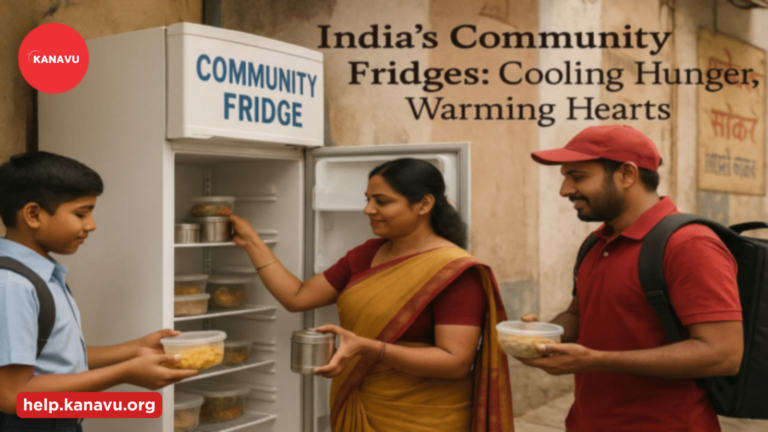
In the dense lanes of India’s cities — where towering high-rises cast shadows over street vendors and daily wage workers — a quiet revolution is humming behind a glass door. Community fridges, a citizen-driven innovation, are slowly turning into life-saving beacons of hope, tackling both urban hunger and food wastage with a single, simple gesture: sharing.
Social help in India is traditionally imagined as top-down — government subsidies, NGO food drives, or ration cards. But the rise of public fridges flips that narrative. It’s grassroots, low-cost, and trust-based. Anyone can leave food. Anyone can take it. No paperwork. No surveillance. No judgment.
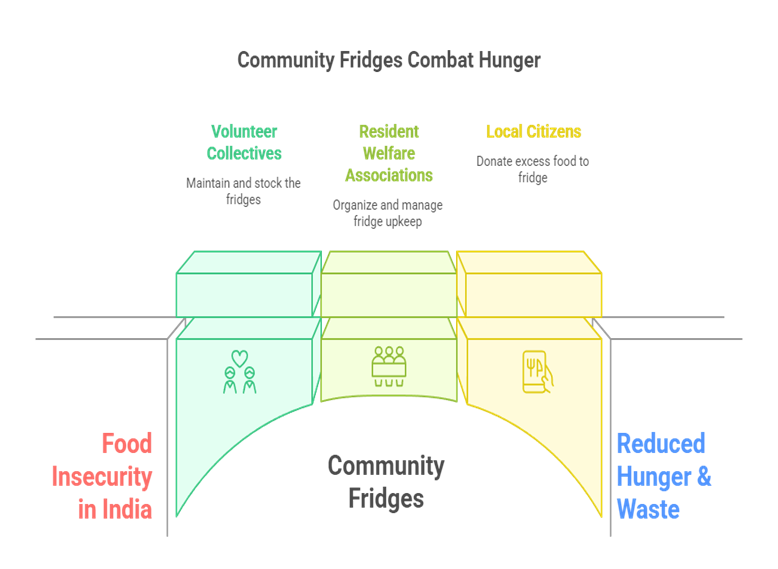
Each community fridge is essentially a public refrigerator, usually powered and protected by a nearby building, shop, school, or temple. Volunteers ensure cleanliness, label food with dates, and often post real-time updates on WhatsApp or community apps when the fridge is restocked.
Donors include:
These fridges often operate under the mantra:
“Don’t waste it. Plate it. Share it.”
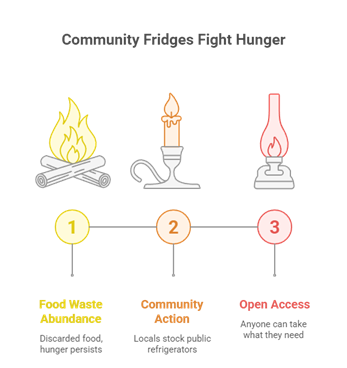
Perhaps the most beautiful aspect of this movement is its ability to break the giver-receiver hierarchy.
These micro-acts of kindness create a culture of shared responsibility, nudging India away from transactional charity towards reciprocal community support.
Some fridges are now being expanded into “compassion corners”, offering:
In Mumbai’s Bandra area, a fridge is stocked with pet food, helping street dog feeders.
In Kolkata, students from Jadavpur University have proposed adding QR codes for free educational downloads on fridge doors — merging nourishment of body and mind.
India’s community fridge movement is still in its infancy, but it holds immense potential:
